

Getting bitten by your parrot can be surprising, especially when the bird is normally friendly and comfortable around you. A bite does not always mean that your parrot is aggressive or dislikes you. Birds may bite when they feel frightened, uncomfortable, overstimulated, protective of their space, or simply want you to stop doing something.
The situation around the bite often tells you more than the bite itself. Think about what happened just before it occurred. Were you reaching into the cage? Trying to pick your parrot up? Touching its feathers? Approaching while it was eating? Looking at these details can help you understand what your bird was trying to communicate.
Once you understand the reason behind the behavior, it becomes much easier to respond without making the problem worse.
[wpsm_toplist]
1. Your Parrot May Be Afraid
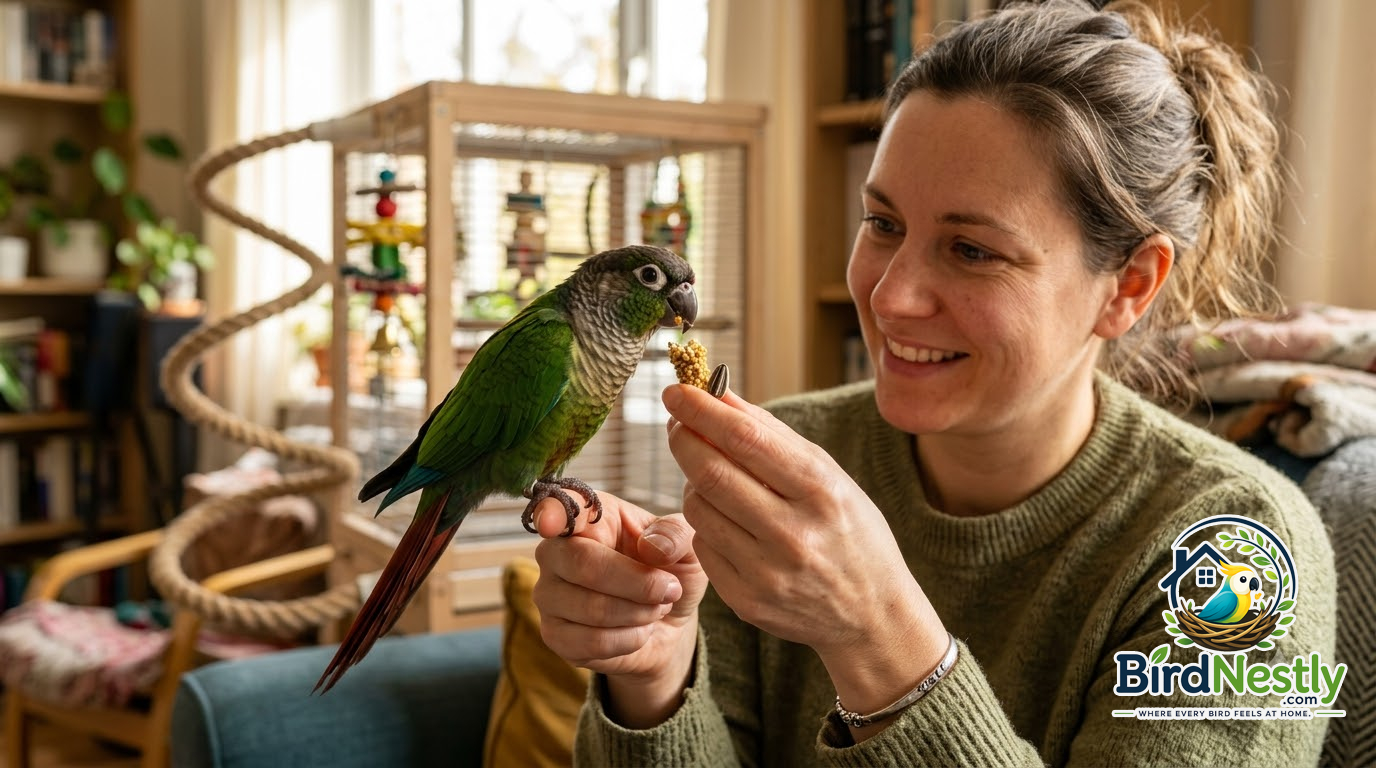
Fear is one of the most common reasons a parrot may bite. A bird that feels threatened may use its beak to make whatever is frightening it move away.
Something as simple as a hand moving toward the bird too quickly can trigger this response. A new person, unfamiliar object, loud noise, sudden movement, or a change in the room can also make a parrot nervous.
Pay attention to your bird’s body language before the bite. Your parrot may move away, lean backward, raise its feathers, open its beak, stare closely at your hand, or become very still. These signs can appear before the bird actually bites.
When you notice these signals, give your parrot some space. Continuing to move toward a frightened bird can leave it feeling that biting is the only way to make the situation stop.
Building trust takes time. Move slowly around a nervous bird, speak calmly, and let it approach you when possible. Short, positive interactions are usually more helpful than forcing physical contact.
A parrot that bites because it is frightened is not being spiteful. It is responding to something it perceives as a threat.
2. Your Parrot May Be Protecting Its Space
Some parrots become particularly protective of their cage, favorite perch, food bowl, toys, or another area they consider their own. This can explain why a bird seems gentle outside the cage but becomes defensive when you put your hand inside.
The cage can feel like a safe place to your parrot. Reaching inside without warning may be seen as an intrusion, especially if the bird is resting, eating, or playing with something it values.
Watch for signs that your parrot is becoming uncomfortable when you approach its space. It may move toward you, stiffen its body, raise its feathers, open its beak, or make warning sounds. These signals are worth respecting.
Instead of forcing your hand toward the bird, give it time to move away or step onto a perch. You can also work on simple step-up training outside the cage when your parrot is relaxed.
Territorial biting does not necessarily mean your relationship with your parrot is poor. A bird can be affectionate toward you and still want certain areas left alone.
Learning when your parrot wants space can prevent many bites before they happen.
3. Your Parrot May Be Overstimulated

A parrot can enjoy being around you and still reach a point where it has had enough interaction. This is especially common during petting or handling.
You may notice that your bird is relaxed at first, then gradually becomes restless, shifts its position, moves away from your hand, or starts showing other warning signs. Continuing to touch or handle the bird after these signals can eventually lead to a bite.
Some parrots prefer gentle attention around the head and neck but do not enjoy being touched elsewhere. Every bird has its own preferences, so it is important to learn what your parrot is comfortable with.
The best approach is to stop when your bird shows that it has had enough. Give it a break and allow it to return to a relaxed state.
Avoid treating a bite as the first sign that your parrot was uncomfortable. In many cases, the bird has already communicated several times through its body language.
With time, you can learn these small signals and end an interaction before your parrot feels the need to use its beak.
4. Your Parrot May Not Trust the Situation Yet
Trust plays a major role in how a parrot reacts to handling. A bird that has recently arrived in your home, had unpleasant experiences in the past, or simply has not become comfortable with you may use biting to create distance.
Trying to force a nervous parrot to step onto your hand or accept physical contact can make it more defensive. Instead, allow the relationship to develop gradually.
Start with simple interactions. Sit near the cage and talk quietly to your parrot. Offer a suitable treat without trying to grab the bird. Let it become familiar with your presence and learn that your hands do not always mean that something uncomfortable is about to happen.
Once your parrot becomes more relaxed, you can slowly introduce simple training. Reward calm behavior and keep sessions short enough that your bird remains comfortable.
If your parrot backs away, freezes, or gives a warning signal, respect that response rather than pushing forward.
Trust is not built through one long session. It develops through many small interactions in which your parrot learns that you will listen to its signals.
A bird that feels safe around you has much less reason to use biting as a way of creating distance.
5. Your Parrot May Be Hormonal
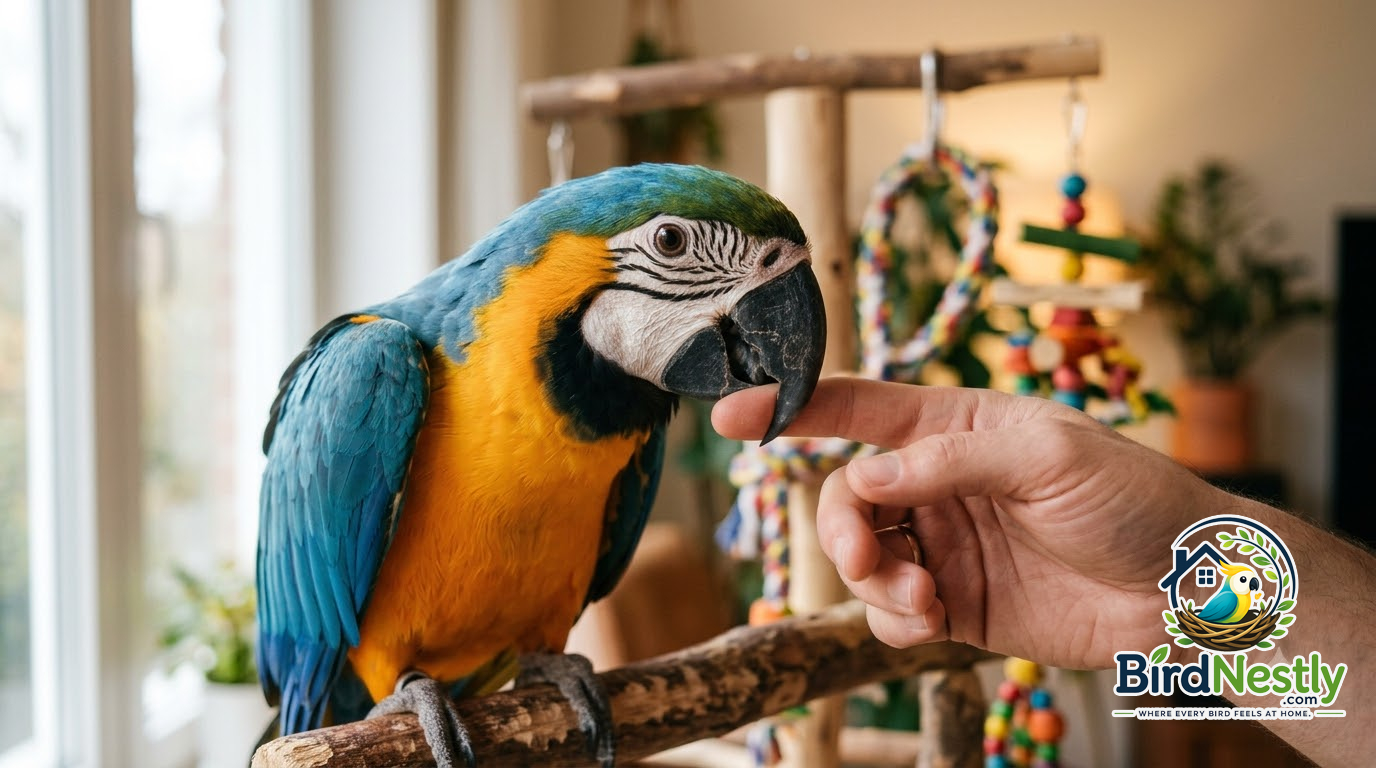
Hormonal changes can affect a parrot’s behavior and may make some birds more territorial, possessive, or easily irritated. A parrot that is normally calm may become more defensive during certain periods.
You may notice changes in the way your bird behaves around its cage, favorite person, toys, food, or certain areas of the home. Some parrots may also become more interested in nesting or trying to find dark, enclosed spaces.
When hormones are affecting behavior, avoid encouraging nesting behavior. Dark boxes, enclosed spaces, tents, and other areas that resemble a nest can sometimes make territorial behavior stronger.
It is also important to avoid handling a hormonal parrot in ways that make it uncomfortable. Give the bird space when it shows warning signs and keep interactions calm.
Hormonal behavior does not mean that your parrot has suddenly become aggressive. It may be a temporary change, but persistent or severe behavior should be discussed with an avian veterinarian.
6. Your Parrot May Have Learned That Biting Gets a Reaction
Parrots are quick to notice what happens after they bite. If biting consistently causes a strong reaction, the bird may learn that the behavior gets results.
Imagine that your parrot bites your finger and you immediately pull your hand away, shout, or start talking to it. From the bird’s perspective, the bite caused something to happen.
This does not mean that your parrot is deliberately trying to manipulate you. It simply learns from repeated experiences.
Try to avoid making biting the easiest way for your bird to get attention or end an interaction. When possible, respond calmly and focus on rewarding the behavior you want to see.
For example, if your parrot steps onto your hand without biting, offer praise or another appropriate reward. If it remains calm while you approach, reinforce that calm behavior.
Consistency is important. Everyone who interacts with the bird should try to respond in a similar way.
Punishment is not a good solution. Hitting, yelling, chasing, or frightening a parrot can damage trust and may make defensive biting worse.
The goal is to teach your parrot that calm communication works better than using its beak.
7. Your Parrot May Be Trying to Communicate
A bite can sometimes be your parrot’s way of saying that it wants something to stop.
Perhaps you are touching it when it wants to be left alone. Maybe you are asking it to step up when it would rather stay where it is. It may also bite when you move your hand too close to something it considers important.
Before biting, many parrots give smaller signals. They may turn away, move backward, flatten their feathers, open their beak, or become tense. Learning these signs can help you understand what your bird is saying before the situation reaches the point of a bite.
This is especially useful during handling. Rather than waiting until your parrot bites, watch for the first sign that it is uncomfortable and pause the interaction.
Your bird does not need to bite for you to understand that it wants space. Over time, responding to these earlier signals can help reduce biting and make handling more comfortable for both of you.
Parrots also communicate in many other ways, including vocal sounds and body movements. Understanding these behaviors can make everyday interaction much easier. For parrots that enjoy learning sounds and words, our guide on how to train a parrot to talk can also help you build better communication with your bird.
8. Your Parrot Could Be in Pain or Feeling Unwell
A parrot that suddenly starts biting when it previously allowed handling may be trying to tell you that something is wrong.
Pain can make a normally gentle bird more defensive. Your parrot may bite because it does not want a certain area touched or because handling has become uncomfortable.
Pay attention to other changes at the same time. A reduced appetite, unusual droppings, changes in breathing, sleeping more than usual, sitting at the bottom of the cage, weakness, changes in feather condition, or a noticeable drop in activity can all be reasons to take the situation seriously.
The location of the bite can also provide a clue. If your bird becomes defensive whenever you touch one particular part of its body, avoid repeatedly handling that area.
Do not assume that a sudden behavior change is simply a training problem.
Parrots can hide signs of illness surprisingly well, so noticeable changes in behavior deserve attention. If the biting appeared suddenly or is accompanied by other unusual symptoms, contact an avian veterinarian for an appropriate examination.
When a parrot is healthy and comfortable, you can then focus on understanding its behavior and working on trust and handling.
Frequently Asked Questions
Why does my parrot bite me?
Your parrot may bite because it is frightened, uncomfortable, territorial, overstimulated, hormonal, or trying to communicate that it wants you to stop. Pay attention to what happens immediately before the bite to identify the likely reason.
Why does my parrot suddenly bite me?
A sudden change in biting can happen because of a change in the environment, stress, hormonal behavior, fear, or discomfort. If your parrot has never behaved this way before and the change continues, watch for other signs that something may be wrong.
Why does my parrot bite me but not other people?
Your parrot may have different relationships with different people. It may feel more comfortable with one person, react differently to another person’s movements, or become protective of a particular person or space.
Why does my parrot bite when I pet it?
Your parrot may have had enough physical contact or may dislike being touched in a particular area. Watch for signs such as moving away, becoming tense, opening the beak, or changing its posture. Stop petting when your bird shows that it is uncomfortable.
Why does my parrot bite my fingers?
Fingers can move quickly toward a parrot and may be perceived as threatening, especially by a nervous or territorial bird. Your parrot may also be testing your hand with its beak or warning you not to come closer.
Why does my parrot bite inside the cage?
Your parrot may consider the cage its personal space and become defensive when you reach inside. This behavior can be stronger when the bird is eating, resting, or protecting a favorite toy or area.
How do I stop my parrot from biting?
Start by finding out why the biting happens. Avoid situations that repeatedly trigger the behavior, learn your parrot’s warning signs, build trust gradually, and reward calm interactions. Avoid hitting, shouting, or frightening your bird.
Should I punish my parrot for biting?
No. Punishment can make your parrot more frightened and may damage the trust you are trying to build. A calm response combined with consistent training is a better approach.
Does my parrot hate me if it bites me?
Not necessarily. A bite does not automatically mean that your parrot dislikes you. Birds may bite even people they are strongly bonded with when they feel frightened, overstimulated, territorial, or uncomfortable.
Can illness make a parrot bite?
Yes. Pain or illness can cause a normally calm parrot to become defensive. If biting starts suddenly or occurs together with changes in appetite, activity, breathing, droppings, feathers, or posture, an avian veterinarian should assess the bird.


Write Your Review
No reviews yet. Be the first to share your experience!