

A parrot that suddenly starts screaming can leave you wondering what has changed. Some parrots are naturally louder than others, but repeated or unusually loud screaming often has a reason behind it. Your bird may be trying to get your attention, calling for you, reacting to something in its surroundings, or simply letting you know that something is bothering it.
The timing can also tell you a lot. A parrot that screams when you leave the room may be looking for you, while one that screams at a strange noise may be frightened. Paying attention to what happens just before the screaming can help you understand what your bird is trying to communicate.
Not every loud call is a problem. Parrots are social and vocal animals, and some amount of noise is completely normal. The important part is noticing changes in your bird’s usual behavior and looking for patterns.
[wpsm_toplist]
1. Your Parrot May Be Trying to Communicate

Screaming is one of the ways parrots communicate. In the wild, parrots use loud calls to stay in contact with other members of their group, especially when they cannot see one another.
Your pet parrot may do something similar at home. It might call when you leave the room, when you move somewhere it cannot see you, or when another person or pet leaves its view. Sometimes the bird is simply checking where everyone is.
You may notice that your parrot becomes louder at certain times of the day. Morning and late afternoon can be particularly vocal periods for some birds. This does not necessarily mean that anything is wrong.
Learning your parrot’s normal sounds can make it easier to notice when something has genuinely changed. A familiar contact call is different from a sudden, distressed scream.
Instead of reacting to every loud sound as though something is wrong, pay attention to the situation around it. Look at where your parrot is, what it is looking at, and what happened immediately before the vocalization.
2. Your Parrot Wants Your Attention

Attention is another common reason a parrot may scream. Parrots are social birds and often enjoy being around their people. When they discover that screaming reliably brings someone over, they can quickly learn that it gets a response.
For example, imagine your parrot screams while you are working in another room. You walk over, talk to it, open the cage, or give it a treat. From the bird’s point of view, the screaming worked. It brought you back.
This can become a habit over time.
The response does not have to be positive for the behavior to be reinforced. Even shouting “quiet!” from across the room is still attention, and some parrots may learn to repeat the behavior because it gets a reaction.
That does not mean you should ignore your parrot completely. Instead, try to give attention when your bird is calm and quiet. Talking to it, offering a treat, or starting an interaction during a peaceful moment can help teach it that calm behavior also gets your attention.
Consistency matters. If screaming gets a reaction sometimes but not others, your parrot may keep trying because it has learned that another scream might eventually get the response it wants.
3. Your Parrot May Be Bored or Lonely
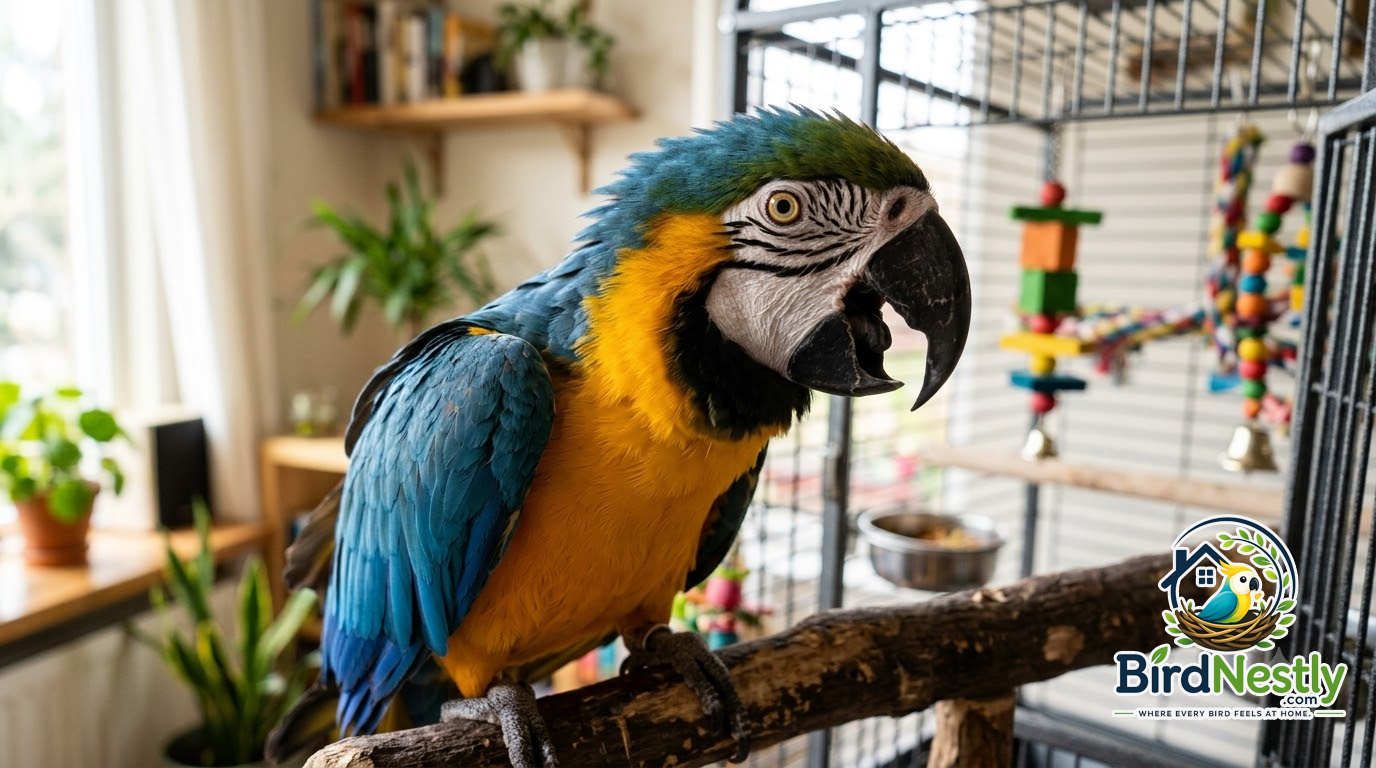
Parrots need more than food, water, and a comfortable cage. They are intelligent, social birds that need regular interaction and things to keep them occupied.
A parrot that spends long periods alone with very little to do may start screaming simply because it has nothing else to engage with. This can happen when there are not enough toys, limited opportunities to explore, or very little interaction with its owner.
Look at what your parrot does when the screaming starts. Is it sitting in one place with nothing to do? Does it become louder when you leave the room? Does the screaming decrease when you spend time talking, training, or playing with it?
These patterns can give you useful clues.
Simple activities can make a difference. Rotate toys rather than leaving the same ones in the cage for months. Offer safe objects to chew, provide opportunities to forage for food, and spend time interacting with your bird outside the cage when possible.
Training can also give a parrot something constructive to focus on. Teaching simple behaviors or working on talking can provide mental stimulation while strengthening the relationship between you and your bird.
If your parrot enjoys learning words and sounds, you may also find our guide on how to train a parrot to talk useful.
A healthy routine is often more effective than simply trying to make the bird quiet. When a parrot has enough interaction and interesting activities throughout the day, excessive screaming may become less frequent.
4. Your Parrot May Be Frightened or Alarmed
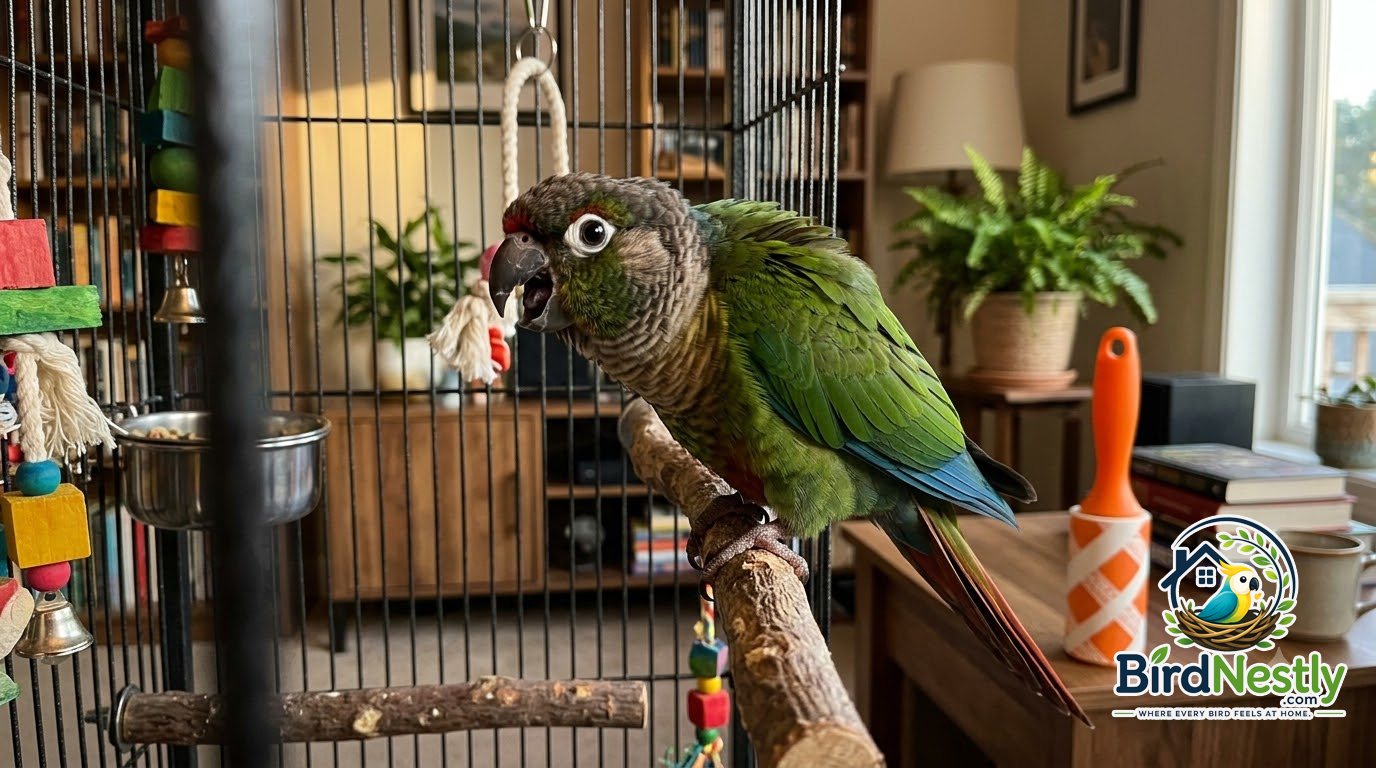
Not all screaming is related to attention or boredom. Sometimes a parrot screams because something has frightened it.
Parrots have excellent hearing and can react to sounds that people barely notice. A vacuum cleaner, barking dog, construction noise, unfamiliar voice, sudden movement, or loud sound from another room can trigger an alarm call.
Changes inside the home can have the same effect. A new piece of furniture, a different cage location, a new person, or even an unfamiliar object placed near the cage may make some parrots uncomfortable.
Pay attention to what happens immediately before the scream. If your parrot becomes tense, moves away from something, flaps its wings, freezes, or repeatedly looks toward a particular area, there may be something in the environment making it nervous.
Try to identify the trigger instead of immediately telling the bird to be quiet. Once you know what is causing the reaction, you can make the environment less stressful.
For example, if a particular household appliance frightens your parrot, give the bird some distance from it and allow it to become familiar with the sound gradually. Avoid forcing the bird to approach something that clearly scares it.
A parrot that occasionally gives a loud alarm call is not necessarily experiencing a serious problem. However, sudden changes in vocal behavior deserve attention, especially when the screaming is accompanied by other unusual changes in eating, activity, breathing, droppings, or appearance.
5. Your Parrot May Be Bored or Looking for More Stimulation
A parrot can have plenty of food and a comfortable cage and still become bored. These birds are naturally curious, active, and interested in what is happening around them. When there is not enough to explore or do, screaming can become one way of filling that gap.
Take a look at your bird’s daily routine. Does it spend most of the day in the same cage with the same toys? Does it have opportunities to forage, chew, climb, or interact with you? A lack of variety can make the day feel very repetitive.
Try rotating toys every few days rather than putting everything in the cage at once. Simple changes can make familiar toys interesting again. Food puzzles, safe chewing materials, and supervised time outside the cage can also give your parrot something to focus on.
Training is another useful form of stimulation. Short sessions can teach your bird new behaviors while giving it focused time with you. A parrot that enjoys learning may benefit from practicing simple cues, stepping onto your hand, or working on sounds and words.
If your bird is interested in talking, you can also use our guide on how to train a parrot to talk for ideas on making training part of its daily routine.
Mental stimulation will not necessarily make a naturally vocal parrot quiet. The goal is to give your bird appropriate ways to spend its energy rather than expecting it to remain silent.
6. Your Parrot May Be Responding to Its Daily Routine
Parrots often become familiar with the rhythm of a household. They learn when people wake up, when meals are served, when the house becomes quiet, and when their owner usually comes home.
A change in that routine can sometimes lead to more vocalization.
Perhaps you normally leave for work at the same time each morning but have recently started leaving earlier. Maybe the cage has been moved, feeding times have changed, or someone who normally spends time with the bird is away.
Some parrots respond to these changes by calling more often.
Try to keep important parts of the day reasonably consistent. Regular feeding times, a predictable sleep schedule, daily interaction, and enough quiet time can help your bird feel more settled.
Sleep is especially important. Most parrots need a consistent period of uninterrupted darkness and quiet each night. A bird that is repeatedly disturbed while sleeping may become irritable or more vocal during the day.
Pay attention to when the screaming happens. If it occurs at roughly the same time every day, look at what normally happens around that time. A pattern can often tell you more than the sound itself.
If the screaming began after a major change at home, consider whether the change could be contributing to it. Give your parrot time to adjust while keeping its surroundings as predictable as possible.
Frequently Asked Questions
Why is my parrot screaming all of a sudden?
A sudden increase in screaming can be caused by fear, a change in the environment, loneliness, attention-seeking, boredom, or a change in routine. Check what happened immediately before the screaming started. If the change is unusual and continues, especially with other signs of illness, contact an avian veterinarian.
Why does my parrot scream when I leave the room?
Your parrot may be using a contact call to find you. Parrots are social birds, so some birds become vocal when their person disappears from view. Try responding calmly and giving attention when your bird is quiet rather than immediately rewarding loud screaming.
Why is my parrot screaming in the morning?
Morning vocalizations are common in many parrots. Your bird may be waking up, calling to other members of the household, or responding to sounds outside. A consistent morning routine can help your parrot settle into the day.
Why does my parrot scream at night?
Nighttime screaming can happen when a parrot is startled by a sound, shadow, movement, or sudden change in its surroundings. Make sure your bird has a quiet, comfortable sleeping area and a consistent sleep routine.
Why does my parrot scream when I ignore it?
Your parrot may have learned that screaming gets a response. Even telling the bird to be quiet can provide attention. Try giving attention, praise, or a reward when your parrot is calm instead.
Should I yell at my parrot when it screams?
No. Yelling can make the situation worse because your parrot may interpret your voice as another form of interaction. Stay calm and focus on rewarding quieter behavior.
How can I stop my parrot from screaming?
First, try to identify why the screaming is happening. Make sure your parrot has enough interaction, mental stimulation, exercise, appropriate toys, food, water, and uninterrupted sleep. Reward calm behavior and avoid making screaming the easiest way for your bird to get attention.
Is it normal for parrots to scream?
Some vocalization is completely normal. Parrots are naturally social and noisy animals. The concern is excessive screaming or a sudden change from your bird’s normal behavior.
Can illness cause a parrot to scream?
Yes. Pain, discomfort, or illness can sometimes cause unusual vocalization. Pay attention to other changes such as reduced appetite, sleeping more than usual, changes in droppings, breathing difficulties, weakness, feather changes, or unusual posture. If these signs appear, seek advice from an avian veterinarian.
How long does it take to reduce excessive screaming?
There is no fixed timeline. It depends on why the parrot is screaming, how long the behavior has been established, and how consistently the household responds. Changes are usually more successful when everyone responds to the behavior in the same way.


Write Your Review
No reviews yet. Be the first to share your experience!