

A cage liner can make routine cleaning easier, but the right choice depends on the tray dimensions, how much debris your bird produces, and whether your parrot can reach the liner. Paper sheets are simple to cut and replace; plastic tray bags can keep a removable pan cleaner but should stay inaccessible to birds that chew. This guide compares both formats with practical fit and safety checks.
Selection note: Product features are taken from current listings. We have not tested absorbency, fit, or how these liners perform in an individual cage. Measure the tray and follow your veterinarian’s guidance for monitoring droppings.
Affiliate disclosure: This guide includes affiliate links. BirdNestly may earn a commission from qualifying purchases.
Products to compare
The product box is a shopping reference rather than a hands-on test or verified sales ranking. Confirm the current model, dimensions, materials, included parts, and care instructions before purchase.
Pros
- Highly absorbent core
- Effective odor neutralization
- Convenient pre-cut sizing
- Easy to trim
- Bird-safe materials
Cons
- Low quantity per pack
- Limited to smaller cage footprints
- Single-use disposable design

Individual product reviews
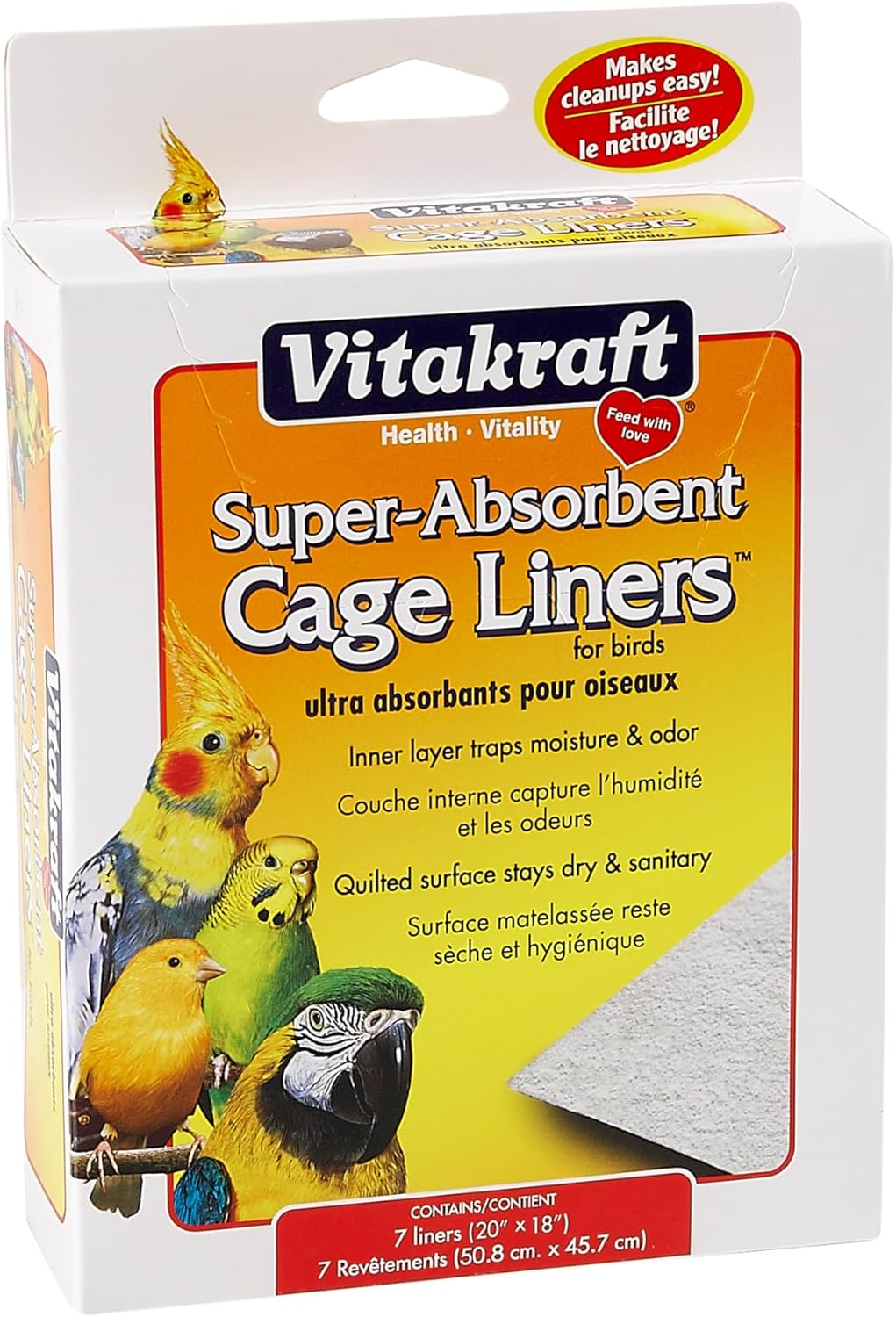
Vitakraft Pre-Cut Absorbent Cage Liners
The listing describes seven pre-cut 20-by-18-inch paper sheets that can be trimmed for standard cages. A ready-cut size can simplify replacement when it matches the tray without much folding or overlap.
Check before buying: Check the actual sheet dimensions against your pan. Paper liners need frequent replacement if wet or heavily soiled; the product title’s odor language is not a substitute for routine cleaning.
Compare this productZIQON 120-Sheet Large Paper Liners
This pack is listed with 120 sheets around 31 by 21.5 inches, which can suit larger trays or households that want to cut paper to fit. The quantity may reduce repeated shopping for a frequent cleaning routine.
Check before buying: Measure your tray and account for the usable flat area. Keep loose paper edges out of reach if your bird pulls liners through the grate or shreds them.
Compare this productTfwadmx Oversized Plastic Tray Liner Bags
These 34-by-22-inch clear bags are marketed as disposable plastic tray covers. Their main appeal is keeping a removable pan cleaner during emptying, provided the bag fits securely and remains beneath the grate.
Check before buying: Plastic film must stay completely inaccessible to the bird. Do not use this format if your parrot can reach, chew, or pull the liner into the cage.
Compare this productQumHmup 50-Pack Clear Tray Liners
The listing describes 24-by-16-inch plastic liners with an elastic closure. A smaller tray bag may suit a compact cage where the oversized bags bunch or fold excessively.
Check before buying: Confirm that the elastic and bag edge remain below the tray rim and cannot be reached by the bird. Check the pan dimensions before buying a bulk pack.
Compare this productNiwaes 50-Pack Disposable Film Liners
This listing includes 50 clear plastic film bags and a small feeder accessory. The quantity is useful to compare for owners who already use plastic covers around a removable tray.
Check before buying: Verify what is included in the current package. As with any plastic liner, avoid it if the bird can access or chew the film.
Compare this productPaper or plastic: choose by cage design
Paper is usually the simpler format when the tray is fully separated from the bird by a secure grate. It is easy to cut, inexpensive to replace, and allows you to see droppings on a light surface. Plastic bags may make tray removal less messy, but they introduce a material that should not be available for chewing. If your bird reaches under the grate or pulls items through the bars, use paper or another option approved for your setup.
Some owners use plain paper such as unprinted paper sheets rather than a product liner. Whatever you choose, keep the surface flat enough that it does not bunch under the grate or obstruct a tray. The liner should not change the cage’s ventilation, create a place for toes to catch, or conceal a spill for long periods.
Fit the tray before ordering
Measure the inside width and depth of the removable pan, not the cage’s outside dimensions. Account for corners, handles, and raised lips. A sheet that is a little larger can be trimmed, while an elastic bag may need a close circumference fit to stay in place. If the cage has a grate, confirm that the liner cannot rise through openings or become accessible.
Replace paper or bags when wet, soiled, or torn, and wash the tray itself regularly. A liner is a cleanup aid; it does not eliminate cleaning or let waste accumulate. Changes in droppings can be useful information, so contact an avian veterinarian if you notice an unusual pattern alongside changes in appetite or behavior. Our parrot cleaning tools guide covers other parts of the daily routine.
Questions owners ask
Can newspaper be used as a cage liner?
Ask your avian veterinarian what material is appropriate for your cage and bird. Avoid any paper your bird can ingest or shred in a way that creates a risk, and keep the liner beneath a secure grate.
How often should I change the liner?
Replace it as soon as it is wet, heavily soiled, or damaged, and follow a cleaning schedule suited to the cage and number of birds.
Are plastic tray bags easier?
They may simplify emptying, but only when the bag is fully outside the bird’s reach. A bird that chews plastic needs a different setup.
Our practical recommendation
Choose paper for a simple, visible surface and plastic only when the tray design keeps it completely inaccessible. Buy by measured tray size, not the word “universal,” and check the cage after changing the liner to make sure it still sits flat.
Before you order
Measure the intended space and compare it with the exact product dimensions. Listings, availability, images, and package contents can change. BirdNestly has not independently tested these products.
Keep the tray visible and the routine consistent
A clean liner makes it easier to notice changes in droppings, spilled water, and food debris. Replace it on a regular schedule that fits the cage and bird, and change it sooner when it is wet or damaged. If you monitor droppings for a health concern, follow the veterinarian’s instructions about what to record and how to keep the cage sanitary.
A paper sheet that is too small may leave the tray exposed; one that is too large may fold up and touch the grate. Trim the edges so the sheet lies flat. For plastic bags, make sure no part extends upward where the bird can pull at it. Never leave loose film, elastic, or liner ties where a parrot can chew them.
What to do if your bird shreds the liner
Some birds investigate anything placed below the grate. If your parrot reaches through and tears paper or film, change the setup so the liner is inaccessible. A product marketed as leak-proof is not suitable if the bird can swallow pieces. Ask an avian veterinarian about safe tray materials if the bird persistently chews or eats non-food items.
When changing the liner, move the bird to a secure perch or carrier if needed. Remove the tray carefully, clean it, and allow it to dry before replacing the new liner. This small routine helps prevent damp areas and keeps the floor beneath the cage clean. For further cleanup ideas, see the parrot cleaning accessories guide.



Write Your Review
No reviews yet. Be the first to share your experience!