

Parrots are naturally prey animals that seek out hollows and dense foliage to feel secure during their most vulnerable hours. Providing the best parrot sleeping hut ensures your feathered companion has a dedicated space to escape drafts and reduce nighttime anxiety. In October 2026, we analyzed 10 different models from brands like Vktech, Cdycam, MOACC and more to find the most durable and cozy options available.
Choosing the right shelter involves more than just picking a cute color; it requires a focus on fabric safety and structural integrity. A well-chosen hut can significantly improve your bird’s sleep quality, especially when paired with a best parrot sleeping perch for maximum comfort. This guide breaks down the top selections to help you create a warm sanctuary within your bird’s cage.

Pros
- High 4.7-star user satisfaction rating
- Soft heat-retaining cotton material
- Convenient side viewing portal
- Easy hanging installation
- Specifically sized for medium parrots
Cons
- Fabric requires regular cleaning for hygiene
- Not suitable for large parrot species
- Cotton fibers may be chewed by aggressive nesters

Pros
- Plush and comfortable cotton material
- Easy to hang with included hooks
- Helps birds feel safe and secure
- Durable construction for long term use
- Washable design for better hygiene
Cons
- Exposed plastic floor edges may encourage chewing
- Size consistency varies between different colors
- May trigger territorial behavior in mature birds

Pros
- Ultra-soft heat-retaining plush material
- Easy dual-strap hanging installation
- Machine washable for simple cleaning
- Encourages natural nesting and hiding behaviors
Cons
- Internal metal wire requires monitoring
- Fabric prone to chewing by larger parrots
- Requires daily lining to prevent waste buildup

Pros
- Retains shape with strengthened base
- Ultra-soft insulating plush material
- Simple tool-free hook installation
- Relieves foot pressure from perching
- Durable enough for light chewers
Cons
- Medium size too small for Macaws
- Birds may require acclimation time
- Interior height limited for tall birds
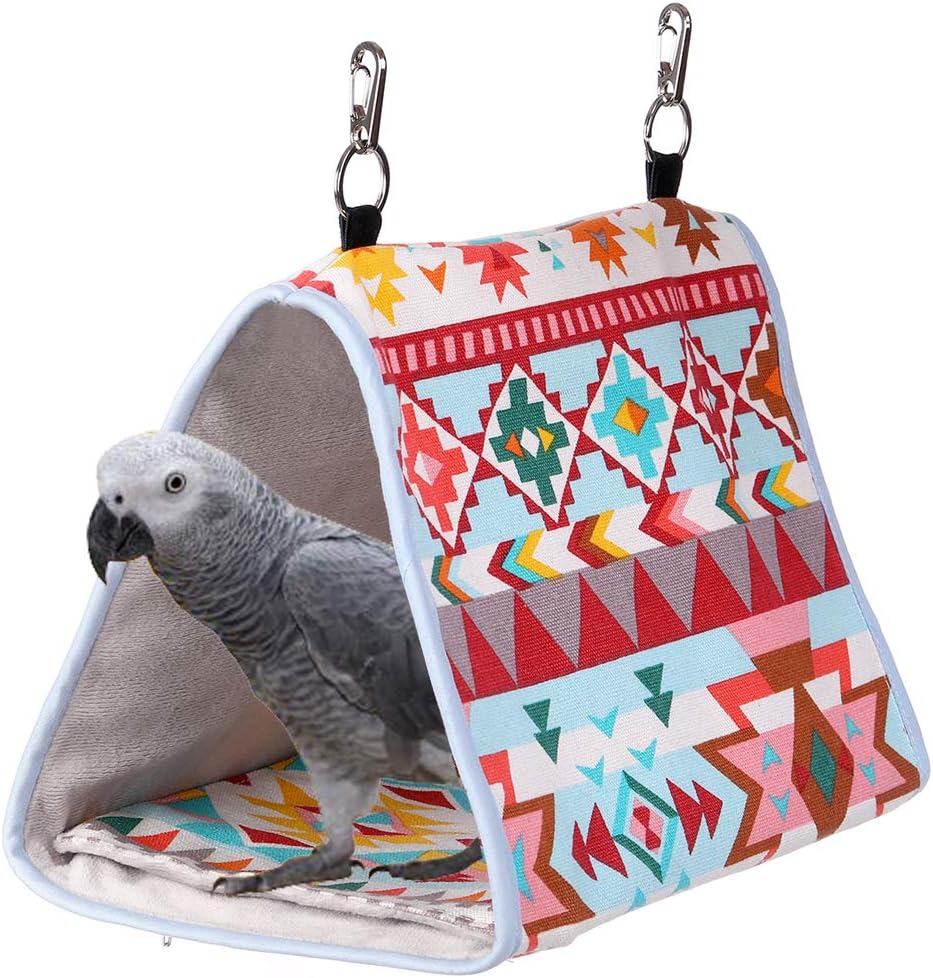
Pros
- Sturdy non-collapsing hard floor
- Machine washable removable pad
- Spacious enough for tail movement
- Anti-bite stainless steel hardware
- Thread-free safety design
Cons
- Clips may pinch curious beaks
- Bulky size for smaller cages
- Fabric prone to fraying over time

Pros
- Strong weight capacity bottom board
- Machine washable plush material
- Universal cage mounting hooks included
- Spacious interior for large breeds
- Windproof enclosed design
Cons
- Indoor use only
- Fabric requires regular inspection for chewing
- Non adjustable hanging height

Pros
- Insulated thickened plush material
- Secure hanging loop included
- Skin-friendly non-irritating fabric
- Spacious interior for medium breeds
Cons
- Hand wash recommended for longevity
- Fabric may attract loose down feathers
- Not suitable for large parrot species

Pros
- Chew-resistant reinforced steel frame
- Dual-sided entry for safety
- Easy to wipe or rinse clean
- Compact space-saving installation
Cons
- Plastic material lacks soft padding
- Open design provides less winter warmth
- Limited to medium or small species

Pros
- Ultra-soft lint material
- Secure hanging attachment
- Spacious interior for medium birds
- Effective thermal insulation
- Machine washable fabric
Cons
- Lint material may catch talons
- Not suitable for aggressive chewers
- Size may overwhelm small cages

Pros
- Thick heat-retaining plush fabric
- Easy dual-hook hanging system
- Machine washable material
- Provides privacy and security
Cons
- Small size may be tight for larger birds
- Fabric may require monitoring for loose threads
- Birds may take time to acclimate
Material Safety and Durability
The most critical factor when selecting a sleeping hut is the material used in its construction. Parrots are notorious for chewing, so you must ensure the fabric does not have loose threads or long fibers that could snag a claw or be ingested. High-quality cotton or dense fleece are preferred because they provide warmth without easily fraying into dangerous loops.
Some modern designs now include reinforced interiors or chewproof frames to prevent the bird from destroying the structure. For example, a hut with a stainless steel frame offers longevity that simple fabric tents cannot match. Always inspect the interior seams regularly to ensure your bird remains safe from entanglement during the night.
Structural Support and Base Stability
A common issue with cheaper bird hammocks is that they lose their shape or sag under the weight of the parrot. This can make the bird feel insecure or even trap them if the sides collapse inward. Look for huts that feature a hard plastic support board or a reinforced base to maintain a flat, stable floor for the bird to stand on.
Stability is especially important for larger species like African Greys or Amazons who need a firm surface to rest comfortably. If you are looking for alternatives to enclosed huts, you might also consider a best parrot platform perch which provides a flat resting area without the enclosed fabric. A stable base ensures the hut remains a reliable place for sleep rather than a source of stress.
Size and Bird Species Compatibility
Size is not just about whether the bird fits; it is about how the bird interacts with the space. A hut that is too large will not retain body heat effectively, while one that is too small can cause feather damage or claustrophobia. Manufacturers typically offer small, medium, and large variants to accommodate everything from Lovebirds to Macaws.
When measuring, ensure there is enough clearance for the bird to turn around without their tail feathers hitting the back wall. If you have a Conure, you may want to look at specific recommendations for the best parrot perches for conures to ensure their entire cage setup is proportional to their size and activity level.
Entry and Exit Design
Huts generally come in two designs: a single-opening cave or a dual-opening tunnel. Single-opening huts are excellent for heat retention and providing a deep sense of privacy. However, some birds prefer a tunnel design because it allows for a quick exit from either side, which can make them feel less trapped.
Consider your bird’s personality before choosing. A shy bird might love a deep, dark cave, whereas a more active or nervous bird might prefer the visibility and escape route provided by a tunnel. The opening should be wide enough that the bird can enter without brushing their wings harshly against the sides.
Ease of Cleaning and Maintenance
Bird huts can quickly become soiled with droppings or food debris, making hygiene a top priority. Most fabric huts are hand-washable, but those with removable support boards are much easier to maintain. Being able to slide out a plastic base allows you to scrub the floor of the hut without soaking the entire fabric structure.
Check if the hanging hardware, such as metal clips or hooks, is rust-resistant and easy to detach. Frequent cleaning prevents the buildup of bacteria and mold, ensuring the sleeping environment remains healthy. If your bird spends a lot of time in their hut, you should have a secondary one to use while the first is being laundered.
Why You Should Trust Us
Our team specializes in avian environment analysis, focusing on the intersection of pet behavior and product safety. We do not just look at the most popular items; we dissect the material specifications and mechanical designs of each product to ensure they meet the rigorous needs of parrot owners. Our goal is to provide objective data that helps you make an informed decision for your pet’s well-being.
We rely on manufacturer data, safety reports, and aggregated feedback from long-term bird owners to form our conclusions. By comparing dimensions, weight capacities, and fabric types, we provide a transparent look at which products offer the best protection and comfort. We are committed to bird safety and only recommend products that prioritize non-toxic materials and secure construction.
Final Thoughts
Choosing the right shelter can transform your bird’s cage into a true home. For those seeking the best overall balance of warmth and durability, the Wontee Bird Nest House Winter Warm Snuggle Hut is an excellent choice that caters to medium-sized birds with its soft cotton interior. It provides the security parrots crave while remaining easy to install in most standard cages.
If you have a larger bird and need something with more structural integrity, we recommend the MEWTOGO Large Winter Warm Bird Nest House. Its hard plastic support board prevents the sagging issues common in other fabric nests, making it a safer pick for heavier species. For budget-conscious owners, the Vktech® Plush Snuggle Bird Hammock Hanging Snuggle offers great value without sacrificing the fuzzy warmth your bird needs during colder months.
Regardless of which model you choose, remember to monitor your bird’s interaction with the hut daily. A safe sleeping environment, combined with proper foot care using the best parrot perch for nail care, will ensure your bird remains happy and healthy for years to come.
FAQs
Is a best parrot sleeping hut safe for all birds?
While many birds love them, some individuals may try to ingest the fabric or become overly hormonal. It is important to monitor your bird’s behavior and remove the hut if you notice excessive chewing or aggressive nesting instincts.
How often should I clean my bird’s sleeping hut in 2026?
We recommend a thorough cleaning at least once a week. Because birds often sleep in the same spot, droppings can accumulate quickly, so daily spot checks are also helpful for maintaining a healthy environment.
Will a sleeping hut keep my parrot warm in the winter?
Yes, most huts are made of insulating materials like fleece or cotton that trap body heat. This is especially useful if your home gets chilly at night or if the cage is near a window.
What is the top-rated option among best parrot sleeping hut for large birds?
For larger species, look for huts with reinforced bases and wide openings. Products designed for African Greys or Macaws, such as the MEWTOGO model, are engineered to handle the weight and size of bigger parrots.
Can these huts be used in a travel cage?
Yes, they can provide a sense of familiarity during stressful trips. If you are using a best portable parrot cage, adding a small snuggle hut can help your bird feel more secure in a new environment.
Why does my parrot refuse to go inside the hut?
Some birds are naturally wary of new objects. It may take several days or even weeks for them to feel comfortable enough to enter; try placing their favorite treats near the entrance to encourage exploration.
Do these huts cause hormonal behavior?
In some parrots, enclosed spaces can trigger breeding instincts. If your bird becomes territorial or starts laying eggs, you may need to limit their time in the hut or switch to a more open sleeping arrangement.


Write Your Review
No reviews yet. Be the first to share your experience!