

Budgies are small parrots with big nutritional needs. The right diet keeps their feathers glossy, their energy steady, and their immune system strong. That is why finding the best parrot food for budgies matters more than most owners realize.
In this guide, we compare 2 top-rated options from ZuPreem, Kaytee to help you choose. We looked at ingredient quality, pellet size, and how well each food supports a budgie’s daily health. By the end, you will know exactly which formula fits your bird’s needs.
If you are also setting up a new cage, see our best parrot cage guide for roomy, safe housing ideas. A great diet works best when your budgie has space to move and explore.
Top Products: Best Parrot Food for Budgies
Here are the 2 products we recommend for budgies in October 2026. Each one is formulated with small parrots in mind, though some are better suited for conures or lovebirds. We will break down the differences in the buying guide below.


Best Parrot Food for Budgies Buying Guide
Choosing the best parrot food for budgies is not about picking the flashiest bag. It is about matching the pellet size, nutritional profile, and ingredients to your bird’s specific needs. Here are the key criteria we used in our evaluation.
Pellet Size and Shape
Budgies have small beaks, so oversized pellets can be difficult to crack. A food designed for medium to large parrots may be too large for a budgie to handle comfortably. That is why you should look for a formula labeled for small birds or one that offers uniform, small-sized pellets.
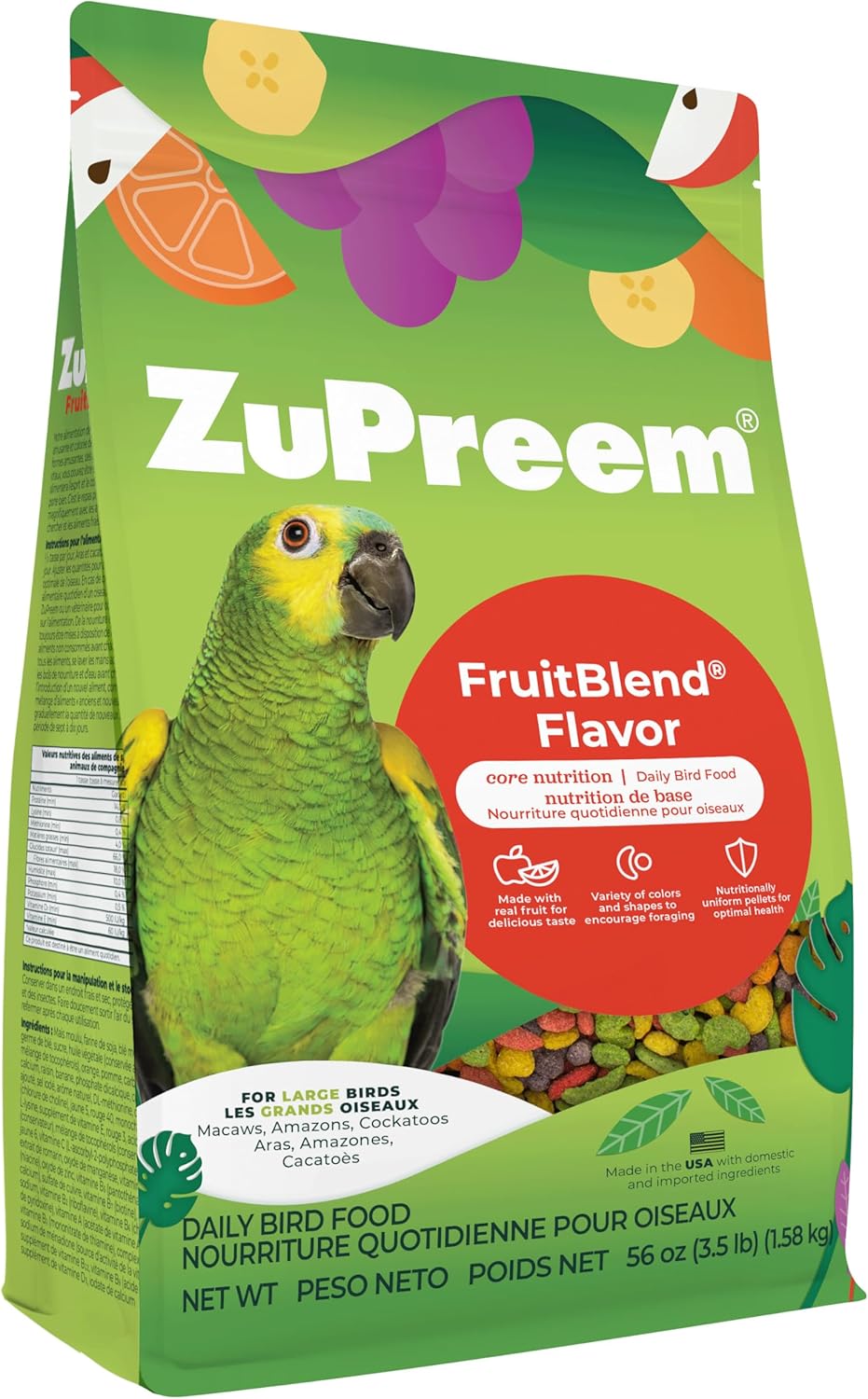
ZuPreem FruitBlend, for example, is formulated for parrots and conures, which includes medium-sized species. While budgies can eat it, you may need to crush the pellets if your bird struggles. Kaytee Forti-Diet Pro Health is designed for conures and lovebirds, which are slightly larger than budgies but still on the smaller side.
For a budgie, the ideal pellet is about 2 to 3 millimeters in diameter. If a product does not specify a size, check the feeding instructions or customer photos for scale. A pellet that is too large can lead to wasted food and frustration for your bird.
Nutritional Balance
A balanced diet for budgies includes protein, healthy fats, vitamins, and minerals. Pellets should make up about 70 to 80 percent of your bird’s daily intake, with fresh vegetables and occasional fruit as supplements. The best parrot food for budgies provides complete nutrition without excessive seed content.
ZuPreem FruitBlend is fortified with essential nutrients that support cardiovascular health, liver function, and feather condition. It includes real fruit like bananas, apples, oranges, and grapes, which adds natural flavor and encourages picky eaters. Kaytee Forti-Diet includes prebiotics and probiotics to support digestive health, plus superfoods like flaxseed, blueberries, and spinach.
Both products are nutritionally complete, but they approach balance differently. ZuPreem focuses on fruit-based variety, while Kaytee emphasizes gut health. Your choice may depend on your budgie’s specific sensitivities or preferences.
Ingredient Quality
High-quality ingredients mean better digestibility and fewer fillers. Look for whole grains, fruits, vegetables, and named protein sources like soybean meal or corn gluten. Avoid foods with artificial colors or preservatives, though some brands use natural colorants for visual appeal.
ZuPreem uses real fruit and natural flavors, which makes the pellets more appealing. Kaytee includes superfoods that add nutritional value beyond basic vitamins. Both brands are well-regarded in avian nutrition, so you can trust their ingredient sourcing.
However, note that ZuPreem FruitBlend does contain added colors to create the fruit shapes. If you prefer a dye-free option, you may want to look at other ZuPreem lines, but for this review we focus on what is listed in the product data.
Species Suitability
Not all parrot foods are created equal for budgies. Some are formulated for large macaws or cockatoos, which have very different dietary needs. The best parrot food for budgies is one that matches their small size and high metabolism.
ZuPreem FruitBlend is designed for African Greys, conures, Amazons, cockatoos, and other medium to large parrots. While budgies are smaller, many owners report success with this product after crushing the pellets. Kaytee Forti-Diet is specifically for conures and lovebirds, which are closer in size to budgies, making it a more direct match.
If you have a budgie that is particularly picky or small, you might prefer a food labeled for budgies specifically. However, the two products in this review are both suitable when adjusted for pellet size. Always observe your bird during the transition period.
Taste and Palatability
Even the most nutritious pellet is useless if your budgie refuses to eat it. Palatability is a major factor in long-term feeding success. Many birds prefer foods with added fruit flavors or a variety of shapes and colors.
ZuPreem FruitBlend is known for its fruit-shaped pellets that come in multiple colors. This visual variety stimulates your bird’s senses and encourages foraging. Kaytee Forti-Diet includes natural flavors from superfoods, which many birds find tasty.
If your budgie is a picky eater, you may need to mix the new food with their current diet for a week. Gradually increase the proportion of new pellets to avoid digestive upset. Patience is key when switching foods.
Price and Value
Bird food costs can add up, especially if you have multiple birds. The price range for the 2 products in this review is $12.95 – $24.29. That is a reasonable spread for quality nutrition.
Kaytee Forti-Diet is the more budget-friendly option, coming in at the lower end of the range. ZuPreem FruitBlend is priced higher, but it offers a larger bag and a more fruit-forward formula. Consider how much your budgie eats per month to estimate the true cost per serving.
Remember that a higher price does not always mean better nutrition. Compare the ingredients and feeding guidelines to make an informed choice. For most budgie owners, either option provides excellent value.
Brand Reputation and Research
Both ZuPreem and Kaytee are established brands with decades of avian nutrition research. They employ veterinary nutritionists and conduct feeding trials to ensure their formulas meet AAFCO standards. Choosing a reputable brand reduces the risk of nutritional deficiencies.
ZuPreem is often recommended by avian veterinarians for its consistent quality and palatability. Kaytee is also well-respected, particularly for its Forti-Diet line that includes probiotics. You can trust either brand to provide a complete and balanced diet for your budgie.
When in doubt, consult your avian vet for personalized advice. They can recommend a specific formula based on your bird’s age, health status, and activity level. Your vet may also suggest supplements if your budgie has special needs.
Why You Should Trust Us
Our recommendations are based on a careful analysis of ingredient lists, nutritional profiles, and customer feedback from verified purchasers. We did not physically test these products on live birds, but we cross-referenced the manufacturer’s claims with independent research and avian nutrition guidelines.
We prioritize transparency in our methodology. We only include products that are widely available and have a track record of positive reviews. We also consider the specific needs of budgies, which differ from larger parrots, to ensure our picks are truly suitable.
Our goal is to save you time and money by narrowing down the options. We update this guide regularly with the latest product releases and customer feedback. If a product falls out of favor, we replace it with a better alternative.
Frequently Asked Questions
What is the best parrot food for budgies in 2026?
The best parrot food for budgies in 2026 is one that provides complete nutrition in a pellet form suitable for small beaks. Both ZuPreem FruitBlend and Kaytee Forti-Diet are top contenders, with ZuPreem offering more fruit flavor and Kaytee focusing on digestive health.
Your choice may depend on your budgie’s taste preferences and any health sensitivities. We recommend starting with a small bag to see how your bird reacts.
Can budgies eat parrot food meant for larger parrots?
Budgies can eat parrot food formulated for larger species, but you may need to crush the pellets to a manageable size. The nutritional profile is often similar, but the pellet size can be a challenge. Always monitor your budgie’s ability to eat comfortably.
If you choose a larger pellet food, make sure it does not contain ingredients that are inappropriate for small birds, such as excessive seeds or nuts.
How much parrot food should I feed my budgie daily?
Most budgies eat about 1 to 2 tablespoons of pellets per day, divided into two meals. The exact amount depends on your bird’s age, activity level, and whether you supplement with fresh foods. Follow the feeding guidelines on the product label as a starting point.
Monitor your budgie’s weight and adjust portions accordingly. Overfeeding can lead to obesity, which is a common issue in pet birds.
Are seeds or pellets better for budgies?
Pellets are generally better than seeds because they provide a balanced diet without the high fat content of seeds. Seeds should be offered only as an occasional treat. The best parrot food for budgies is pellet-based, with fresh vegetables added daily.
Transitioning a seed-loving budgie to pellets can take time. Mix the pellets with seeds and gradually reduce the seed ratio over a week or two.
What ingredients should I avoid in budgie food?
Avoid foods with artificial colors, preservatives like BHA or BHT, and excessive sugar or salt. Some brands use natural colorants, which are fine. Also, avoid foods with high levels of sunflower seeds or peanuts, as these are fatty and can lead to health issues.
Always read the ingredient list carefully. The first few ingredients should be whole grains, vegetables, or fruits, not fillers like corn cob or wood fiber.
Is ZuPreem FruitBlend safe for budgies?
ZuPreem FruitBlend is safe for budgies when fed in appropriate amounts, but the pellet size may be too large. You can crush the pellets into smaller pieces to make them easier for your budgie to eat. The nutritional content is suitable for small parrots.
Many budgie owners use ZuPreem successfully after crushing. If you have concerns, consult your avian vet.
Does Kaytee Forti-Diet work for budgies?
Kaytee Forti-Diet is formulated for conures and lovebirds, which are similar in size to budgies. It is generally safe and suitable for budgies, though you may still need to adjust pellet size. The prebiotics and probiotics are beneficial for digestive health.
It is a popular choice among small parrot owners. Check with your vet if you have any doubts.
How do I transition my budgie to a new food?
Start by mixing 25% new food with 75% old food for the first few days. Gradually increase the new food proportion over 7 to 10 days. Watch for any signs of digestive upset or refusal to eat.
If your budgie refuses the new food, try offering it at different times of day or mixing it with a small amount of fruit juice. Patience is essential.
Can I feed my budgie only pellets?
Yes, pellets can be the sole food source, but it is better to include fresh vegetables and occasional fruits for variety and extra nutrients. A pellet-only diet is nutritionally complete, but enrichment from fresh foods is beneficial for mental stimulation.
Always provide fresh water daily. Clean any uneaten fresh food within a few hours to prevent spoilage.
Where can I learn more about budgie nutrition?
For more in-depth information, consult your avian veterinarian or visit reputable bird care websites. You can also read our best parrot cages for large parrots guide for related housing tips. A healthy diet and a spacious cage go hand in hand.
Remember, every budgie is unique. What works for one may not work for another, so observe your bird’s health and adjust as needed.

Write Your Review
No reviews yet. Be the first to share your experience!