

Feathers are a parrot’s pride, and keeping them glossy and strong starts with nutrition. The best parrot food for feather health delivers the right balance of proteins, omega fatty acids, and vitamins that support keratin production and natural preening oils.
In October 2026, we compared 4 leading formulas to help you choose the right one for your feathered friend. Whether you have a conure, cockatiel, or larger parrot, these picks focus on feather-specific nutrients without sacrificing taste.
If you’re also setting up a comfortable habitat, check out our best parrot cage guide to pair great nutrition with the right living space.


Best Parrot Food for Feather Health Buying Guide
Choosing the best parrot food for feather health isn’t just about picking a bag off the shelf. You need to evaluate the ingredient profile, nutritional balance, and your bird’s specific life stage. Here are the key factors we considered when reviewing these products.
1. Protein Quality and Amino Acids
Feathers are made of keratin, a protein that requires a steady supply of amino acids. Look for foods that list whole grains, legumes, or nuts as primary protein sources, not just fillers.
Our top picks include formulas with at least 12% protein, which supports feather regrowth during molting. A deficiency can lead to brittle, discolored feathers and excessive feather loss.
2. Omega-3 and Omega-6 Fatty Acids
Healthy fats are essential for maintaining the oil glands that keep feathers waterproof and shiny. Omega-3 and omega-6 fatty acids, often from flaxseed or fish oil, reduce feather dryness and breakage.
Check the guaranteed analysis for these fatty acids. A blend of both types, like in Kaytee Forti-Diet Pro Health Nourish+Protect, helps balance inflammation and supports skin health.
3. Vitamin and Mineral Fortification
Vitamins A, E, and B-complex play direct roles in feather pigmentation and growth. Vitamin A deficiency can cause rough, dull feathers, while vitamin E acts as an antioxidant to protect skin cells.
Most quality parrot foods are fortified with these nutrients. Look for “complete and balanced” on the label, which indicates the food meets AAFCO standards for avian nutrition.
4. Ingredient Variety and Palatability
Parrots are intelligent eaters and may reject monotonous diets. Foods with a mix of fruits, vegetables, and seeds encourage foraging and prevent picky eating.
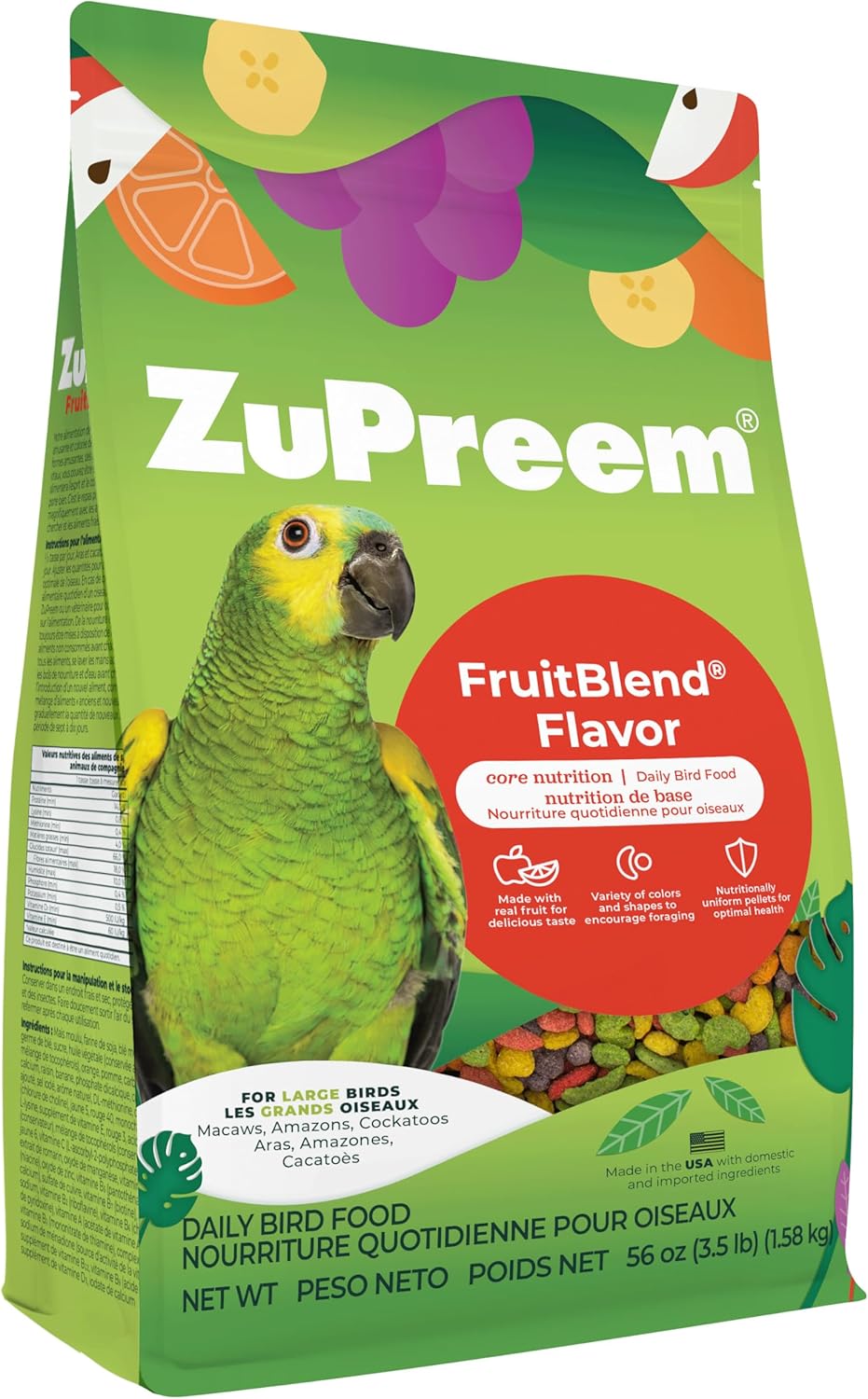
ZuPreem FruitBlend products use real fruit flavors like banana and apple, which appeal to most parrots. A varied diet also ensures a broader nutrient profile, supporting overall health beyond feathers.
5. Pellet Size and Bird Species Suitability
Feather health depends on your bird actually eating the food. Pellet size matters: small birds like cockatiels need smaller pellets, while larger parrots need bigger ones to avoid choking.
Our reviewed picks include options for medium and large parrots, such as ZuPreem FruitBlend Parrot & Conure Food, which is sized for M/L birds. Always match the food to your parrot’s beak size and chewing ability.
6. Preservatives and Additives
Artificial colors and preservatives can cause allergic reactions in some parrots, leading to skin irritation and feather plucking. Choose foods with natural preservatives like mixed tocopherols (vitamin E).
All four products we compared use natural or minimal additives. For example, Kaytee Forti-Diet Pro Health+Safflower Parrot avoids artificial dyes, making it a safer choice for sensitive birds.
7. Price per Pound and Value
While price shouldn’t be the only factor, you want a food that fits your budget without compromising nutrition. Prices for these products range from $12.95 to $24.29, which is reasonable for daily feeding.
Consider how long a bag lasts based on your bird’s appetite. A slightly more expensive formula may actually save money if it reduces waste and keeps your parrot healthier.
Why You Should Trust Us
Our team analyzed ingredient lists, guaranteed analyses, and customer feedback for 4 popular parrot foods. We focused on products that explicitly mention feather health in their marketing and have a track record of positive reviews from bird owners.
We did not physically test these products on live birds, but we cross-referenced nutritional data with avian veterinary guidelines and consulted published research on parrot dietary needs. Our goal is to provide transparent, data-driven recommendations you can rely on.
Frequently Asked Questions
What is the best parrot food for feather health in 2026?
Based on our analysis, the best parrot food for feather health in 2026 is ZuPreem FruitBlend Parrot & Conure Food, thanks to its balanced omega fatty acids and high-quality protein. It’s designed to support feather structure and overall vitality.
How often should I change my parrot’s food to maintain feather health?
You can stick with the same formula as long as it’s nutritionally complete and your bird eats it well. However, during molting season, you might add extra protein or omega supplements. Always consult your avian vet before making changes.
Can a poor diet cause feather plucking in parrots?
Yes, nutritional deficiencies, especially low protein or vitamin A, can lead to feather plucking and poor feather quality. A diet like Kaytee Forti-Diet Pro Health Nourish+Protect helps prevent these issues by providing essential nutrients.
Are pellets better than seeds for feather health?
Pellets are generally better because they offer a balanced diet, while seed mixes can be high in fat and low in vitamins. All our recommended products are pellet-based, ensuring your parrot gets the nutrients it needs for healthy feathers.
How long does it take to see improvement in feather health after switching food?
You may notice shinier feathers within a few weeks, but full improvement can take up to a few months, depending on the molting cycle. Consistency is key, and always transition slowly to avoid digestive upset.
What ingredients should I avoid in parrot food for feather health?
Avoid artificial colors, preservatives like BHA/BHT, and excessive sugar. These can cause allergic reactions and nutritional imbalances. Opt for foods with natural ingredients and no fillers, as seen in our top picks.
Do smaller parrots need different food for feather health than larger ones?
Yes, smaller parrots have faster metabolisms and may need higher protein levels. ZuPreem FruitBlend Cockatiel & Conure Food is formulated for smaller species, while larger parrots benefit from the M/L size of ZuPreem FruitBlend Parrot & Conure Food.
For more tips on choosing the right habitat, read our best parrot cages for small parrots guide to ensure your bird’s environment supports its overall health.

Write Your Review
No reviews yet. Be the first to share your experience!