

Taking your bird out of the house used to require lugging a heavy iron cage that limited mobility and stressed your pet. Today, a high quality best parrot backpack carrier allows you to share outdoor adventures while keeping your bird safe from predators and escape. Whether you are heading to the vet or hiking a local trail, these portable solutions provide the necessary ventilation and visibility your pet needs. We have analyzed 4 leading options for October 2026 to ensure you find a model that balances comfort with durability.
Before you head out on your first trip, it is important to consider how your bird will react to a new environment. Many owners find that pairing a new carrier with some best natural parrot treats helps create a positive association with travel. Choosing the right carrier is not just about aesthetics; it is about maintaining your bird’s sensitive respiratory health and providing a stable perch for long journeys.


Pros
- Excellent heat protection
- Breathable mesh ventilation
- Calming cover flaps
- Two perches reduce foot fatigue
- Lightweight and comfortable to carry
Cons
- Not for large parrots like cockatoos
- Maximum bird weight 2.2 pounds
- Single feeding cup included
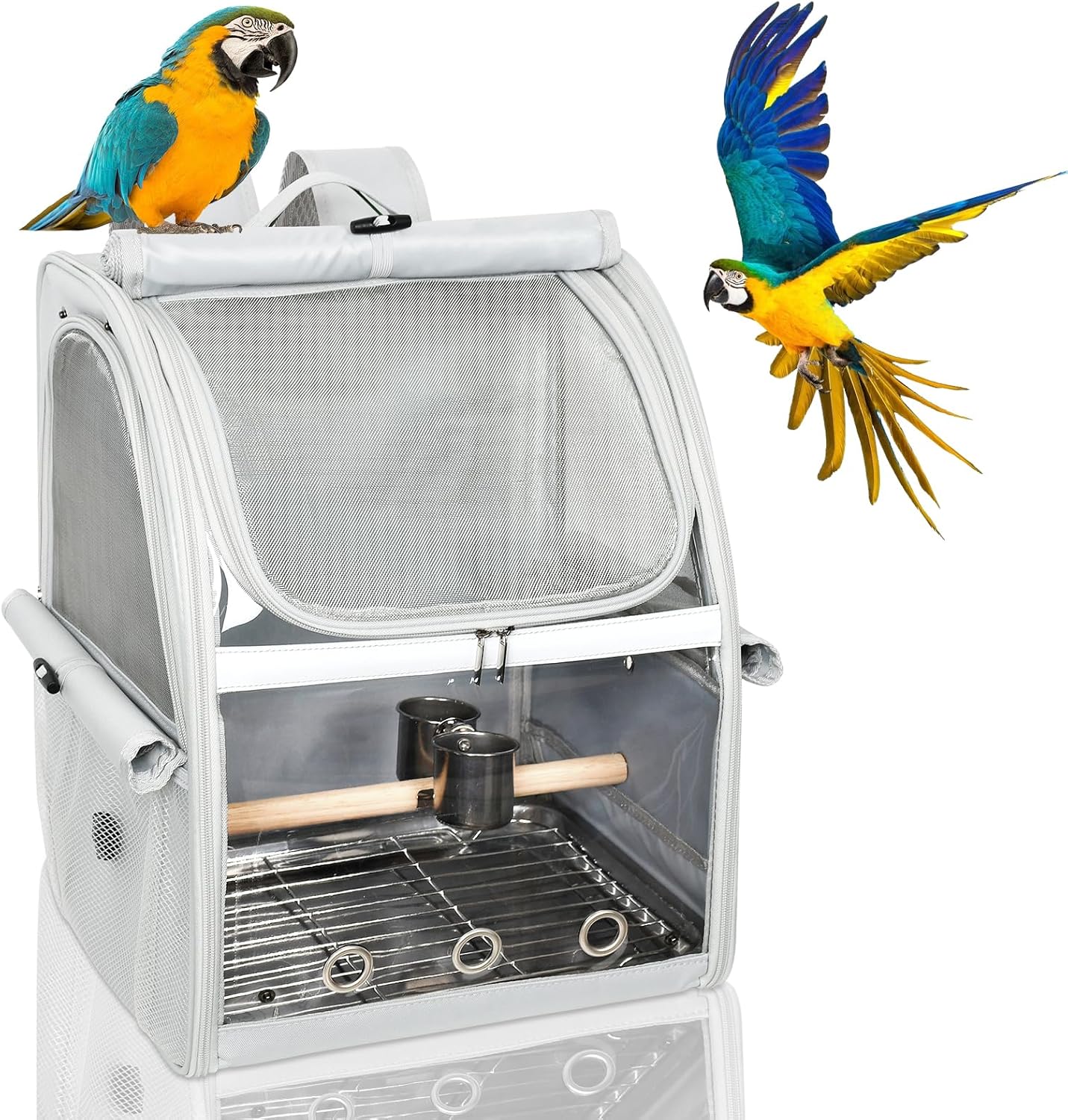

Pros
- Excellent airflow for respiratory health
- Tall design protects tail feathers
- Calming enclosed space for travel
- Removable stainless steel tray for easy cleaning
- Lightweight with comfortable backpack straps
Cons
- Not for large macaws or chewers
- Some parrots may need time to adjust
- Limited color options
Ventilation and Airflow Quality
Birds have incredibly sensitive respiratory systems that require a constant supply of fresh air. When evaluating a best parrot backpack carrier, look for models that feature multi sided mesh panels rather than just small air holes. Stainless steel mesh is often preferred over plastic because it is bite resistant and allows for maximum oxygen exchange during active movement.
Proper airflow also helps regulate the internal temperature of the backpack. In the summer months, a carrier with poor ventilation can quickly turn into a heat trap, putting your bird at risk of heatstroke. High quality carriers often use white mesh or reflective materials to bounce sunlight away from the interior, keeping the environment significantly cooler than standard PVC models.
Size and Tail Room
The internal dimensions of the carrier must match your bird’s physical size to prevent feather damage. For species with long tail feathers, such as Macaws or certain Cockatoos, a vertical orientation is essential. The carrier should be tall enough that the bird can stand in a natural posture without its tail pressing against the bottom tray or the mesh walls.
We recommend measuring your bird from the top of the head to the tip of the tail before making a purchase. A carrier that is too small will cause stress and physical discomfort, while one that is too large might not provide enough stability during transport. If you are training a younger bird to enjoy travel, you might also look into the best parrot treats for training to reward them for staying calm in their new space.
Perch Stability and Adjustability
A bird spends the entire journey standing, so the quality of the perch is paramount. Look for backpacks that offer adjustable perch heights, allowing you to customize the standing position based on your bird’s eye level and tail length. Natural wood or rope perches provide a better grip than smooth plastic, reducing foot fatigue during bumpy walks.
Some premium carriers include dual perches, which allow the bird to shift its weight and change its grip. This is especially helpful for medium to large parrots who may be in the carrier for several hours. Ensure the perch is securely fastened to the sides of the backpack so it does not slide or rotate while you are walking.
Light Control and Privacy Flaps
While many birds enjoy seeing the scenery, new environments can be overwhelming. A best parrot backpack carrier with fabric shade covers or roll up flaps provides a necessary retreat for a stressed pet. Being able to block out visual stimuli can help a bird calm down if they become frightened by loud noises or unfamiliar animals during your outing.
These covers also serve a dual purpose by blocking direct UV rays and harsh sunlight. By controlling the amount of light entering the carrier, you can create a more predictable and soothing environment. This feature is particularly useful when transitioning from a bright outdoor setting to a dimly lit indoor area like a veterinarian’s office.
Cleaning and Maintenance
Hygiene is a major factor in long term bird health. The best carriers feature removable stainless steel trays that catch droppings and food debris. These trays should be easy to slide out without having to dismantle the entire backpack or remove the bird, which minimizes mess and saves time after every trip.
Check the fabric components of the backpack as well. Water resistant materials that can be wiped down are superior to porous fabrics that absorb odors. Keeping the carrier clean ensures that your bird is not exposed to bacteria or mold, which is just as important as feeding them the best pellets for parrots for their internal health.
Why You Should Trust Us
Our team specializes in avian lifestyle products, focusing on the intersection of pet safety and owner convenience. We analyze technical specifications, material safety data, and real world feedback from parrot owners to determine which products truly stand up to daily use. We do not accept free products in exchange for positive reviews, ensuring our recommendations remain unbiased.
We understand that a parrot is a long term companion, and their safety is your primary concern. By comparing ventilation rates, weight distribution for the wearer, and bird comfort features, we provide a comprehensive look at the best parrot backpack carrier market. Our goal is to provide the data you need to make an informed decision for your feathered family member.
Final Thoughts
Choosing the right travel gear can transform your relationship with your bird, opening up a world of shared experiences. For those seeking the best overall balance of features, we highly recommend the Birds Day Bird Carrier Backpack. Its focus on heat protection and respiratory health makes it a standout choice for most small to medium species.
If you are looking for the best value without sacrificing safety, the Texsens Bird Carrier Backpack offers excellent ventilation and a lightweight design at an accessible price point. For owners of larger birds like Cockatoos or African Greys, the Birds Day Cockatoo Carrier Backpack-Parrot Travel provides the necessary height and tail room to ensure a comfortable journey.
Finally, for those who prioritize durability and bite resistance, the Bird Backpack Carrier,Stainless Steel Mesh Window is a fantastic option. No matter which model you choose, remember to introduce the carrier slowly and keep your bird’s favorite snacks nearby to make every trip a success.
FAQs
How do I get my bird used to a best parrot backpack carrier?
Start by leaving the carrier open in their play area so they can explore it at their own pace. Place some best store bought parrot treats inside to encourage them to enter voluntarily. Gradually increase the time they spend inside with the door closed before attempting your first outdoor walk.
Is a transparent bubble or a mesh window better for a parrot?
While bubble backpacks offer a wide view, they can trap heat and lack sufficient ventilation. Mesh windows, especially those made of stainless steel, are generally safer for parrots because they allow for better airflow and prevent the greenhouse effect that can occur in direct sunlight.
Can I use a best parrot backpack carrier for long distance travel?
Yes, but you must ensure there is enough room for food and water cups. Many carriers include D rings for hanging toys and accessories, making them suitable for longer trips as long as you provide regular breaks and monitor your bird’s stress levels throughout the journey.
What is the most durable material for a bird carrier in 2026?
For the window sections, 304 stainless steel mesh is the most durable choice as it is resistant to the powerful beaks of parrots. For the main body, high density Oxford fabric or similar heavy duty textiles provide a good balance of strength and lightweight portability.
How do I clean the interior of the backpack?
Most quality carriers feature a removable bottom tray that can be washed with bird safe soap and water. The fabric interior should be wiped down with a damp cloth. Avoid using harsh chemicals or scented cleaners, as parrots have very sensitive lungs and can be harmed by strong fumes.
Are these backpacks safe for large Macaws?
Standard backpack carriers are usually designed for small to medium parrots. While some larger models exist for Cockatoos, a full sized Macaw typically requires a specialized, extra large carrier to accommodate their massive wingspan and tail length without causing injury.
Do I need a harness if my bird is in a best parrot backpack carrier?
While the carrier is secure, some owners prefer to use a harness as an extra layer of safety when opening the bag. However, never leave a harness on a bird while it is unattended inside the carrier, as it could become tangled in the perch or mesh.


Write Your Review
No reviews yet. Be the first to share your experience!