

If you travel with a bird, the right carrier can make the difference between a calm outing and a stressful one. The best parrot travel cages support short vet visits, secure car rides, and light outdoor use without adding unnecessary bulk.
In this guide to best parrot travel cages, we focus on comfort, security, airflow, and cleaning convenience across 10 options. If you want more bird care advice after this, our parrot training guide for beginners is a helpful next read.






Size and bird fit
Size is the first decision because a carrier that is too small can stress your bird, while one that is too large can feel unstable during movement. Measure your bird from beak to tail and compare that length with the interior space, then leave room for a perch, bowls, and a natural turning radius.
Small parrots often do well in compact travel cages, but medium birds need extra headroom and a wider base for balance. If you are comparing designs, the carrier should let your bird stand upright, turn around, and grip securely without brushing against the sides every time you stop.
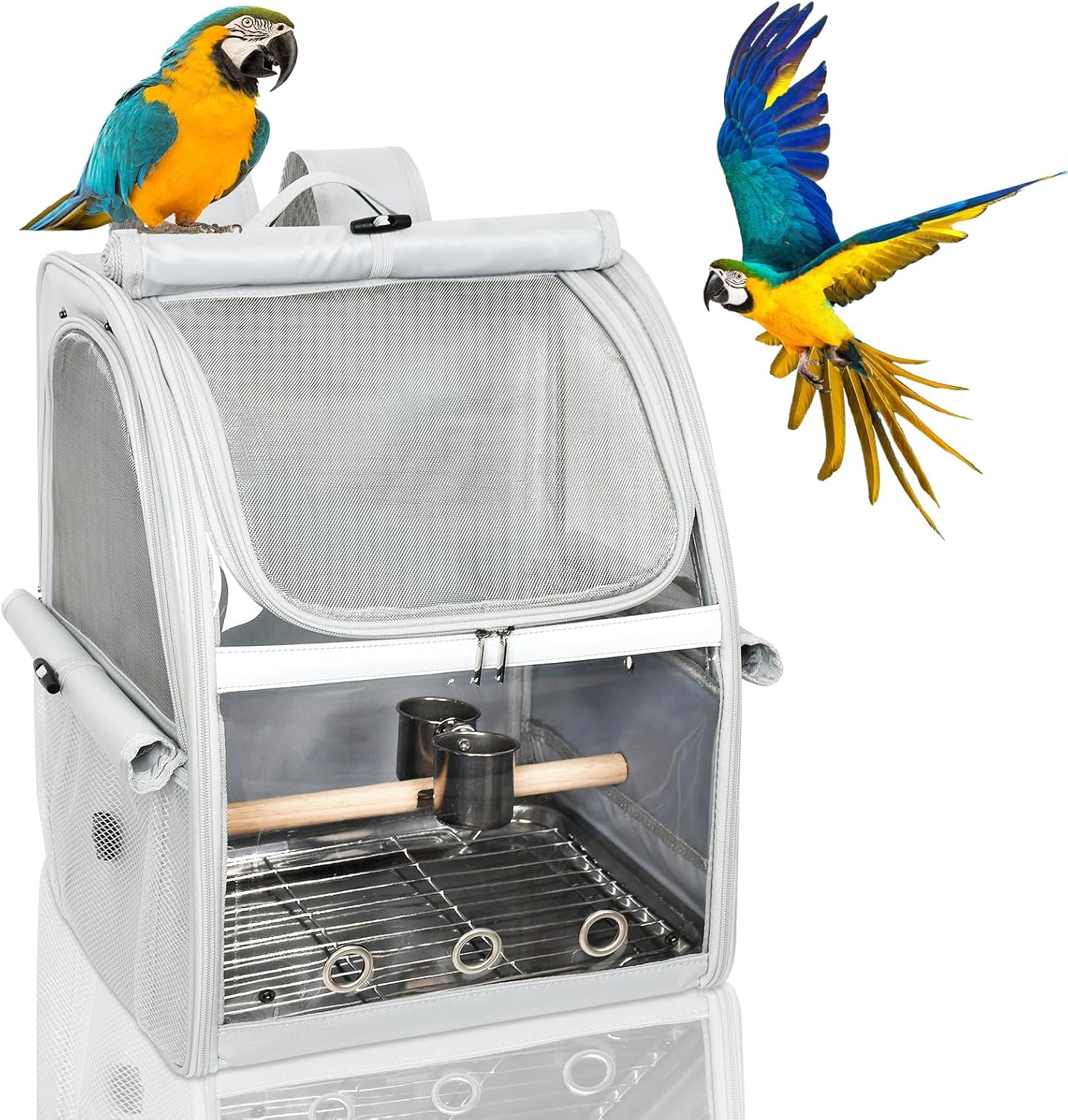
A useful rule is to prioritize usable interior space over external footprint. Backpack styles such as the bird-friendly care resources on our site can work well for short walking trips, while rigid cages usually suit car travel better.
Ventilation and visibility
Good airflow matters because parrots can overheat quickly in enclosed spaces. Mesh panels, open bar spacing, and multiple ventilation points help reduce heat buildup while still keeping your bird protected.
Visibility also affects stress. Many birds settle better when they can see their surroundings, but some feel calmer with partial shade, especially during car rides or bright outdoor walks.
For that reason, carriers with adjustable covers or shaded panels offer more flexibility than fixed designs. If you travel in warm weather, ventilation should matter more than decorative features or extra storage pockets.
Security, locks, and escape prevention
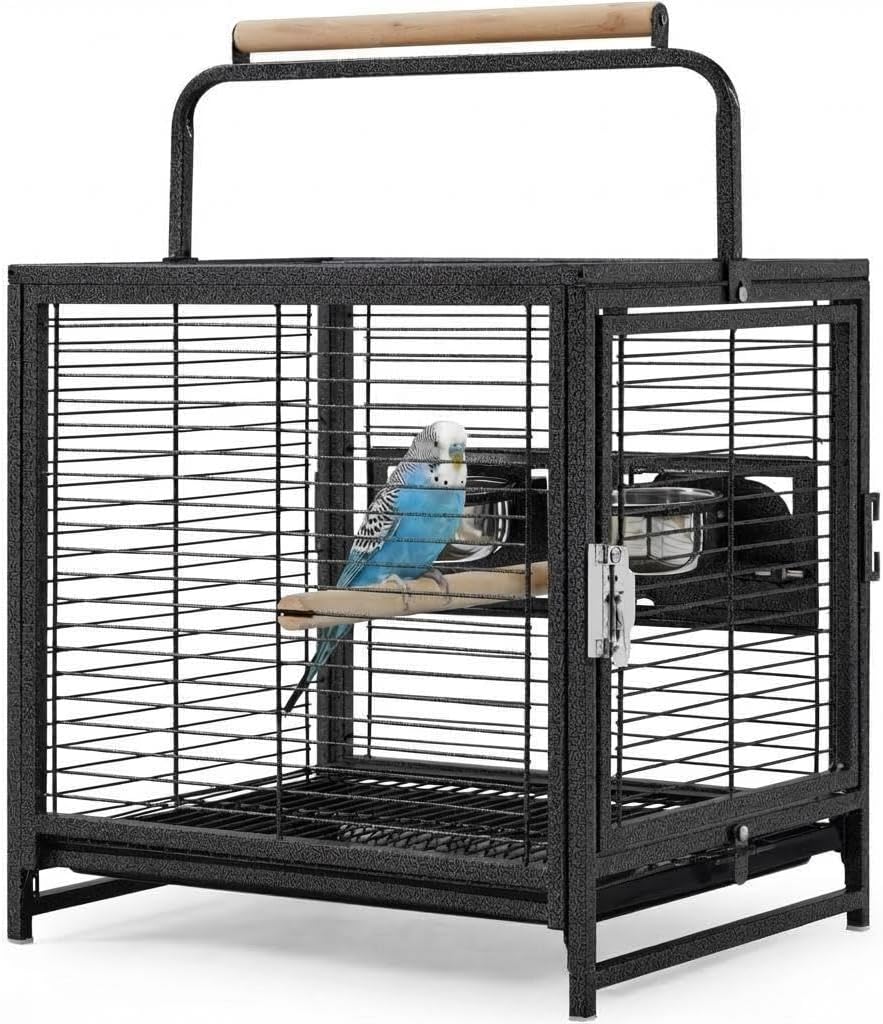
Parrots are clever, fast, and often determined to test weak latches. A good travel cage should use secure door locks, feeder-door closures, and stable hardware that stays shut when the carrier shifts in a vehicle.
Seatbelt compatibility is another important safety detail for car travel. Models with hooks, brackets, or straps stay steadier during turns and sudden braking, which can reduce jostling and panic.
If your bird is a known chewer, materials matter just as much as the lock design. Stainless steel and powder-coated metal are usually better choices than flimsy frames when you want a carrier that holds up over time.
Material and durability
Durability shapes how often you replace a travel cage, especially if you use it for vet appointments and routine errands. Metal frames, rust-resistant coatings, and chew-resistant surfaces usually outlast soft-sided carriers in busy households.
Stainless steel is a strong option when you want a cleaner surface and less worry about chipping. Powder-coated steel can also be dependable, but the finish should feel smooth and well applied so beaks and feet do not catch on rough edges.
| Material | Strength | Best use |
|---|---|---|
| Powder-coated steel | Solid for short trips | Vet visits and occasional travel |
| 304 stainless steel | Very durable and chew resistant | Frequent use and tougher birds |
| Fabric backpack mesh | Light and portable | Walking trips and light outings |
Cleaning and daily convenience
Easy cleaning should be near the top of your checklist because travel cages collect seed hulls, droppings, and spilled water fast. Removable trays, grates, and wide access doors help you reset the carrier quickly after each trip.
Fold-flat designs also help if you store the cage between outings. If you are short on space, a model that packs away quickly may be more useful than one with extra accessories you rarely use.
For more guidance on bird behavior during handling and transitions, our parrot recall training can help you build calmer movement habits around travel time.
Perches, food access, and comfort during travel
Travel cages work better when the perch feels stable and the feeding system is easy to manage. A perch that doubles as a handle or play top can make transfers smoother, while secure bowls reduce spills in the car.
Think about how your bird behaves in motion. Some parrots need a simple perch and enclosed feel, while others benefit from a more open setup with enough room to stay balanced and alert.
When comparing the best parrot travel cages, the most practical models are the ones that balance all of these needs without making the cage difficult to carry. If you want a more handling-focused companion read, our guide to why parrots bite can help you avoid stress triggers during transport.
Why You Should Trust Us
We evaluate each option using product specs, build materials, bird size guidance, and practical travel features. That lets us compare carriers on the details that actually matter for safety, comfort, and ease of use.
Our approach is transparent, and we avoid guessing about performance that is not supported by the product data. We focus on what the design suggests for real-world travel, so you can choose with more confidence.
Final Thoughts
For a best overall pick, we like Prevue Pet Products Playtop Travel Carrier because it combines secure transport, a playtop perch, and dependable road-ready construction. It is a strong fit when you want one carrier that feels sturdy, organized, and suitable for regular use.
For best value, Texsens Bird Carrier Backpack stands out with a lightweight backpack format and breathable design that works well for shorter outings. For a specific-use pick, 304 Stainless Steel Travel Bird Cage is the one we would choose for chew-prone birds that need a tougher, foldable metal carrier.
If you are still narrowing things down, compare the travel style you use most often with the bird’s size and temperament. You can also revisit our parrot care and training resources for more practical bird-owner advice after the purchase.
FAQs
What makes best parrot travel cages different from regular bird cages?
Travel cages are built for portability, short-term comfort, and secure transport, while regular cages are usually designed for long-term living. The best parrot travel cages are easier to carry, easier to clean, and often include travel-friendly safety features.
How do I choose the right size among best parrot travel cages?
Start with your bird’s body length and species size, then make sure the carrier allows standing, turning, and stable perching. If your bird is between sizes, choose the roomier option as long as it still feels secure during movement.
Are backpack carriers safe for parrots during short trips?
Backpack carriers can be safe for short trips when they offer solid ventilation, a secure perch, and stable closures. They work best for calm travel, walking, and light errands, not for long rides where a rigid cage may be steadier.
Which material is better for the best parrot travel cages in 2026?
304 stainless steel is often the strongest choice for birds that chew or for owners who want the most durable surface. Powder-coated steel is also a dependable option, especially when you want a more traditional travel cage layout.
Do the best parrot travel cages need a perch?
Yes, a perch helps your bird balance and feel more secure during travel. A stable perch also keeps your parrot off the tray and gives it a familiar place to settle while you move.
How important is ventilation for parrot carriers?
Ventilation is essential because trapped heat and stale air can make travel stressful quickly. Good airflow also helps reduce humidity, which matters when your bird is inside the carrier for more than a few minutes.
Can I use best parrot travel cages for vet visits?
Yes, that is one of their main uses, especially for small parrots and companion birds that travel frequently. A compact cage with secure locks and a removable tray is usually the easiest choice for vet appointments.
What features matter most for car travel?
Look for seatbelt compatibility, stable construction, secure latches, and a design that does not tip easily. Those features help reduce movement inside the car and make the ride feel safer for your bird.
How do I keep my bird calmer in a travel cage?
Keep the setup familiar with a perch, secure bowl placement, and a consistent routine before trips. A partially shaded carrier can also help some birds relax by reducing visual overstimulation.





Write Your Review
No reviews yet. Be the first to share your experience!