

Blueberries don’t usually stay in the bowl for very long around parrots. They’re small enough to roll around, easy to grab, and somehow always seem to catch a curious bird’s attention. Some parrots pop one straight into their beak, while others spend a minute chasing it across the table before deciding it’s actually food. Watching that little bit of hesitation is half the fun.

I’ve always liked keeping a few blueberries in the fridge because they’re easy to share. A quick rinse, a handful in the fruit bowl, and breakfast is ready. They don’t make nearly as much mess as strawberries, and they’re just the right size for many parrots to enjoy without much preparation.
Blueberries are a safe fruit for parrots, and most birds are happy to have them as part of a varied diet. Like any treat, they’re best enjoyed alongside vegetables, pellets, and other fresh foods rather than becoming the main attraction every day. A little variety goes a long way, and parrots seem to appreciate that just as much as we do.
[wpsm_toplist]
Are Blueberries Safe for Parrots?

Blueberries are one of those fruits that fit into a parrot’s food bowl without much fuss. They’re soft, naturally sweet, and just the right size for many birds. Around here, a few blueberries often disappear pretty quickly. Some parrots pick them up and eat them in one go, while others seem more interested in rolling them around first.
A lot depends on the bird. One parrot may love blueberries from the very first day, while another takes a while to warm up to them. That’s nothing unusual. Parrots can be picky, especially with foods they haven’t seen before. Leaving a few berries in the bowl now and then usually works better than trying to persuade them.
I always give blueberries a good rinse before serving them. After that, they can go straight into the bowl. Smaller birds like budgies and lovebirds sometimes find half a berry easier to handle, while larger parrots are perfectly happy with whole ones.
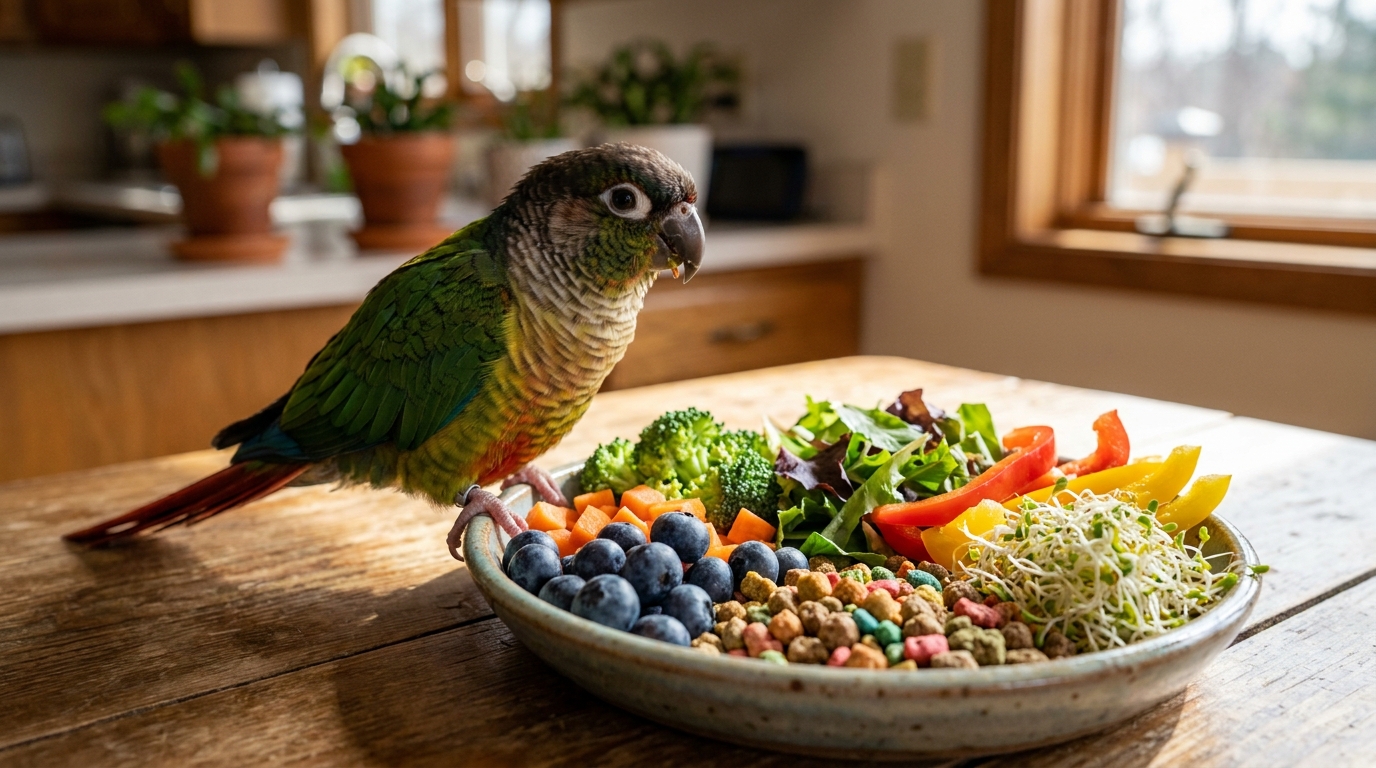
Blueberries aren’t meant to replace the rest of the diet, of course. They sit alongside vegetables, pellets, sprouts, and other fresh foods. That little bit of variety keeps mealtimes interesting, and parrots seem to enjoy having different colors and textures to explore.
One thing that always makes me laugh is the evidence left behind after breakfast. A tiny purple mark on a perch or a faint stain near the food bowl usually tells the story. Somewhere nearby, there’s a very satisfied parrot cleaning blueberry juice from its beak.
Why Blueberries Are Worth Adding to the Bowl
Blueberries usually make their way into my birds’ bowls for the same reason they end up in my own breakfast. They’re fresh, easy to prepare, and full of good nutrients without needing much effort. A quick rinse, a handful in the bowl, and that’s about it.
Their deep blue color comes from natural antioxidants called anthocyanins. Blueberries also contain vitamin C, vitamin K, and a little fiber. According to the USDA, they’re low in calories and made up of about 84% water, which makes them a light, refreshing fruit to add now and then.
I never look at blueberries as something a parrot needs every day. They’re simply one piece of a much bigger picture. Some mornings it’s blueberries, another day it might be chopped apple, papaya, or a few pieces of kiwi. The bowl changes from one day to the next, and the birds seem to enjoy that more than seeing the same fruit every morning.
One thing I’ve noticed is that blueberries rarely last long once they’re discovered. A bird might carry one to its favorite perch, another might squash it before taking a bite, and there’s almost always a tiny purple stain waiting to be cleaned up later. It comes with the territory, and honestly, I wouldn’t have it any other way.
How to Feed Blueberries the Right Way
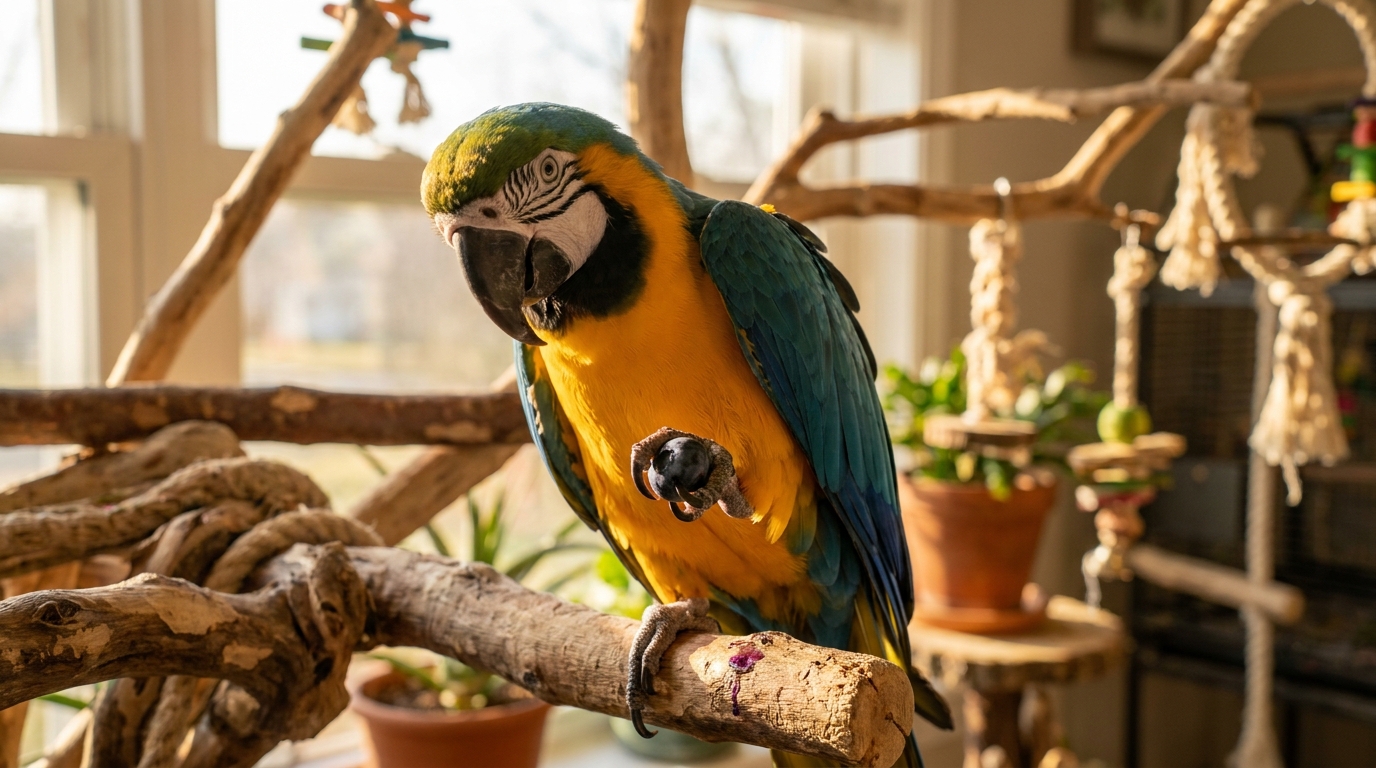
Getting blueberries ready doesn’t take much. I give them a good rinse under running water, check that they’re fresh, and that’s about it. Soft, ripe berries are usually the easiest for parrots to eat. Anything that’s moldy, damaged, or starting to spoil goes straight in the bin.
For larger parrots, I usually leave the berries whole. They enjoy picking them up, turning them around with their feet, and taking small bites. Budgies, lovebirds, and other smaller birds often find half a blueberry easier to manage, especially when they’re still getting used to fresh fruit.
Blueberries don’t need to fill the bowl. A few berries mixed with vegetables, sprouts, pellets, or another fruit work well. The birds still get their favorite treat, but they don’t end up ignoring everything else. I’ve found that mixing foods together works better than serving all the fruit in one pile.
People sometimes ask about frozen blueberries. I let them thaw completely before offering them. Once they’re soft again, the birds eat them just like fresh ones. I stay away from canned blueberries or dried blueberries with added sugar. Fresh fruit has always been the better choice in my house.
Every parrot is a little different. Some finish every blueberry before touching anything else, while others take one bite and move on. After a while, you get a feel for what your own bird enjoys, and feeding them becomes much less about following rules and much more about knowing their habits.
Common Questions About Feeding Blueberries
Can baby parrots eat blueberries?
They can, once they’re fully weaned and eating solid foods on their own. I usually start with a small piece instead of a whole berry. Young birds spend just as much time playing with new food as they do eating it, so don’t be surprised if more ends up on the cage floor than in their stomach.
Can parrots eat frozen blueberries?
Yes, but I always let them thaw first. A frozen berry is hard to bite into, and most parrots don’t seem very interested in food that’s ice cold. Once it’s soft again, they usually treat it no differently from a fresh one.
What about dried blueberries?
I leave those for people. Many dried blueberries sold in stores have added sugar, oils, or preservatives that don’t belong in a parrot’s diet. Fresh berries are a much better choice and are easy to find most of the year.
Do parrots need blueberries?
Not really. A parrot can stay perfectly healthy without ever eating a blueberry. They’re simply another safe fruit to enjoy now and then. What matters much more is offering a good mix of vegetables, pellets, sprouts, and different fruits over time.
My parrot won’t touch blueberries. Should I worry?
Probably not. I’ve had birds ignore a food for weeks, then suddenly decide they loved it. Parrots can be funny that way. I just remove the untouched fruit, try again another day, and let them make up their own minds. Most eventually get curious enough to take that first bite.


Write Your Review
No reviews yet. Be the first to share your experience!