

A pear is one of those fruits that can easily attract a parrot’s attention. It’s soft, juicy, sweet, and easy for a bird to pull apart with its beak. If your parrot comes running over while you’re cutting one for yourself, there’s no need to automatically keep it away.
Yes, parrots can eat fresh pears. A few pieces of ripe pear can be offered as part of a varied diet. Pears also contain plenty of water and provide fiber along with several vitamins and minerals.
There are a couple of things to take care of before the first piece goes into the food bowl, though. Wash the pear well, remove the seeds and core, and cut the flesh into pieces that suit the size of your bird. Pears are naturally sweet, so a small serving is plenty.
[wpsm_toplist]
Can Parrots Eat Pears?
Yes. Fresh, clean pear flesh is safe for parrots when offered in moderation.

Many pet parrots enjoy the soft texture and sweet taste. A Cockatiel may happily hold a little piece with one foot and nibble away at it, while a larger parrot may simply bite off chunks from a larger piece. Smaller birds such as Budgies and Lovebirds should be given smaller pieces that are easy for them to manage.
Pears can also add a little variety to a bird’s diet. They contain dietary fiber, vitamin C, vitamin K, B vitamins, and a good amount of water.
That doesn’t mean a parrot should have a bowl full of pear every day. Fruit is only one part of a healthy diet, and pears contain natural sugars. Too much can add unnecessary calories, while the high water and fiber content may cause loose droppings or an upset stomach in some birds.
The simplest way to serve one is to choose a fresh pear, wash it well, cut it open, and remove the seeds and central core. Then cut a little of the flesh into bite-sized pieces and offer it alongside your bird’s usual food.
And don’t be surprised if your parrot decides the pear is more interesting as a toy than as food. Some birds will eat the whole piece. Others will chew it, drop half of it, and leave you wondering what the point was. That’s pretty normal parrot behavior.
For a bird trying pear for the first time, start with a small piece. Once you know your parrot handles it well, you can occasionally add pear to the rotation with other fruits such as apples, berries, mango, or papaya. A little variety is much more useful than relying on one fruit over and over again
Are Pears Good for Parrots?
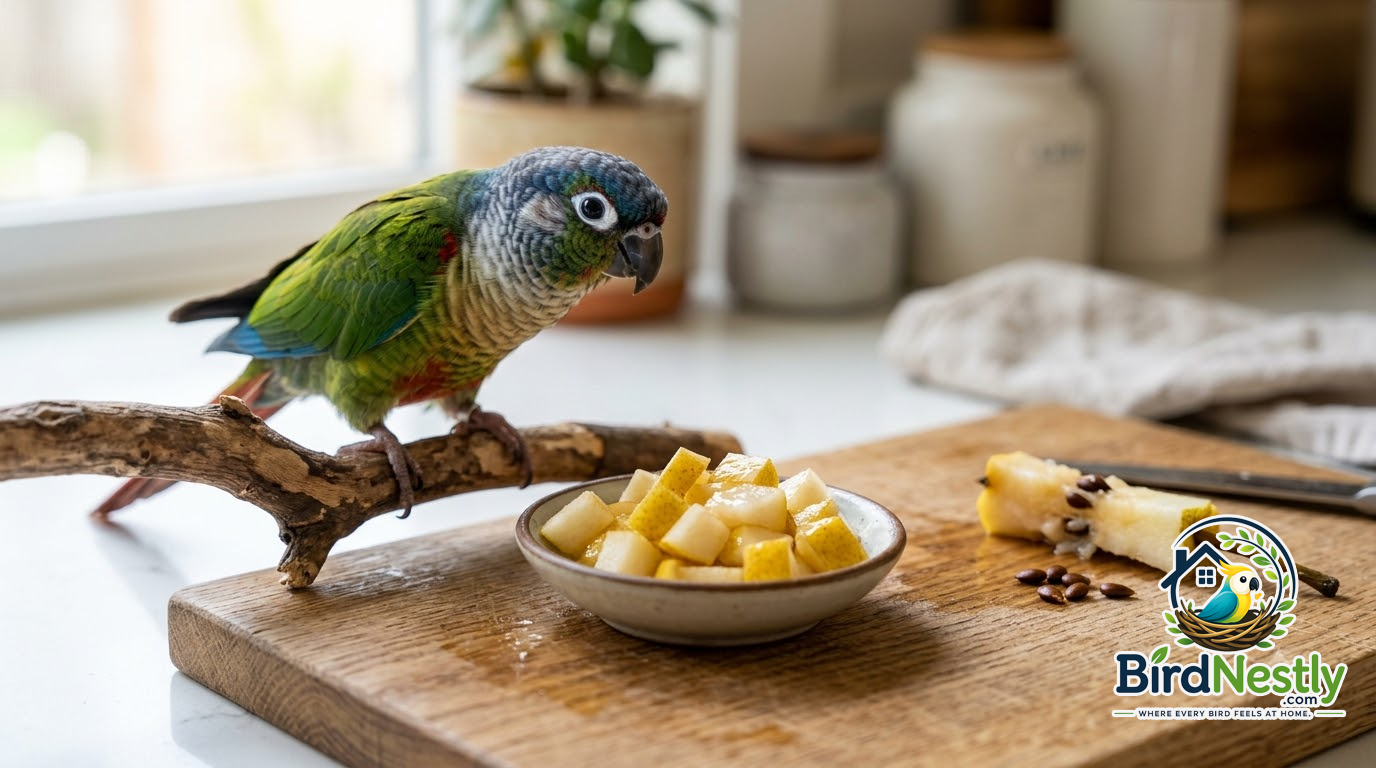
Pears can be a nice change of pace for a parrot that enjoys fresh fruit. They’re juicy and fairly soft when ripe, so most birds have no trouble tearing off little pieces. A pear also brings some fiber, vitamin C, vitamin K, and other nutrients to the bowl.
The high water content is another reason some parrots seem to enjoy pears, especially on a warm day. You may notice your bird taking a bite, squeezing it with its beak, and leaving a little trail of juice behind. That’s just part of the fun when fresh fruit meets a parrot.
Still, pear shouldn’t take over the meal. The fruit contains natural sugar, and your bird gets what it needs from a properly balanced everyday diet. Think of pear as something to add alongside its regular food rather than something to pile into the bowl.
A few pieces are usually enough. You can also switch between different fruits during the week, such as apples, blueberries, mango, or papaya. That way, pear stays a small treat rather than becoming the only fruit your parrot sees.
One thing to watch is how your bird reacts after trying it for the first time. A little change in droppings can happen after eating juicy fruit because pears contain so much water. If your parrot seems unwell or develops persistent digestive problems, stop offering the fruit and speak with an avian veterinarian.
Can Parrots Eat Pear Skin?
Yes, your parrot can eat the skin of a pear, so you don’t have to peel the fruit before offering it. Some birds will happily nibble through the skin, while others will eat the soft part and leave the skin behind. Either way is perfectly fine.
The important part is to wash the pear well before giving it to your bird. Pears can have dirt, wax, or traces of things used during growing and handling on the outside. Give the whole fruit a good rinse under running water and rub the skin gently with your fingers. Once it’s clean, cut the pear open and remove the middle section and all the seeds.
There’s also no need to insist that your parrot eat the skin. If your bird prefers the soft flesh, simply cut away the skin and serve the pieces it likes. A parrot doesn’t need pear skin specifically to have a healthy diet.
Pay attention to the condition of the fruit, too. Don’t give your bird pear that is moldy, fermented, badly bruised, or starting to rot. A fresh, firm-to-ripe pear is a much better choice.
For smaller parrots, cut the fruit into little pieces that are easy to hold and nibble. Larger birds can manage bigger pieces, although cutting the pear yourself makes it much easier to remove the seeds and core completely.
So when you’re preparing a pear for your bird, there’s no complicated trick to it: wash it, cut it, remove the core and seeds, and let your parrot enjoy the fresh flesh and skin if it wants to.
Can Parrots Eat Pear Seeds?
This is where you need to be a little more careful. While the juicy part of a pear is fine for your parrot, the seeds should be removed before you serve it. The same goes for the tough central core around the seeds.
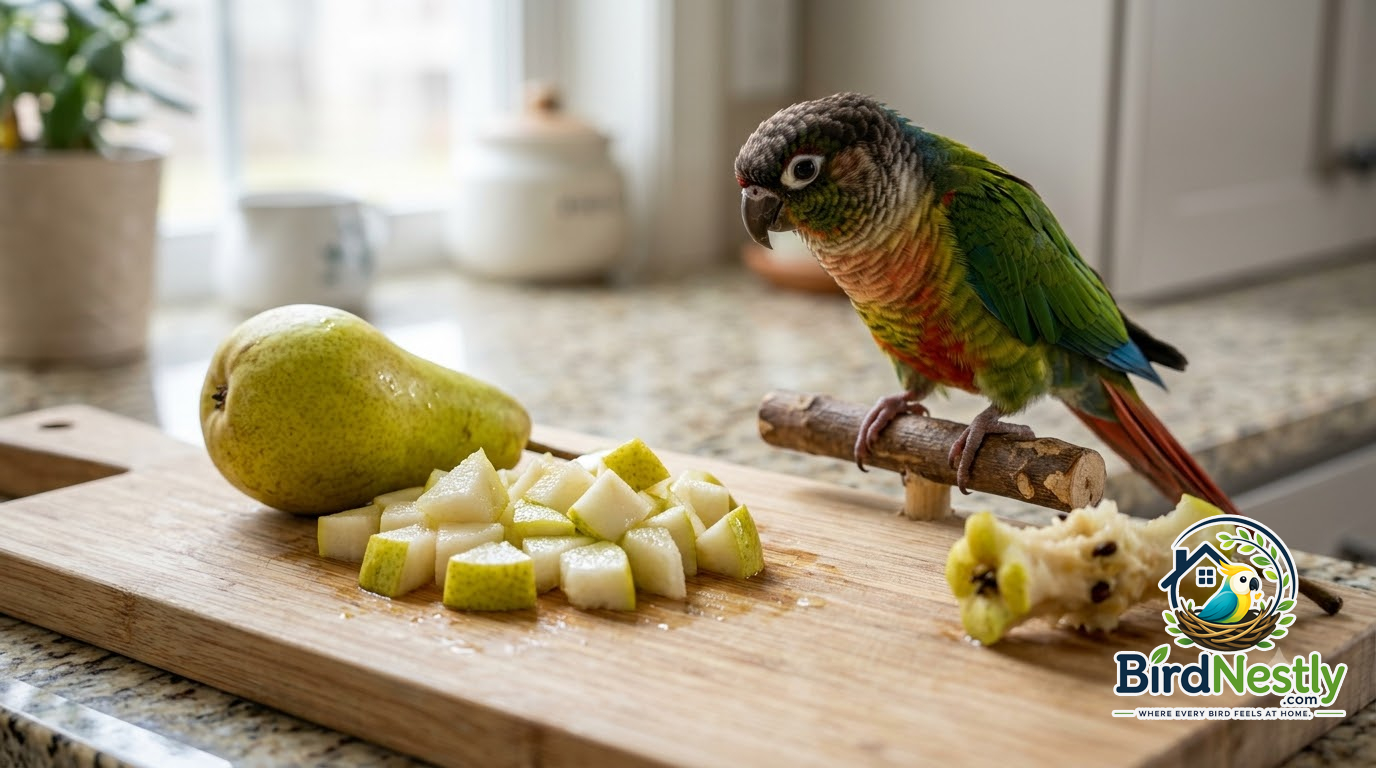
Pear seeds contain compounds called cyanogenic glycosides. When seeds are crushed or chewed, these compounds can release cyanide. A few seeds are not something you want your parrot deliberately chewing on, especially when removing them takes only a few seconds.
It’s best to cut the pear open yourself rather than handing your bird a whole pear and letting it work its way through the middle. Parrots are naturally curious and love chewing things, so once they discover the hard center, they may spend more time attacking the core than eating the fruit.
Don’t leave the seeds sitting next to the pieces of pear, either. A curious bird may decide that the discarded bits are worth investigating. Once you’ve cut the fruit, remove the core and seeds and throw them away before putting the pear in the cage.
The same rule is worth remembering with other fruits that have seeds or pits. When you’re serving apples, for example, remove the seeds before giving your parrot a piece. With cherries, the hard pit should also be removed.
If your parrot has managed to chew or swallow pear seeds, don’t panic, but don’t ignore it either. Take away the remaining fruit and contact an avian veterinarian for advice, particularly if you know your bird swallowed several seeds or begins acting unusually.
The easy rule is one worth remembering: pear flesh can go in the bowl; pear seeds and the hard core should stay out.
How Much Pear Can a Parrot Eat?
A few small pieces of pear are enough for most parrots. The right amount depends on the size of your bird, but there’s no need to make pear a large part of the meal. A Budgie or Lovebird may only need a couple of tiny bites, while a larger parrot such as an African Grey, Amazon, Cockatoo, or Macaw can have a little more.
For a bird trying pear for the first time, start small. Give your parrot a piece or two and see how it goes. Some birds will happily eat it, while others may take one bite and leave the rest sitting in the bowl.
Pears are naturally sweet and contain plenty of water, so they’re better treated as an occasional fruit rather than an everyday staple. You can offer pear alongside your bird’s normal food and switch it with other fruits on different days.
There’s also no need to give your parrot a whole pear. Apart from being far more than it needs, a whole pear still has the seeds and core that need to be removed. Cutting off a small portion makes it easier to prepare the fruit properly and keeps the serving sensible.
Frequently Asked Questions
Can parrots eat pears every day?
They can have pear regularly, but there’s no real reason to serve it every day. It’s better to rotate pear with other fruits and keep the portions small.
Can a Budgie eat pear?
Yes. A Budgie can have a tiny piece of fresh pear with the seeds and core removed.
Can Cockatiels eat pear?
Yes. A few small pieces are enough for a Cockatiel. There’s no need to offer a large serving.
Can African Grey parrots eat pear?
Yes. African Greys can enjoy fresh pear as an occasional fruit treat. Remove all seeds and the hard central core first.
Can parrots eat pear skin?
Yes. Pear skin can be eaten after the fruit has been washed well. Some parrots like it, while others prefer the soft flesh.
Can parrots eat pear seeds?
It’s best not to give pear seeds to parrots. Remove the seeds and core before serving.
Can parrots eat canned pears?
Fresh pear is the better choice. Canned pears may be packed in syrup or contain added sugar, which isn’t needed in a parrot’s diet.
How should I cut pear for my parrot?
Wash the pear, remove the seeds and core, then cut the flesh into small pieces that your bird can easily hold and eat.


Write Your Review
No reviews yet. Be the first to share your experience!