

A nectarine can disappear pretty quickly when a curious parrot gets hold of one. The sweet smell catches their attention, and the soft flesh is easy to tear apart with a beak. Some birds take to it right away. Others take one bite, look at it for a moment, and decide they’d rather have something else.
Nectarines are safe for parrots when served properly. The juicy flesh can be offered as a small treat, but the hard pit needs to be removed before the fruit reaches your bird. Washing the fruit before cutting it is also worth doing.
[wpsm_toplist]
Can Parrots Eat Nectarines?
Yes, fresh nectarine flesh is safe for parrots in small portions.
Budgies, Cockatiels, Lovebirds, Conures, African Greys, Amazons, Macaws, and Cockatoos can all have a little nectarine. The size of the serving should match the size of the bird. A Budgie only needs a tiny piece, while a larger parrot can manage a few small chunks.
Nectarines are soft and juicy, which makes them easy for most parrots to eat. They’re also sweet, so some birds may take to them faster than less sugary fruits.
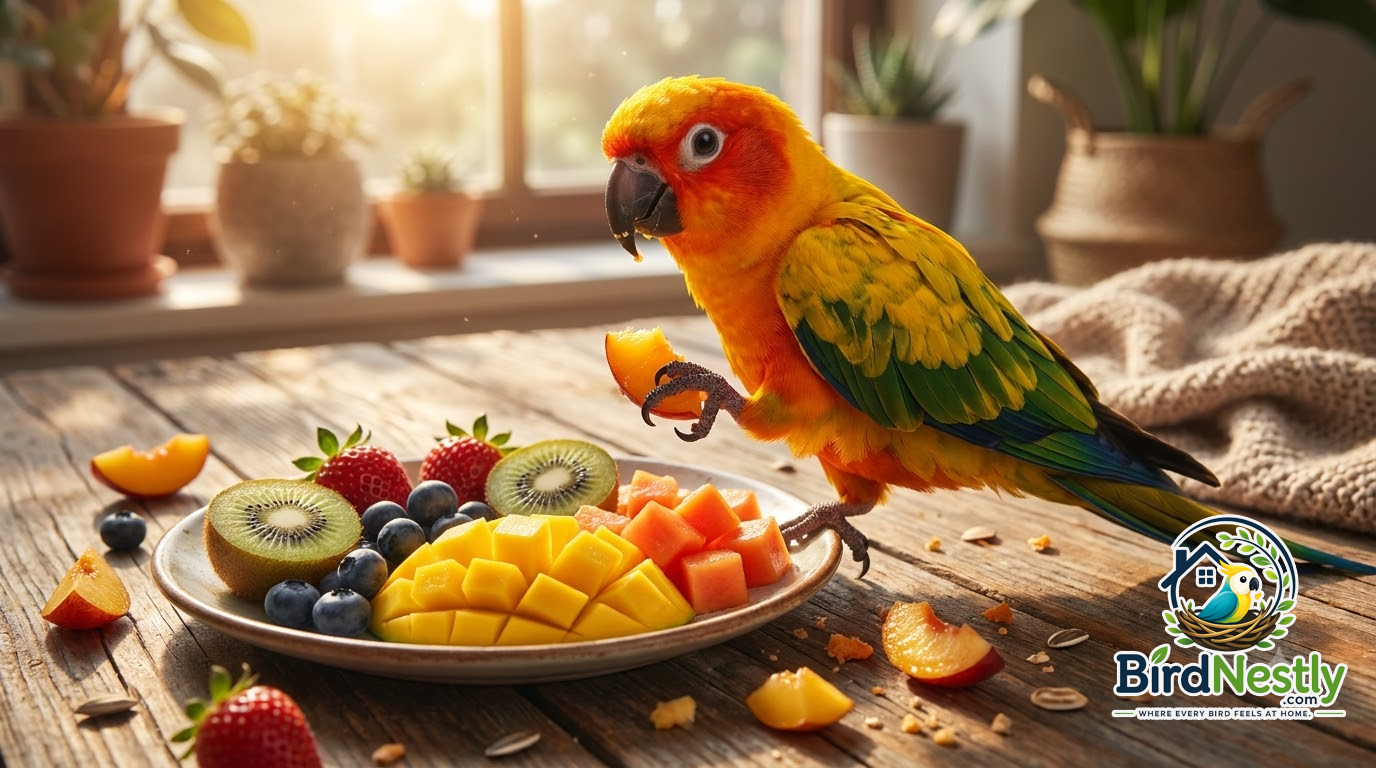
Start with a small piece the first time. Your bird may eat it immediately, nibble at it slowly, or simply toss it onto the cage floor. Parrots have their own tastes, and there’s no need to coax a bird into eating something it doesn’t want.
Before serving, wash the nectarine, cut it open, and remove the pit completely. Then cut the flesh into pieces your bird can comfortably hold and chew. Small parrots need smaller pieces; larger parrots can handle somewhat bigger chunks.
Nectarines are closely related to peaches, so the two fruits have several things in common. You can also read our guide on whether parrots can eat peaches if you’re adding stone fruits to your bird’s diet.
One last thing: expect a little mess. A juicy nectarine and a parrot can make quite a combination. You may find bits of fruit on the perch, stuck to the cage bars, or sitting underneath the food bowl. That’s often just what happens when a parrot gets to enjoy fresh fruit.
Are Nectarines Good for Parrots?
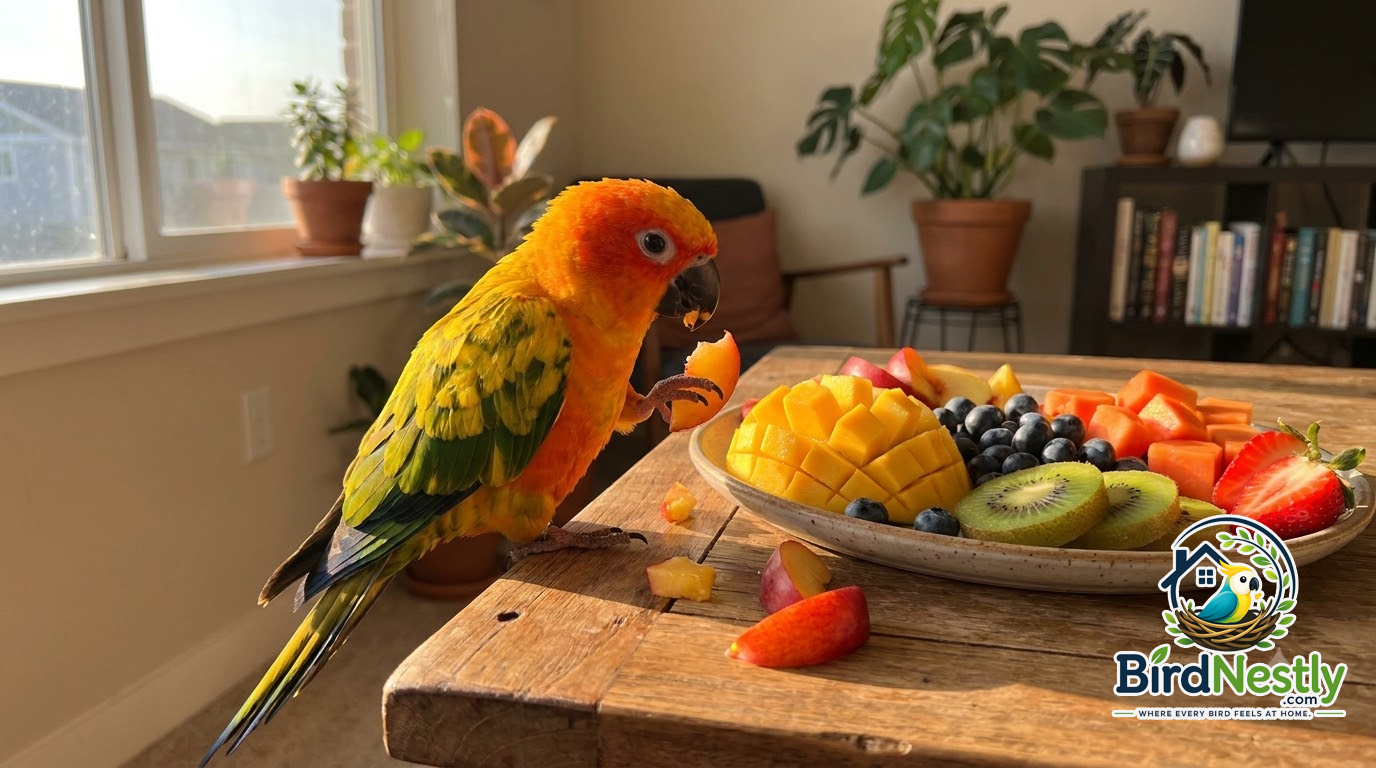
Nectarines can be a nice little addition to a parrot’s fruit bowl. The flesh is mostly water, with some fiber, vitamin C, vitamin A, and potassium. Nothing about a nectarine makes it a must-have food, but it can give your bird another taste and texture to enjoy.
The water content is one of the things that makes ripe nectarines appealing on a warm day. Some parrots like to pull the soft flesh apart with their beaks, while others prefer smaller pieces that they can hold with one foot.
There’s also some fiber in the flesh. That doesn’t mean a few pieces of nectarine will suddenly change your bird’s health, but it does add something useful to an otherwise varied diet.
The sweetness is worth keeping in mind. Nectarines contain natural sugar, so a whole nectarine isn’t an appropriate serving for a small pet bird. A few small pieces are plenty. The rest of the meal should still come from the foods your parrot normally relies on for its daily nutrition.
Fruit also doesn’t need to be the same every day. You might offer a little nectarine one day and switch to blueberries, papaya, or mango another day. That gives your parrot different flavors without filling its diet with too much fruit.
So, there’s no need to make a big deal out of nectarines. A ripe piece here and there is enough. Your bird gets something tasty to investigate, and you can keep the rest of the meal centered around the foods it needs every day.
Can Parrots Eat Nectarine Skin?
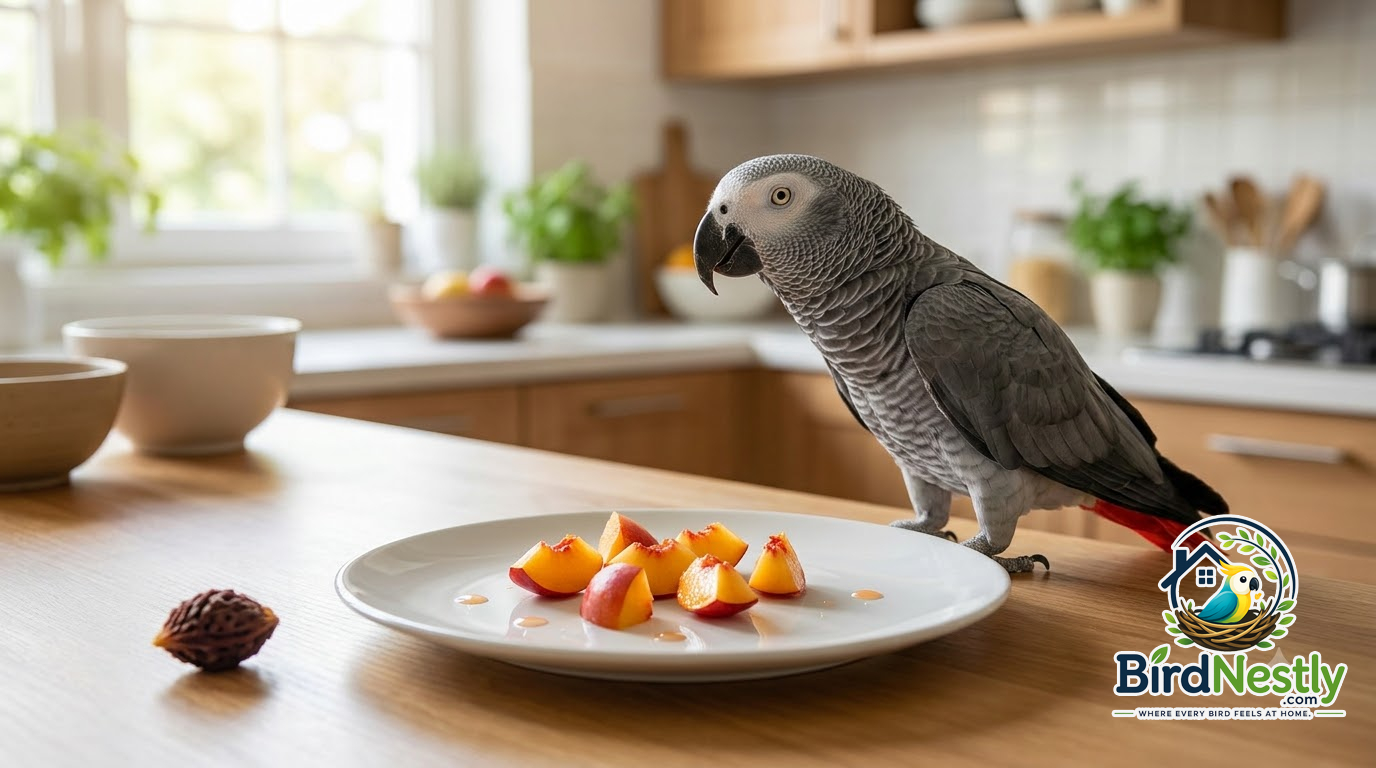
Yes, the skin can be eaten too.
There’s no need to peel a nectarine before giving a small piece to your parrot. The skin is thin, and many birds eat it along with the soft flesh. Some will bite through it without hesitation, while others will scrape the flesh away and leave the skin sitting on the plate.
The main thing to deal with is what’s on the outside of the fruit.
Give the nectarine a good wash under running water before cutting it. Rub the surface with your fingers as you rinse it, then dry it with a clean towel. This removes dirt and helps reduce whatever residue may be sitting on the skin.
You can peel it if that’s what you prefer. There’s nothing wrong with serving only the flesh. But if your bird likes the skin, there’s no particular reason to strip it off a clean, fresh nectarine.
Check the fruit before serving, too. Skip any piece that has mold, a rotten patch, or a strange smell. Cut away a small bruised area rather than handing it to your bird.
For a small parrot, cut the nectarine into tiny pieces. A larger bird can manage a bigger chunk, although there’s still no reason to offer a whole nectarine.
And keep the pit completely out of the cage. Your parrot may ignore the fruit skin, but that hard pit can be far more interesting to a bird that loves chewing everything it can get its beak on.
Can Parrots Eat Nectarine Pits?
This is the part of the nectarine that should stay well away from your parrot. The soft fruit is one thing, but the hard pit in the middle is not something a bird should be chewing on. Nectarine pits contain compounds known as cyanogenic glycosides. When the pit is damaged or crushed, these compounds can release cyanide, so there is no good reason to let a parrot crack one open. The pit is also extremely hard and can become a choking hazard, especially for smaller birds.
Nectarines belong to the same stone-fruit family as peaches, plums, apricots, and cherries, so the same habit is worth following whenever one of these fruits lands in your kitchen: cut the fruit open first, take the pit out, and only then give your bird a piece of the flesh. With a large parrot such as a Macaw or Cockatoo, don’t assume that a powerful beak makes the pit safe. Quite the opposite—those strong beaks can make it easier for a determined bird to crack or break apart something that shouldn’t be eaten.
It’s also better not to leave the pit sitting beside the fruit. Parrots are curious little creatures, and a bird that has finished its piece of nectarine may decide that the discarded pit looks much more interesting. Put it straight into the trash or compost bin before the fruit goes into the cage.
The same care applies when serving peaches or cherries. Remove the hard center before your parrot gets anywhere near the fruit.
If your bird grabs a nectarine pit, take it away rather than letting it turn into a chewing toy. Should the pit be cracked open, chewed apart, or swallowed, contact an avian veterinarian promptly for advice, particularly if you notice unusual behavior, weakness, breathing problems, vomiting, or other concerning signs.
For nectarines, there’s an easy rule to remember: the juicy flesh can go in the bowl; the pit goes in the trash.
How Much Nectarine Can a Parrot Eat?
A few small pieces are plenty for a parrot. Nectarines are sweet and juicy, so there’s really no reason to fill the food bowl with them. A Budgie or Parrotlet might only need a couple of tiny bites, while a Conure, Cockatiel, or Lovebird can have a few small chunks. Larger parrots such as African Greys, Amazons, Cockatoos, and Macaws can handle a little more, but even then, nectarine should remain a small part of the meal.
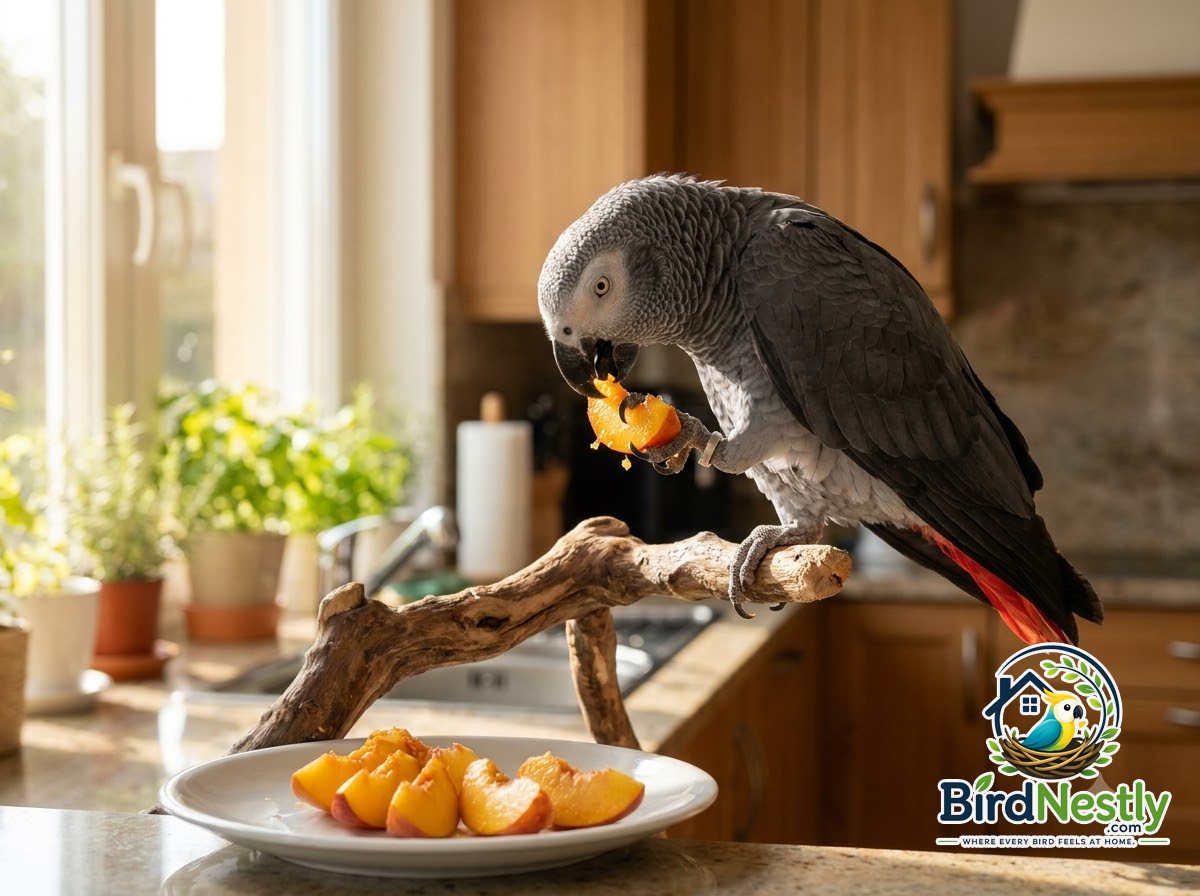
The first time you offer it, start with just one or two pieces and see what your bird does. Some parrots will eat every bit they can reach, while others will take a bite and wander off. There’s no need to push the fruit if your bird isn’t interested. You can always try again another day.
I wouldn’t make nectarine an everyday treat, either. The fruit contains natural sugar, and parrots have no need for large amounts of sweet fruit when their regular diet already provides what they need. A little nectarine alongside their usual food is plenty.
You can also switch things around during the week. A few pieces of blueberries one day, some papaya another day, and nectarine later in the week gives your bird plenty of different flavors to explore. There are plenty of fruits to choose from, so there’s no reason to stick with the same one every morning.
One thing worth remembering is that parrots can be very enthusiastic eaters when they find something they love. If your bird keeps coming back for more nectarine, don’t let that enthusiasm decide the portion. Put a few pieces in the bowl, let your parrot enjoy them, and then get back to the regular meal.
And don’t leave the leftover pieces sitting around all day. Once cut fruit has been sitting in a warm cage for a while, it isn’t something I’d want my bird going back to later. Remove what’s left and wash the dish before the next meal.


Write Your Review
No reviews yet. Be the first to share your experience!