

Papaya is one of those fruits that usually gets a curious look from my parrots. The bright orange flesh, sweet smell, and soft texture make it hard for them to ignore when I’m cutting one open in the kitchen.
The first time I shared papaya with my birds, I wasn’t sure which parts were worth giving them and which parts should stay on the cutting board. The skin, the little black seeds, and that soft orange flesh all look pretty different.
The good part is that serving papaya doesn’t have to be complicated. A ripe piece of the fruit can make a nice little treat, especially when it’s served alongside the foods they already eat.
And if your parrot already enjoys fruits such as mango or pineapple, there’s a fair chance papaya will get some attention too.
[wpsm_toplist]
My Parrot Knew I Was Cutting Papaya

I barely had the papaya cut in half before my African Grey came over to investigate.
It was sitting on its perch a few feet away, minding its own business, until the knife hit the cutting board. Then came the head tilt. A few seconds later, it was leaning toward me as far as it could, watching that bright orange fruit like I’d just opened a bag of its favorite treats.
I cut off a small piece and held it out.
The first bite was tiny. My Grey rolled the piece around in its foot, nibbled the edge, and paused for a second. Then it took another bite.
That second bite was all it needed.
My Conure was even less patient. It grabbed its piece and started eating right away. By the time it was finished, there was a little orange smear across its beak. It wiped its face on the perch, looked back at me, and came over for another piece.
That’s when I started looking more closely at the question can parrots eat papaya.
Papaya can be a nice fruit to add to a parrot’s rotation. It’s soft, juicy, and easy to cut into small pieces. I just don’t treat it like a meal on its own. The birds still get their regular food, vegetables, and other fruits, with papaya showing up now and then.
That’s pretty much how I handle fruit in general. One day it might be papaya, another day banana, blueberries, or a few pieces of watermelon.
It keeps things interesting without turning the fruit bowl into the whole menu.
And judging by how quickly that little piece of papaya disappeared, my birds don’t seem to mind the variety one bit.
What Makes Ripe Papaya a Nice Treat?
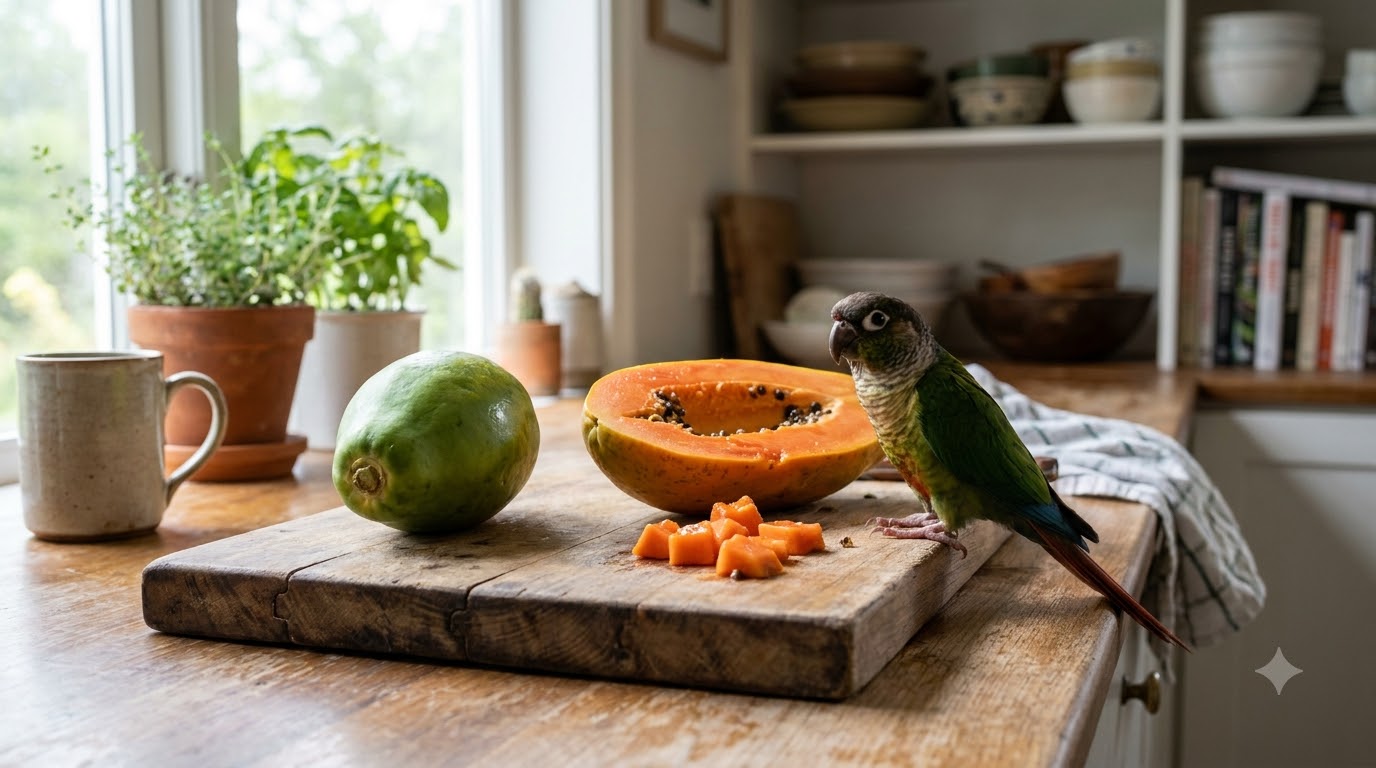
A ripe papaya has a couple of things going for it that make it easy to share with a parrot. It’s soft, juicy, and doesn’t take much work to prepare. For a bird that likes fruit, that’s already a pretty good combination.
The texture is probably what I notice first.
When papaya is ripe, you can cut it with almost no effort. There’s no hard crunch like an apple, and you don’t have to worry about a bird struggling with a tough piece. My African Grey can hold a small chunk with one foot and slowly nibble away at it.
My Conure takes the opposite approach. It usually gets a piece and starts eating before I’ve even finished putting the rest in the bowl.
Papaya also contains nutrients such as vitamin C, vitamin A, and folate. There’s plenty of water in the fruit too, which makes a few pieces a nice addition to a warm-day snack. I still keep the serving small, though. Papaya is naturally sweet, and there’s no reason for fruit to take over the bowl.
That’s one thing I’ve learned from feeding different fruits over the years. A little variety works better than piling one favorite into the cage.
For example, my birds might get a few pieces of papaya one day and strawberries another day. Raspberries and blackberries also make occasional appearances.
Papaya is especially handy when I have a bird that’s being picky about texture. A ripe piece is soft enough that even a cautious eater can take a tiny bite without having to wrestle with it.
One morning, my Cockatiel stared at a piece of papaya for almost a full minute before finally giving it a peck. It walked away like it wasn’t impressed, then came back and took another bite. By the third trip, the whole piece was gone.
That’s pretty much how fruit goes around here. Some birds dive straight in. Others act like they’ve been personally offended by the new food before deciding five minutes later that it’s actually pretty good.
Either way, ripe papaya is an easy fruit to keep in the rotation, especially when it’s served in small pieces alongside the rest of their regular food.
Which Parts of Papaya Can Parrots Eat?

A whole papaya has more than just the soft orange part. Once you cut it open, you’ll see the black seeds in the middle and the green skin around the outside. That’s where I usually slow down for a minute before putting anything in the bird’s bowl.
The soft orange flesh
This is the part I save for my parrots.
A ripe papaya should be soft enough to cut with a regular kitchen knife. I scoop out the flesh, cut it into small pieces, and give the birds just a little at a time.
My African Grey likes to hold a piece in its foot and take slow bites. My Conure is much messier. It usually bites straight into the middle and ends up with orange bits stuck around its beak.
I’ve also noticed that softer fruit can be a nice change when the birds have been eating firmer things like apples or grapes.
Can parrots eat papaya seeds?
The little black seeds always get my birds’ attention.
They’re easy for a parrot to pick up, and some birds may nibble on them. Papaya seeds aren’t in the same category as the dangerous pits and seeds found in some fruits, but I still don’t make a pile of them part of the meal.
When I’m preparing papaya, I usually scoop most of the seeds out and serve the soft fruit instead. It’s less messy and gives me better control over how much they’re eating.
My Conure once grabbed a seed that had fallen onto the cutting board. It rolled it around in its beak for a while, dropped it, then went straight back to the orange flesh sitting beside it. Apparently, the seed wasn’t nearly as interesting as it thought it would be.
Can parrots eat papaya skin?
I peel the papaya before serving it.
The skin is tough compared with the soft flesh, and there’s really no reason for my birds to work through it when the good stuff is right underneath. I wash the fruit first, peel it, cut away the flesh, and toss the skin.
It also makes cleanup easier. Papaya gets sticky enough without adding pieces of peel to the food bowl.
So when I’m preparing papaya, my setup is pretty simple: soft ripe flesh goes into the bowl, most of the seeds stay out, and the skin goes in the trash or compost.
That’s the same sort of routine I use with other fruits. A little preparation before the bird gets involved saves a surprising amount of mess afterward.
Ripe Papaya or Green Papaya?

There’s a big difference between a papaya that’s ready to eat and one that’s still green and firm.
When I’m picking one for my parrots, I want the fruit to have some give when I press it gently. The skin should be turning yellow or orange, and the inside should be soft enough to scoop out without much effort.
That’s the papaya that disappears quickly around here.
My African Grey usually takes its time with ripe papaya. It’ll hold a piece in one foot, take a few bites, then pause and look around before going back for more. My Conure doesn’t bother with the slow approach. It grabs the piece and gets to work right away.
Green papaya is another story.
It’s firmer and doesn’t have that same sweet, soft texture. I’ve let my Conure have a tiny taste before, and it took one bite before giving me a look that said, “What am I supposed to do with this?”
It dropped the piece on the bottom of the cage and went looking for the ripe fruit instead.
That’s why I stick with ripe papaya for my birds. It’s easier for them to eat, and I don’t have to watch them struggle with a hard piece.
I also don’t wait until the papaya is completely mushy. Once the fruit starts smelling fermented, leaking liquid, or developing dark, spoiled spots, it goes in the trash. A ripe piece should smell fresh and fruity, not sour or boozy.
For me, choosing papaya is pretty much the same as choosing any other fruit for the birds. I look for something fresh, ripe, and clean, then cut off a small portion.
And if I’m standing in the kitchen with a ripe papaya in one hand and a green one in the other, there’s no contest. The ripe one goes to the birds.
The green one can wait a few days.


Write Your Review
No reviews yet. Be the first to share your experience!