

Sweet potatoes are a familiar food in many kitchens, but sharing them with a parrot takes a little more care. The good news is that parrots can eat sweet potato, and plain sweet potato can be a useful addition to a varied diet. It provides several nutrients that can support a bird’s overall health while also giving it a soft, enjoyable texture.
The way sweet potato is prepared matters. A plain piece of cooked sweet potato is very different from the sweet potato dishes commonly prepared for people. Salt, butter, sugar, sauces, and seasonings should be left out of your parrot’s portion. Starting with a small amount is also a good way to introduce it and see whether your bird enjoys it.
[wpsm_toplist]
1. Can Parrots Eat Sweet Potato?
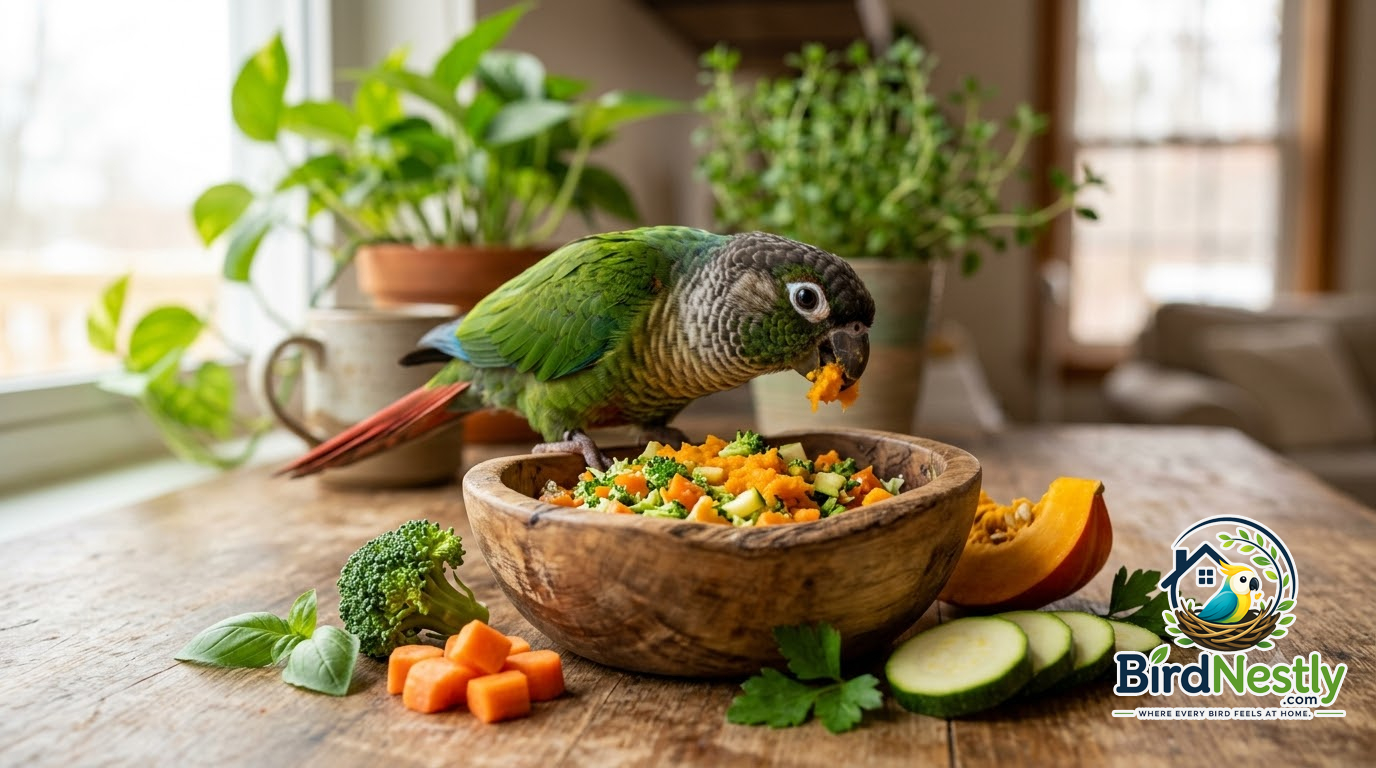
Yes, parrots can eat sweet potato. Plain sweet potato is generally safe for parrots when it is fresh, properly prepared, and served in a suitable amount.
Cooked sweet potato is usually the easiest option because cooking softens the flesh and makes it easier for a parrot to pick apart and eat. It can be steamed, boiled, or baked without adding salt, butter, sugar, spices, or other ingredients.
Sweet potato can also provide useful nutrients, including beta-carotene and fiber. Beta-carotene is converted into vitamin A by the body, and vitamin A plays an important role in normal vision, skin, feathers, and immune function.
That does not mean sweet potato should become a major part of your parrot’s diet. Birds benefit from eating a range of suitable foods, so sweet potato is best offered alongside other vegetables and the foods that normally make up your parrot’s diet.
When offering sweet potato for the first time, start with a small piece. Some parrots will eat it immediately, while others may need several attempts before accepting a new food. Remove any uneaten fresh food from the cage before it begins to spoil.
2. Is Sweet Potato Good for Parrots?

Sweet potato can be a nutritious food for parrots when served plain and in moderation. Its bright orange flesh contains beta-carotene, which gives sweet potatoes their characteristic color and can be converted into vitamin A.
Vitamin A is important for several normal functions in birds. It supports healthy vision, skin, feathers, and the immune system. Sweet potato also contains fiber, which can contribute to normal digestion.
Another benefit is its texture. Once cooked, sweet potato becomes soft and easy to break apart. This makes it a practical vegetable for parrots that prefer softer foods.
However, more is not necessarily better. Sweet potato should be one part of a varied diet rather than the main vegetable offered every day. Rotating it with other suitable vegetables gives your parrot access to a wider range of nutrients and textures.
Plain preparation is essential. Sweet potato prepared with butter, salt, sugar, syrup, cream, garlic, onion, or other seasonings should not be shared with a parrot. A simple piece of properly cooked sweet potato is a much better choice.
3. Can Parrots Eat Cooked Sweet Potato?
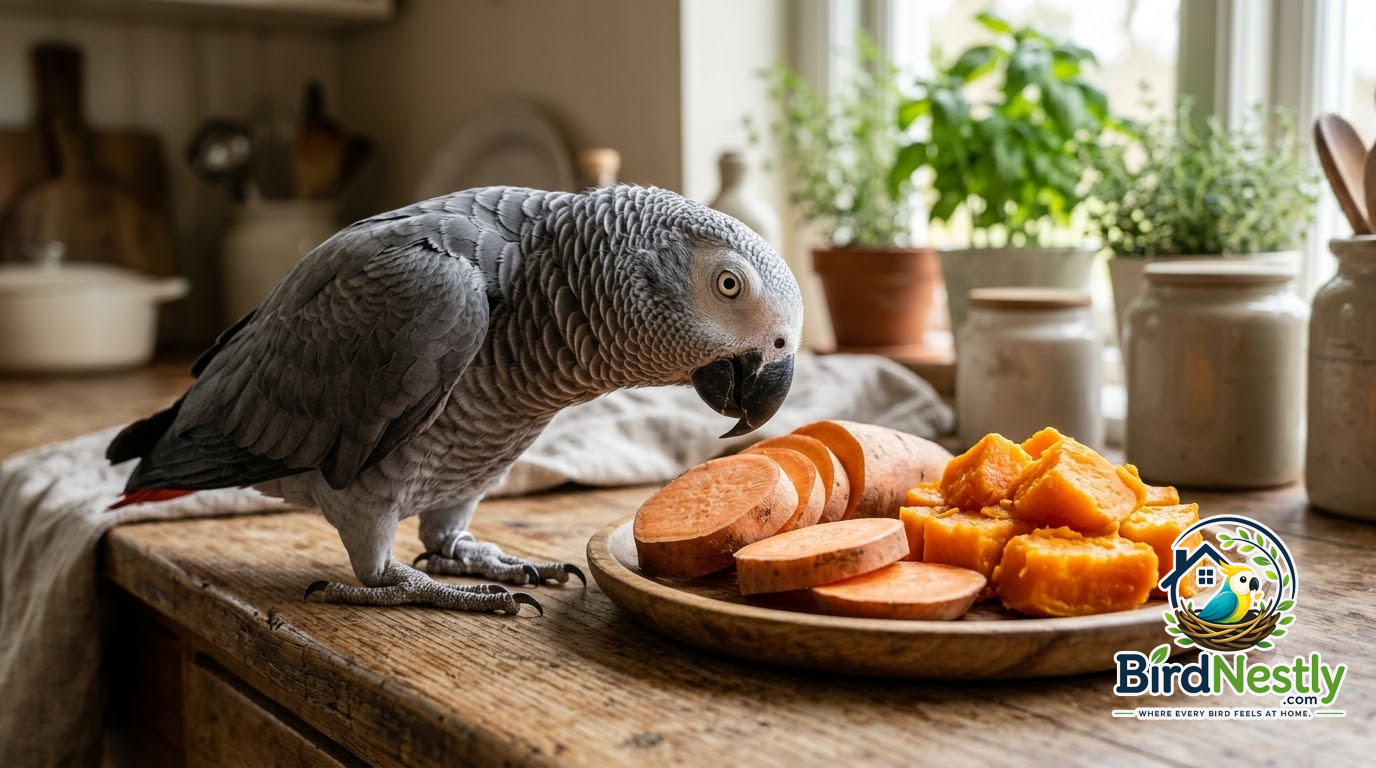
Yes, parrots can eat cooked sweet potato, and this is often the simplest way to serve it. Cooking softens the flesh, making it easier for a parrot to bite, pick apart, and swallow.
Sweet potato can be steamed, boiled, or baked. Whichever method you choose, keep the portion completely plain. There is no need to add salt, butter, oil, sugar, honey, cinnamon, or other seasonings.
Once the sweet potato is tender, allow it to cool completely before giving it to your parrot. Hot food can burn a bird’s mouth and should never be served straight from the oven, pot, or steamer.
Cut the cooled sweet potato into small pieces that are appropriate for your bird. Larger parrots may be comfortable handling bigger pieces, while smaller parrots may do better with smaller portions.
Cooked sweet potato can also be mixed with other suitable vegetables. This can make meals more varied and give your parrot different flavors and textures to explore.
Avoid sweet potato dishes prepared for people. Mashed sweet potatoes containing butter, cream, sugar, marshmallows, salt, or seasoning are not suitable for parrots. Keep your bird’s portion separate before adding any ingredients intended for human meals.
4. Can Parrots Eat Raw Sweet Potato?
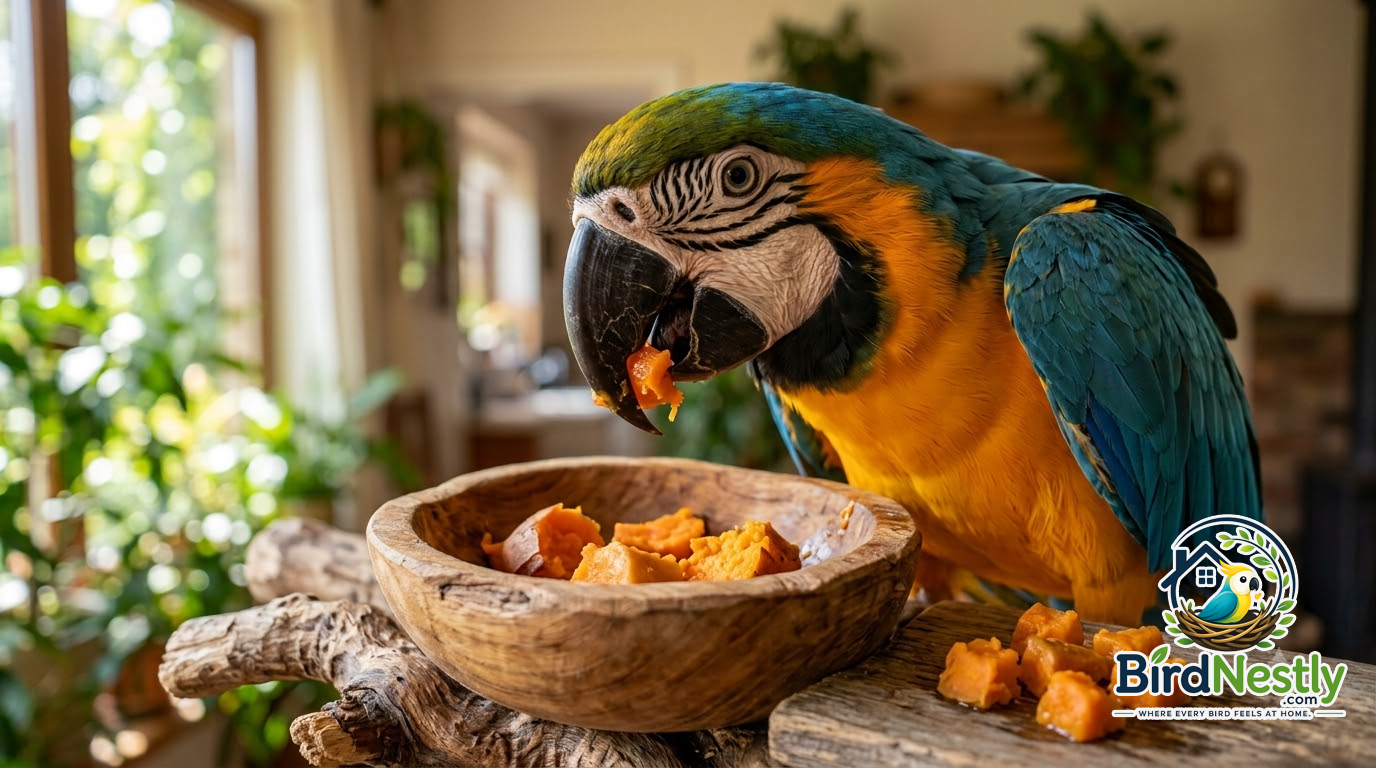
Parrots can eat sweet potato, but raw sweet potato is much firmer than cooked sweet potato. Its hard texture may make it difficult for some birds to chew and handle comfortably.
For this reason, cooked sweet potato is generally the easier option. Steaming or boiling softens the flesh while keeping the food simple and easy to portion.
If you decide to offer a small piece of raw sweet potato, wash it thoroughly first and remove any damaged areas. Cut it into a size that your parrot can safely handle, and watch your bird while it eats.
There is no nutritional need to serve sweet potato raw. Cooking is a practical choice when your parrot prefers softer foods or has difficulty handling firm vegetables.
Your parrot may also have a clear preference. Some birds enjoy the firmness of raw vegetables, while others prefer foods that are soft and easy to tear apart. Either way, plain preparation is the important part.
For most parrots, a small amount of cooled, plain cooked sweet potato is a simple and convenient way to include this vegetable in a varied diet.
5. Can Parrots Eat Sweet Potato Skin?
Parrots can eat sweet potato skin when it has been washed thoroughly and the sweet potato is fresh. The skin is not something that must always be removed, although some birds may find it harder to chew than the soft flesh.
Before serving sweet potato with the skin, scrub the outside well under running water to remove dirt and other residue. Cut away any bruised, damaged, or spoiled areas.
For smaller parrots, removing the skin can make the food easier to handle. Larger parrots may have less trouble with the texture, especially when the sweet potato has been cooked until tender.
There is also no need to leave the skin on simply for the sake of adding more nutrients. The flesh itself is already a nutritious part of the vegetable, so removing the skin is perfectly fine if your parrot prefers a softer texture.
Sweet potato skin should always be plain. Do not serve skin that has been coated with salt, butter, oil, sugar, spices, or other ingredients.
The same basic rule applies to other vegetables in your parrot’s diet. For example, vegetables such as carrots, zucchini, and pumpkin can also provide variety when prepared appropriately.
6. How Much Sweet Potato Can a Parrot Eat?
Sweet potato should be offered in a small portion rather than becoming a major part of your parrot’s daily food. The appropriate amount depends on the size of the bird, its normal diet, and the other foods being offered that day.
For a first taste, a few small pieces are enough. This gives your parrot a chance to become familiar with the flavor and texture without making a large change to its usual diet.
Larger parrots may be comfortable with a slightly larger serving, while smaller birds need much less. There is no single portion that works equally well for a budgie, cockatiel, conure, African grey, Amazon, and macaw.
Variety is more important than feeding a large amount of any one vegetable. Sweet potato can be rotated with other suitable vegetables such as broccoli, cauliflower, kale, and cucumber.
There is also no need to serve sweet potato every day. Offering different vegetables throughout the week can help keep meals varied and prevent your parrot from relying too heavily on one particular food.
Any leftover cooked sweet potato should be removed from the cage rather than left available for an extended period. Moist foods can spoil, especially in a warm environment.
The goal is simple: give your parrot enough sweet potato to enjoy as part of a varied diet without allowing it to replace the other foods your bird needs.
7. How to Prepare Sweet Potato for Your Parrot
Preparing sweet potato for a parrot is simple. The safest approach is to keep it plain and avoid the ingredients commonly added to human recipes.
Start by choosing a fresh sweet potato without mold, soft rotten areas, or a strong unpleasant smell. Wash the outside thoroughly, especially if you plan to leave the skin on.
Cut away any damaged sections and cut the sweet potato into manageable pieces. You can then steam, boil, or bake it until the flesh becomes tender.
Once cooked, allow it to cool completely. Never give your parrot sweet potato while it is still hot.
Serve a small amount on its own or alongside other suitable vegetables. Vegetables such as carrots, broccoli, and pumpkin can be rotated with sweet potato to provide more variety.
Do not add salt, sugar, butter, cream, sauces, garlic, onion, or spice blends. These ingredients may be harmless or familiar in human meals but are not appropriate additions to a parrot’s food.
Simple preparation
- Wash the sweet potato thoroughly.
- Remove any damaged or spoiled areas.
- Cut it into manageable pieces.
- Steam, boil, or bake until tender.
- Let it cool completely.
- Serve a small plain portion to your parrot.
- Remove leftovers after feeding.
Keeping the preparation simple makes it much easier to know exactly what your parrot is eating.
8. Can Parrots Eat Sweet Potato Every Day?
Parrots can eat sweet potato regularly, but there is no need to serve it every day. A varied diet is more useful than relying on the same vegetable at every meal.
Sweet potato can be rotated with other vegetables throughout the week. For example, one meal might include a small amount of sweet potato, while another can include kale, spinach, cabbage, or celery.
Offering different vegetables also exposes your parrot to different flavors, colors, and textures. This can be particularly helpful with birds that become selective about food.
Sweet potato should remain one part of the overall diet. It should not replace a properly balanced source of nutrition or become the only vegetable your parrot receives.
There is also no reason to force a parrot to eat sweet potato. Some birds take to it immediately, while others prefer different vegetables. Foods such as apples or other suitable fruits can provide additional variety when offered appropriately.
The best approach is to offer a selection of suitable foods and allow your parrot to become familiar with different options over time.


Write Your Review
No reviews yet. Be the first to share your experience!