

Cauliflower isn’t usually the first thing people think of when they picture a parrot’s dinner, but plenty of parrots are happy to nibble on it. The little white florets are easy to break into small pieces, and some birds enjoy the crunchy texture just as much as they enjoy carrots or broccoli.
So, can parrots eat cauliflower? Yes, they can. Fresh cauliflower can be a nice addition to a varied diet when it’s washed properly and served plain. You can offer it raw, or lightly steam it if your parrot prefers softer vegetables.
There’s no need to dress it up with salt, butter, oil, sauces, garlic, onion, or seasoning. Plain cauliflower is all your bird needs. And don’t be surprised if your parrot takes one bite and throws the rest away. Some birds need a little time before they decide a new food belongs in their bowl.
[wpsm_toplist]
Can Parrots Eat Cauliflower?

Yes, parrots can eat cauliflower. The florets are the easiest part to serve, but fresh stems and leaves can also be offered when they’re clean and in good condition.
Give the cauliflower a thorough wash under running water before serving. For smaller parrots, break the florets into tiny pieces that are easy to pick up. Larger parrots can usually handle a bigger piece and may enjoy holding it with one foot while they nibble away.
Raw cauliflower is perfectly fine and gives your bird something firm to chew. If your parrot likes softer foods, lightly steaming or boiling the cauliflower is another option. Let it cool completely before it reaches the food bowl.
Start with a small amount, especially when cauliflower is new to your parrot. There’s no need to fill the bowl with it. A few pieces alongside other vegetables are enough.
You can rotate cauliflower with carrots and broccoli to give your bird different textures and flavors throughout the week.
Is Cauliflower Good for Parrots?

Cauliflower contains water, fiber, vitamin C, vitamin K, folate, and several other nutrients. It can be a useful vegetable to include in a varied diet, especially when your parrot gets a mixture of different vegetables rather than the same food every day.
It doesn’t need to become a daily staple, though. Cauliflower is best treated as one part of a wider selection of fresh foods. Different vegetables provide different nutrients, tastes, and textures, which gives your parrot more to choose from.
Some birds prefer cauliflower raw because of the crunch. Others are more interested when it’s been lightly steamed and softened. Try both and see which one disappears from the bowl first.
Fresh fruit can be offered separately as well. Apples, pears, and mango are a few options that can add more variety.
A small serving is plenty. Your parrot doesn’t need a mountain of cauliflower to get something useful from it, and a balanced diet should always include more than one type of food.
Can Parrots Eat Raw Cauliflower?
Raw cauliflower is probably the easiest way to serve it. There’s no cooking involved, and the firm florets give parrots something crunchy to grab, bite, and pull apart.
Wash the cauliflower well under running water before giving it to your bird. Break off a small floret and adjust the size to suit your parrot. A Budgie or Lovebird will need much smaller pieces than an African Grey, Amazon, or Macaw.
There’s no need to peel the florets or soak them in anything. Just wash, cut, and serve. If your parrot likes holding food with its foot, a slightly larger piece may be more fun to eat. Smaller pieces work better for birds that prefer picking food from their dish.
Raw cauliflower can also be mixed with a few other vegetables. A little carrot alongside the cauliflower gives your parrot something different to crunch on, while broccoli is another vegetable that can be rotated into the same food routine.
Keep the cauliflower plain. Salt, butter, oil, garlic, onion, sauces, and seasoning don’t belong in your parrot’s portion.
Don’t worry if your bird doesn’t eat it straight away. Some parrots need several tries before they’ll accept something unfamiliar. You may find that your bird spends more time shredding the floret than actually eating it. That’s part of the fun for them.
Can Parrots Eat Cooked Cauliflower?
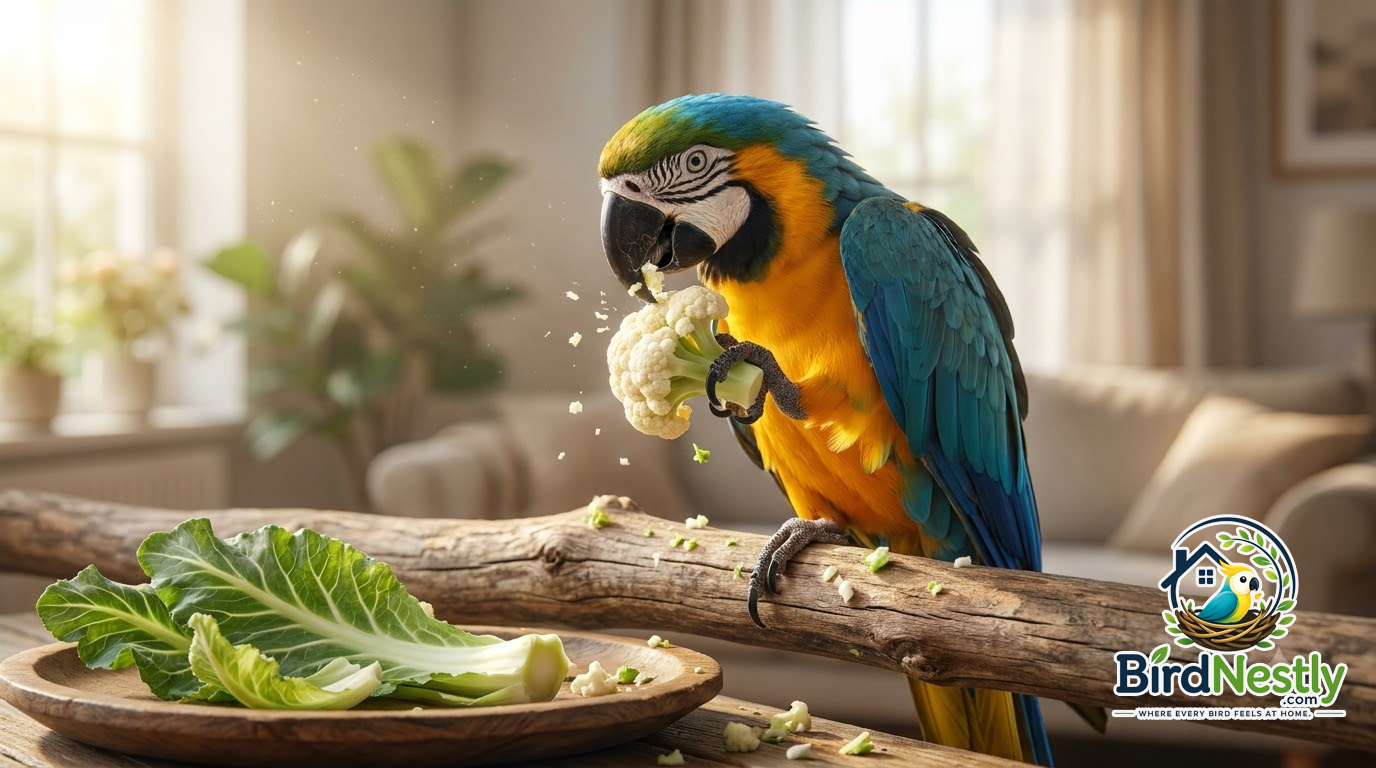
Cooked cauliflower can be offered too, especially for parrots that prefer softer vegetables. Light steaming or boiling is enough. There’s no reason to turn it into a heavily cooked side dish like you might prepare for people.
The cauliflower should be cooked without salt, butter, oil, garlic, onion, sauces, or seasoning. Once it’s tender, let it cool completely before putting it in your parrot’s bowl.
Lightly steamed cauliflower tends to hold its shape better than cauliflower that’s been boiled for too long. You want it soft enough to bite easily but not so mushy that it falls apart as soon as your bird picks it up.
If you’re making cauliflower for your own meal, set aside a plain piece for your parrot before adding seasoning to the rest. This is much easier than trying to rinse salt or sauce off afterward.
You can leave the florets whole or break them into smaller pieces. For smaller parrots, tiny pieces are easier to manage. Larger parrots may enjoy holding a whole small floret and working through it themselves.
Once the food has cooled, offer a modest portion and see how your parrot reacts. Some birds prefer the crunch of raw cauliflower, while others will happily eat the softer cooked version.
Remove any leftover cooked cauliflower after mealtime rather than leaving it in the cage for hours. Fresh cooked vegetables can spoil quickly, particularly in warm conditions.
What Nutrients Does Cauliflower Provide for Parrots?
Cauliflower is mostly water, so it isn’t a calorie-heavy food. According to USDA FoodData Central data for raw cauliflower, 100 grams contains about 92.1 grams of water, 25 calories, 1.9 grams of protein, 5 grams of carbohydrates, and 2 grams of dietary fiber.
That makes cauliflower a fairly light vegetable for a parrot’s food rotation. The same 100-gram serving provides roughly 48 mg of vitamin C, along with vitamin K and folate. It also contains smaller amounts of calcium, phosphorus, magnesium, and potassium.
Your parrot obviously isn’t going to sit down and eat 100 grams of cauliflower in one go. A small piece contains much less of everything listed above. The numbers are useful mainly for showing what cauliflower brings to the table rather than suggesting that a parrot needs a particular amount.
A closer look at 100 grams of raw cauliflower
- Water: ~92.1 g
- Calories: ~25 kcal
- Protein: ~1.9 g
- Carbohydrates: ~5 g
- Fiber: ~2 g
- Vitamin C: ~48 mg
- Fat: ~0.3 g
The vitamin C content is one of the more notable points. Still, cauliflower shouldn’t be treated as a supplement or as a replacement for a properly balanced parrot diet. It’s simply one vegetable that can contribute useful nutrients while adding another texture to mealtime.
The high water content is worth keeping in mind as well. Fresh vegetables can contribute to a bird’s overall water intake, but cauliflower should never replace fresh, clean drinking water.
Variety matters more than trying to squeeze every nutrient out of one vegetable. You can rotate cauliflower with broccoli and carrots, then offer suitable fruits separately.
One other point is easy to overlook: the numbers above describe raw cauliflower, not every form of cooked cauliflower. Cooking can change the amount of certain nutrients, and the longer a vegetable is cooked, the more its texture and nutritional profile can change.
So there’s no need to chase a perfect serving size based on a nutrition chart. A few clean pieces of cauliflower, offered alongside a balanced diet and other suitable vegetables, are a much more sensible approach for a pet parrot.
Can Parrots Eat Cauliflower Stems and Leaves?
The white florets aren’t the only part of a cauliflower your parrot can nibble. The tender stem and fresh leaves can also be offered, so there’s no need to throw them away when you’re preparing the vegetable.
The stem is firmer than the florets, which can actually make it more interesting for a parrot that enjoys chewing. For a small bird, cut the stem into thin slices or tiny pieces. Larger parrots can usually handle a thicker piece, but it should still be easy for the bird to grip and bite.
If the outer part of a stem feels particularly tough, trim it away and use the softer center. Lightly steaming the stem is another option if your parrot prefers softer food. Let it cool completely before serving.
The leaves can be washed and offered fresh when they’re crisp and in good condition. Remove anything yellow, wilted, slimy, or damaged. Smaller birds may find strips easier to handle than a whole leaf.
There’s no need to season any part of the cauliflower. Salt, butter, oil, garlic, onion, sauces, and spicy ingredients should stay out of your parrot’s portion.
You can serve a little stem or leaf together with the florets, or save them for another meal. Rotating cauliflower with vegetables such as broccoli and carrots gives your parrot more textures to explore.
Don’t be surprised if your bird has a strong preference. One parrot might happily strip a leaf down to the stem, while another may ignore the leaf and go straight for the floret. Letting your bird choose what it enjoys is part of finding foods that work well for its regular rotation.
As with any fresh food, remove leftovers rather than leaving them in the cage for a long time. This is especially important with cooked vegetables, which can spoil faster than dry food.
FAQs
Can parrots eat cauliflower?
Yes. Parrots can eat fresh cauliflower when it is washed properly and served plain. The florets, tender stem, and fresh leaves can all be offered in suitable portions.
Can parrots eat raw cauliflower?
Yes. Raw cauliflower is fine for parrots and gives them a crunchy texture to chew. Wash it well and cut the pieces according to your bird’s size.
Can parrots eat cooked cauliflower?
Yes. Lightly steamed or boiled cauliflower can be offered after it has cooled completely. Avoid salt, butter, oil, sauces, garlic, onion, and seasoning.
Can parrots eat cauliflower stems?
Yes. Tender cauliflower stems can be eaten. Since they are firmer than the florets, smaller parrots should get thin slices or small pieces.
Can parrots eat cauliflower leaves?
Fresh cauliflower leaves can also be offered after being washed thoroughly. Avoid leaves that are wilted, slimy, damaged, or moldy.
Is cauliflower good for parrots?
Cauliflower provides water, fiber, vitamin C, vitamin K, folate, and several minerals. It can be a useful vegetable in a varied diet, but it shouldn’t replace a balanced everyday diet.
How much cauliflower can a parrot eat?
A small portion is enough. The right amount depends on the bird’s size and what else it eats throughout the day. Start with a few small pieces when introducing cauliflower.
Can parrots eat cauliflower every day?
They can have cauliflower regularly, but there’s no need to offer it every day. Rotating different vegetables gives your parrot more variety.
Can baby parrots eat cauliflower?
A young parrot that is already eating solid foods may be able to eat small, soft pieces of cauliflower. Very young birds that are still being hand-fed need a diet suited to their stage of development.
Can parrots eat frozen cauliflower?
Plain frozen cauliflower can be used after it has been fully thawed. Avoid products containing salt, sauces, seasoning, or other added ingredients.
Can cauliflower upset a parrot’s stomach?
Eating too much of a new food may cause digestive changes. Start with a small amount and watch your bird’s droppings, appetite, and behavior. If unusual symptoms persist, stop offering cauliflower and contact an avian veterinarian.
What other vegetables can parrots eat?
Carrots and broccoli are two vegetables you can rotate with cauliflower. You can read more about carrots for parrots and broccoli for parrots before adding them to your bird’s food rotation.


Write Your Review
No reviews yet. Be the first to share your experience!