

Mango is one of those fruits that can get a parrot’s attention in a hurry. The sweet smell, bright color, and soft texture make it pretty hard for a curious bird to ignore. But before tossing a piece into the food bowl, there are a couple of things worth knowing about the fruit, especially the skin and the big seed in the middle.
[wpsm_toplist]
My Parrot Knew I Was Cutting Mango

I knew I was going to have company the second I started cutting the mango.
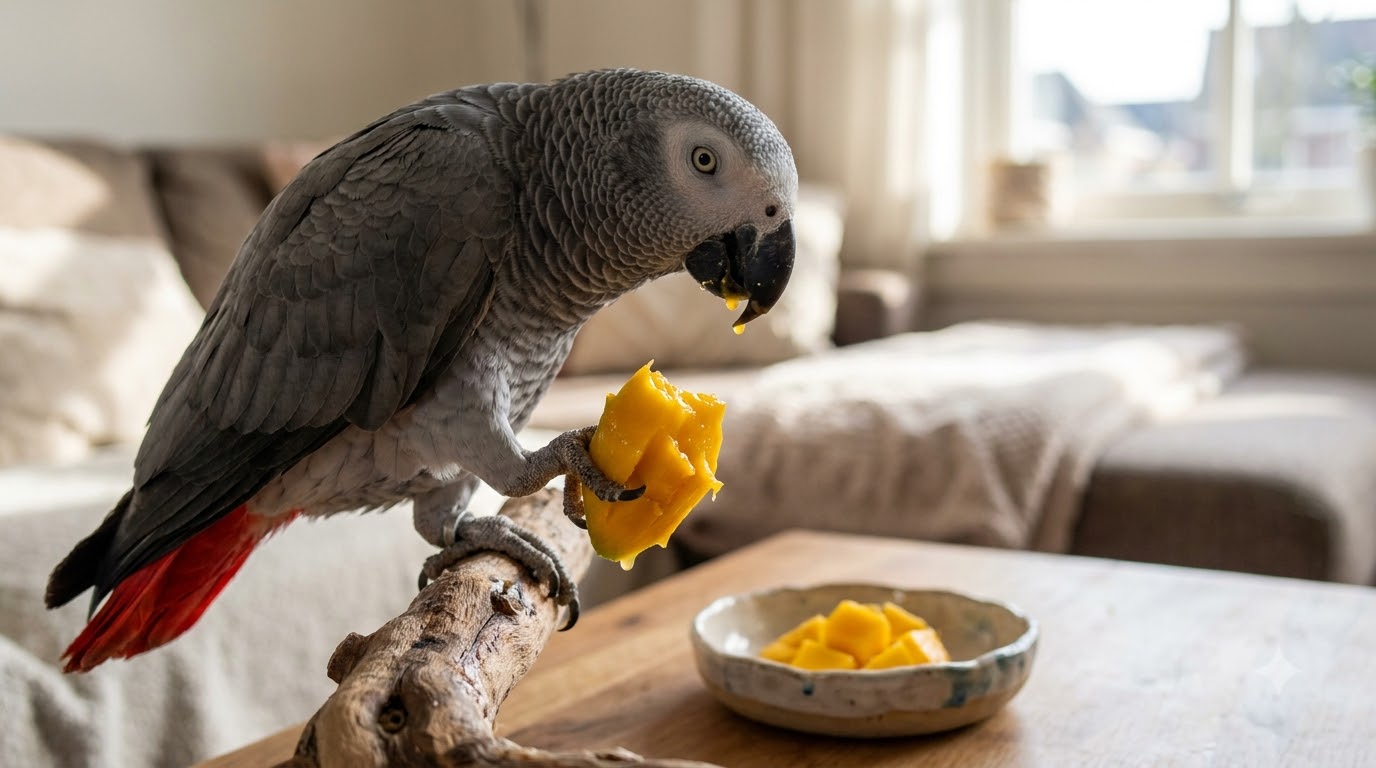
My African Grey was perched nearby, watching the whole thing like it had somewhere to be. As soon as I sliced into the fruit, it leaned forward and started making those little curious noises birds make when they want to know what’s going on.
I cut off a small piece of the soft yellow flesh and held it out.
It took the mango, turned it around in its foot, gave it one cautious bite, and then went straight back for another. A little juice ended up on its beak, and a few seconds later it was wiping its face on the perch like nothing happened.
My Conure wasn’t quite as polite.
It grabbed a piece, took several quick bites, and somehow managed to get mango all over its beak and feathers. The food bowl looked like a tiny crime scene by the time breakfast was over.
That got me wondering the same thing other bird owners ask: can parrots eat mango?
Mango flesh is soft and easy for most parrots to handle, but I don’t just cut the whole fruit into the bowl. I remove the skin, cut the flesh away from that large center seed, and serve only a few small pieces.
That’s become my usual way of sharing mango with the birds. It’s simple, there’s less mess, and they seem perfectly happy with the soft, sweet part.
Which Parts of a Mango Can Your Parrot Eat?
A mango has a lot going on once you put it on the cutting board. There’s the soft, juicy flesh, that big flat seed in the middle, and the skin wrapped around the whole thing.
I don’t put the whole mango in the bird’s bowl. I keep it pretty simple and stick with the part that’s soft and easy to eat.
The ripe flesh is the part they go for
The yellow-orange flesh is what my parrots get.
Once a mango is ripe, it’s soft enough to cut into little chunks without much work. My African Grey likes to grab a piece with one foot and slowly pick at it. My Conure, on the other hand, doesn’t mess around. It takes a couple of bites and somehow gets mango juice all over its beak.
That’s one reason I like fresh mango for an occasional treat. It’s soft, juicy, and easy for a bird to handle.
I usually cut just a few small pieces rather than filling the whole bowl. Mango is naturally sweet, so there’s really no need to pile it in there.
Can parrots eat mango seed?

This is an easy one for me: I take the seed out.
The mango seed is big, flat, and rock-hard. A parrot might peck at it because, well, parrots will investigate just about anything they can get their beak on. But there’s no reason to let them sit there chewing on a hard seed.
When I cut mango, I slice the flesh away from the seed and toss the seed straight into the trash or compost.
One time, I left a little strip of mango attached to the seed while I was cleaning up. My Conure spotted it from across the kitchen and came over like it had just found a brand-new toy. It grabbed the seed, gave it a few hard bites, and then dropped it when it couldn’t get anywhere.
That was enough for me. I finish the job with the knife and keep the seed out of the food bowl.
Can parrots eat mango skin?
I peel it before serving.
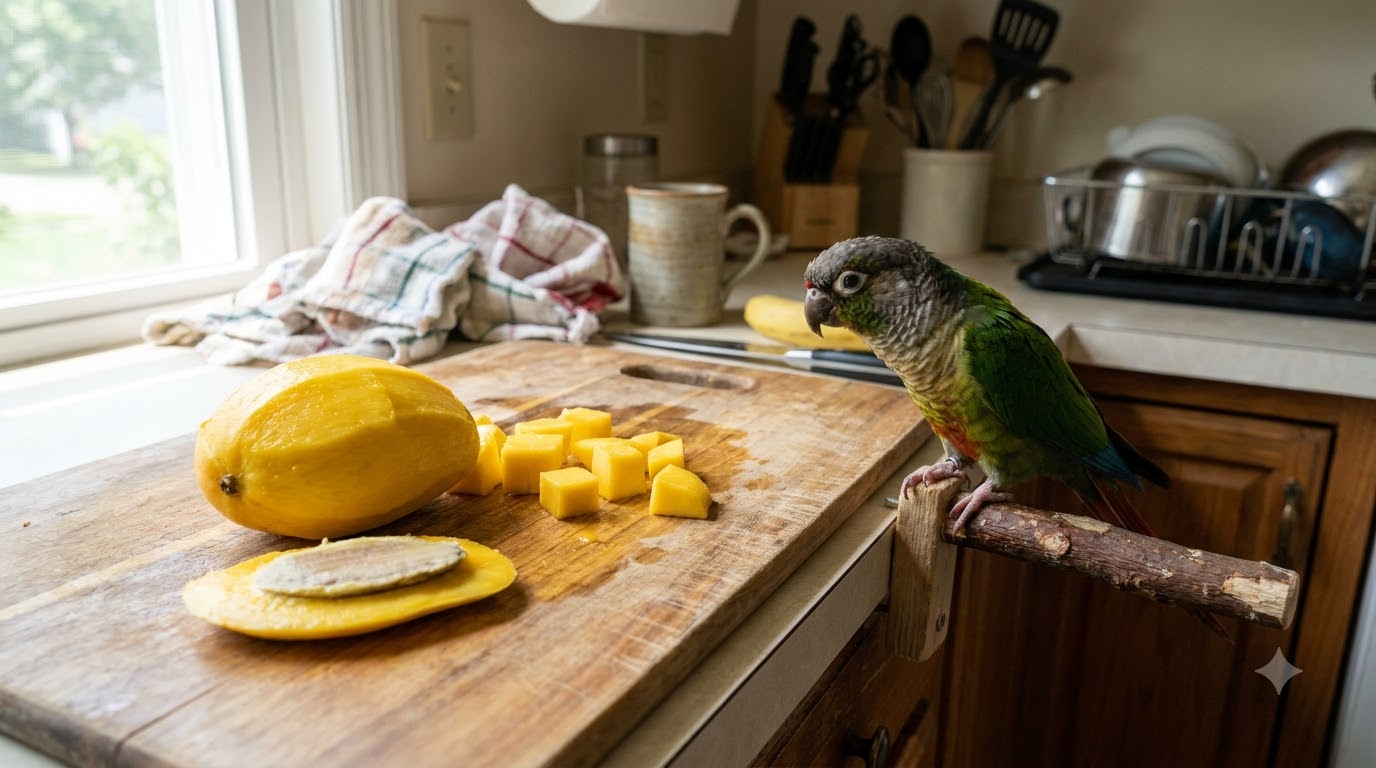
The skin is the outside of the fruit, so I don’t see much reason to leave it on when the soft flesh is right underneath. I wash the mango first, peel it, cut around the seed, and then chop the flesh into small pieces.
My birds don’t seem to miss the skin one bit.
They go straight for the juicy part and leave me to deal with the sticky cutting board afterward—which, honestly, is probably the hardest part of serving mango.
So when I’m asked are mangoes safe for parrots, my routine is pretty straightforward: ripe flesh in the bowl, big seed out, skin peeled away, and only a few pieces at a time.
Ripe Mango or Green Mango?
There’s a pretty big difference between the mango I’d hand to my parrots and the one I’d happily slice up for myself with a little salt and chili.
For the birds, I stick with ripe mango.
A ripe mango should give a little when you press it gently. The flesh is soft, juicy, and easy to cut into small pieces. That’s the kind my birds usually go crazy for.
My African Grey can tell when I’ve got a good one. I’ll barely start peeling it before that little head pops around the corner of the cage. Once it gets a piece, it usually takes it straight to the perch and eats it slowly, one bite at a time.
Green mango is a different story.
It’s firmer, more sour, and not nearly as juicy. I’ve let my Conure have a tiny taste before, and the reaction was pretty funny. It took one bite, froze for a second, shook its head, and wiped its beak on the perch. A few minutes later, it was back asking for the ripe mango sitting on the counter.
That’s why I prefer fresh mango that’s ripe but not mushy.
There’s no need to wait until the fruit is falling apart, either. A mango that’s soft enough to cut easily but still holds its shape works great. I cut a few small chunks, put them in the bowl, and keep the rest for myself.
People also ask can parrots eat mango every day. I wouldn’t make it an everyday thing. Mango is naturally sweet, and my birds have plenty of other foods in their rotation. A few pieces here and there are plenty.
One day they might get mango. Another day it’s blueberries or a little apple. It keeps the fruit bowl from getting boring, and my birds never seem to complain when something different shows up.
How I Cut Mango for My Parrots
Mango can get messy in a hurry.
The first time I gave my Conure a piece that was a little too big, it grabbed the whole thing and took off to its perch. Two bites later, mango juice was running down its beak, and there were little orange smears all over the perch.
These days, I cut it up before it ever gets near the cage.
I start by rinsing the mango under running water. Then I peel the skin, cut the flesh away from the big seed, and slice the soft part into small chunks. Nothing fancy. A sharp kitchen knife and a cutting board are all I need.
For a larger bird like my African Grey, I make the pieces a little bigger so it can hold one comfortably with its foot. My smaller birds get tiny cubes. That saves me from finding half-chewed mango stuck between the bars later.
One morning, I gave my Cockatiel a piece that was barely bigger than a pea. It grabbed it, took three little bites, dropped it, then came back and picked it up again. Apparently, that was the perfect size.
I also don’t fill the bowl with mango.
A few pieces are plenty. The rest goes into a covered container in the fridge for later. Mango is sticky, and leaving a big pile in the cage turns cleanup into a whole production.
Another thing I keep in mind is freshness. I don’t serve mango that’s gone mushy, smells fermented, or has been sitting cut up on the counter for hours. Fresh pieces are easy enough to prepare, so there’s no reason to push my luck.
That’s also why I prefer fresh mango for parrots over sweetened or processed mango products. My birds don’t need anything added to it. They already think plain ripe mango is pretty darn tasty.
And yes, they usually make a mess anyway.
But at least these days, the mango stays in the bowl instead of ending up halfway across the bird room.


Write Your Review
No reviews yet. Be the first to share your experience!