

A carrot is one of those foods that often ends up within reach when a parrot is sitting nearby during meal time. The bright orange color catches their attention, and plenty of parrots are happy to grab a piece and have a good chew. But before you toss a whole carrot into the bowl, it’s worth knowing how to serve it properly.
Yes, parrots can eat carrots. Fresh carrots can be a handy vegetable to add to a varied diet, whether your bird likes them raw and crunchy or prefers them softened a little. They provide fiber, water, and useful nutrients, including beta-carotene.
There’s no need to make carrots the main event, though. A few pieces alongside your parrot’s usual food are enough. And as with any fresh food, give the carrot a good wash before serving and cut it into a size that’s comfortable for your bird to handle.
[wpsm_toplist]
Can Parrots Eat Carrots?
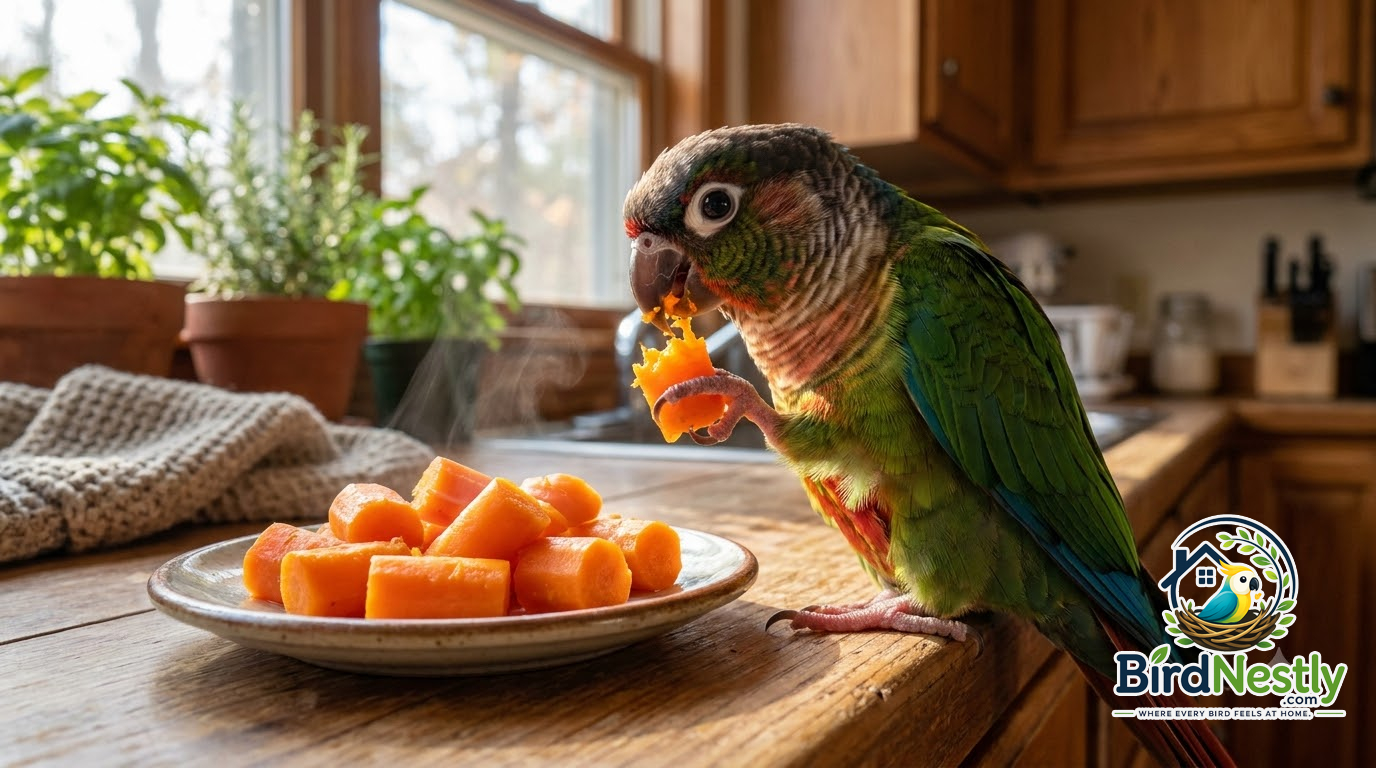
Yes, parrots can eat fresh carrots, and many seem to enjoy the crunchy texture as much as the taste. A small parrot may sit and nibble at a thin strip, while a larger bird can happily hold a chunk in one foot and work away at it with its beak.
Carrots are suitable for many common pet parrots, including Budgies, Lovebirds, Cockatiels, Conures, Quakers, African Greys, Amazons, Cockatoos, and Macaws. The main difference is how much you offer. A tiny Budgie doesn’t need the same piece of carrot as a Macaw.
For a first taste, there’s no reason to give a large serving. A couple of small pieces are enough to see whether your bird likes it. Some parrots take to carrots immediately, while others stare at the unfamiliar orange thing for a while before deciding it’s worth a bite. That’s pretty normal with birds and new foods.
Carrots can be served raw or gently cooked. Raw carrot gives your parrot something firm to chew, while a lightly steamed carrot becomes softer and easier for birds that aren’t keen on hard pieces. Whichever way you serve it, keep it plain and avoid adding salt, butter, oil, sauces, or seasoning.
Give the carrot a thorough wash before cutting it. You can then slice it into thin sticks, small chunks, or another shape that suits your bird. There’s no need to make it complicated; the simpler the carrot, the better.
Are Carrots Good for Parrots?
Carrots have more going for them than their bright orange color. They’re a useful source of beta-carotene, a plant pigment that the body can convert into vitamin A. Vitamin A plays an important role in normal vision, skin, immune function, and the health of tissues throughout the body.
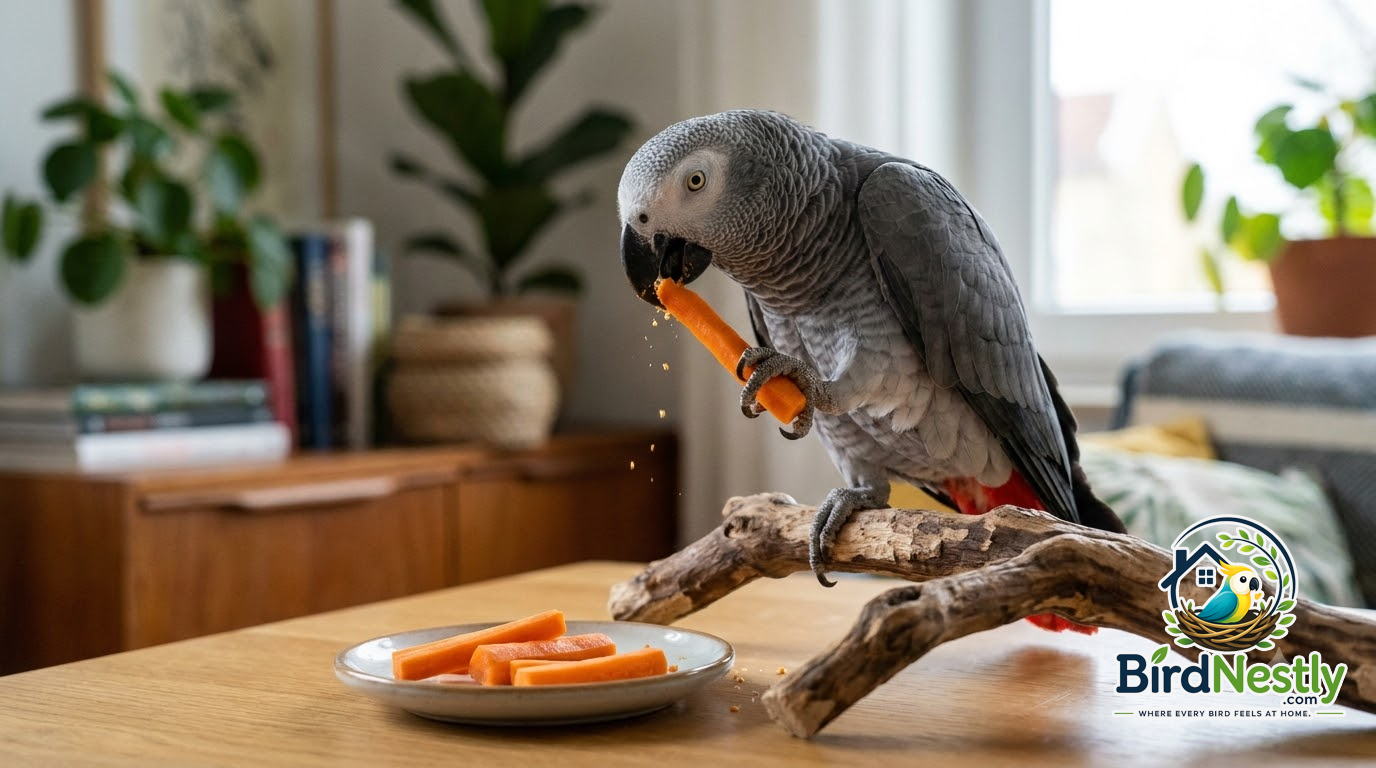
They also provide some fiber, along with nutrients such as vitamin K and potassium. Carrots contain plenty of water too, which adds to their appeal as a fresh vegetable.
That doesn’t mean a parrot needs a pile of carrots every day. No single vegetable can provide everything a bird needs, and carrots work best as one part of a varied diet. You can offer them alongside other suitable vegetables and rotate different foods throughout the week.
There’s also something nice about the texture. Raw carrot gives parrots something firm to hold and work at with their beaks. For birds that enjoy tearing, chewing, and picking at their food, that little bit of extra work can make a simple vegetable much more interesting.
The best approach is to keep carrots as one of several fresh foods on the menu. A few pieces of carrot alongside a balanced diet can be a simple way to add another vegetable without making the whole meal revolve around it.
Raw carrots are perfectly fine for parrots, and for some birds, the crunch is half the fun. A Cockatiel may happily hold a thin piece between its toes and nibble away, while a larger parrot might prefer a chunk it can get a good grip on.
Before serving raw carrot, wash it well under running water and remove any dirt from the surface. You don’t have to turn it into anything fancy. A thin stick, a few small slices, or little chunks are all easy options.
The size matters more than the shape. Small parrots such as Budgies and Lovebirds should get smaller pieces that are easy to manage. Larger parrots can handle bigger pieces, but there’s still no reason to give them a whole carrot at once.
One nice thing about raw carrot is that it gives your bird something to chew. Parrots naturally use their beaks for picking, shredding, and breaking food apart, so a crunchy vegetable can be more interesting than something soft straight from the bowl.
Don’t worry if your parrot doesn’t eat much of it the first time. Some birds need a few introductions before they decide a new food is worth trying. You can leave a small piece alongside familiar foods and see what happens.
Raw carrot can also be grated or chopped into tiny pieces and mixed with other vegetables. This works well for birds that aren’t keen on holding a large piece themselves.
Just keep the carrot plain. There’s no need for salt, seasoning, butter, oil, or sauces. A clean, fresh piece of carrot is all your parrot needs.
Can Parrots Eat Cooked Carrots?
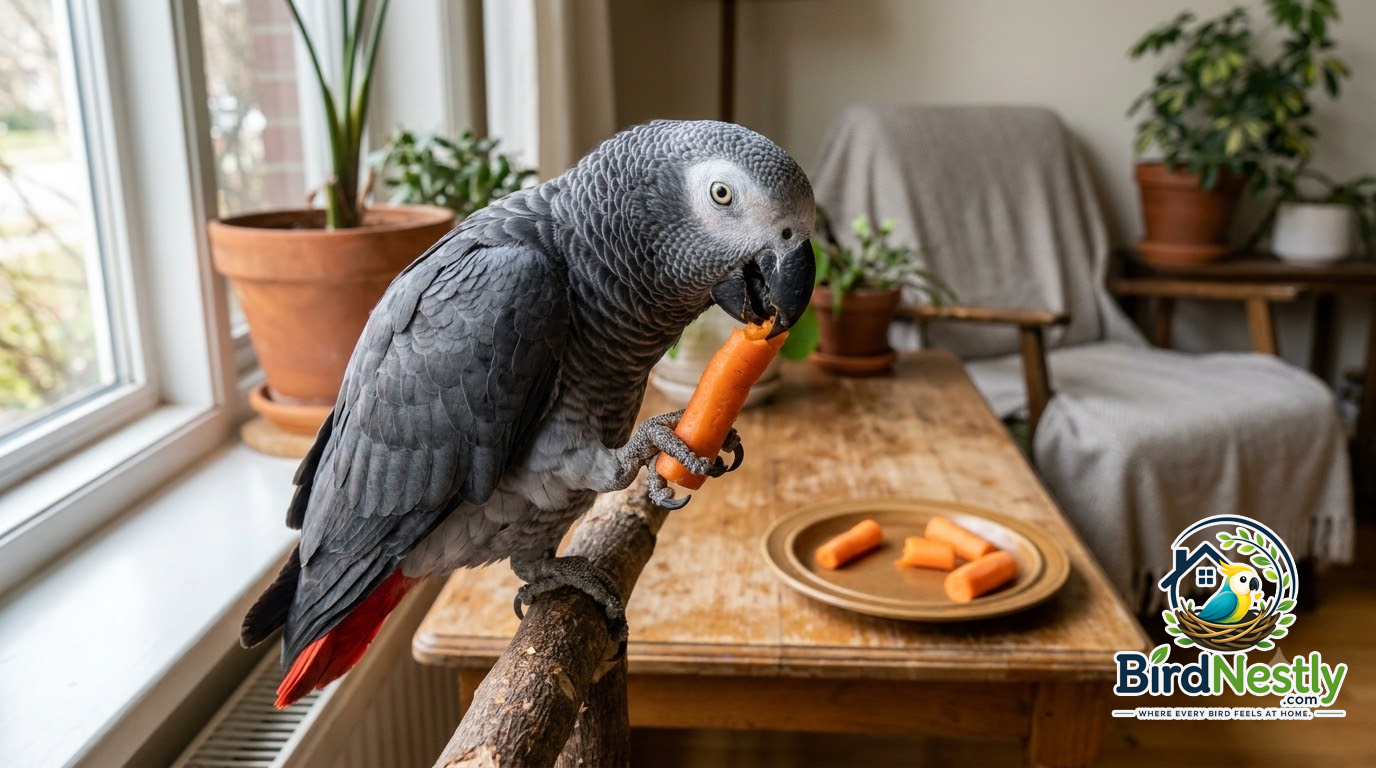
Yes, parrots can eat cooked carrots too. Some birds actually prefer them this way because cooking makes the carrot softer and easier to bite into. A parrot that turns its beak up at a crunchy piece may be much more interested once the carrot has been lightly steamed.
The simplest way to prepare cooked carrot is to steam or boil it until it’s tender but not mushy. Let it cool completely before giving it to your bird. There’s no need to add anything while cooking.
Keep the carrot plain. Salt, butter, oil, sauces, garlic, onion, and seasoning don’t belong in your parrot’s portion. A piece taken from a family meal can contain ingredients that aren’t suitable for birds, so it’s better to set aside a plain piece before adding anything to your own food.
You can cut cooked carrot into small pieces once it has cooled. For a Budgie or Lovebird, tiny pieces are easier to handle. Cockatiels and Conures can manage somewhat larger pieces, while bigger parrots can have a chunk they can comfortably hold.
Cooking does change the texture, so there’s no need to choose one method every time. Raw carrot can be a crunchy snack, while lightly cooked carrot gives your bird something softer to explore. Offering both from time to time can be a simple way to keep meals interesting.
One thing to avoid is overcooked carrot that’s turned into a wet, mushy paste. A soft piece is fine, but something overly watery can be difficult for a bird to pick up and may quickly become messy in the bowl.
Once your parrot has finished eating, remove leftover cooked carrot rather than letting it sit around for hours. Fresh food spoils more quickly than dry food, particularly in a warm room.
So whether your parrot likes its carrot crunchy o
Can Parrots Eat Carrot Tops?
Yes, parrots can eat carrot tops when they’re fresh and properly washed. The leafy greens have a different texture from the crunchy carrot root, giving your bird something else to nibble, tear, and pick at.
Before serving them, wash the carrot tops thoroughly under running water to remove dirt and anything left on the surface. Trim away yellow, wilted, slimy, or damaged leaves. For smaller parrots, you can chop the greens into shorter pieces so they’re easier to pick up and eat.
Carrot tops can be served on their own or mixed with other fresh vegetables. There’s no need to cook them or add salt, butter, oil, or seasoning. Keeping them plain is the easiest option.
Adding different vegetables to your parrot’s meals is a good way to keep things interesting. You can also rotate them with suitable fruits such as apples, pears, or papaya rather than offering the same food every day.
There’s no particular amount of carrot tops your parrot needs. Start with a small amount and see whether your bird enjoys them. Some parrots will happily strip the leaves from the stem, while others may take one look and move on to something else.
The main thing is to serve fresh carrot greens and wash them well before they reach the food bowl. If the leaves look old, moldy, or spoiled, throw them away rather than giving them to your bird.
How to Prepare Carrots for Your Parrot
Preparing a carrot for your parrot doesn’t need to be complicated. Start with a fresh carrot and wash it thoroughly under running water. Give the surface a good scrub to remove dirt, then cut away the ends and any damaged spots.
For a small parrot, thin slices or tiny pieces are usually easier to manage. Larger parrots can handle thicker sticks or chunks that they can hold comfortably with one foot. There’s no need to make the pieces perfectly even—your bird probably won’t care either way.
You can serve the carrot raw, which gives it a satisfying crunch, or lightly steam it if your parrot prefers softer food. Cooked carrot should be allowed to cool before it goes into the bowl. Keep it plain and leave out salt, butter, oil, sauces, and seasoning.
Carrots can also be chopped into small pieces and mixed with other suitable vegetables. For a bit of variety, you can occasionally offer fresh fruit such as mango or papaya separately from the vegetables.
Don’t leave fresh carrot sitting in the cage all day. Once your parrot has finished eating, remove leftovers so they don’t become stale or spoiled.
A simple approach works best: wash it well, cut it to suit your bird, serve it plain, and offer only a small amount at a time.


Write Your Review
No reviews yet. Be the first to share your experience!