

Strawberries are one of those fruits that never seem to go unnoticed around parrots. Set a bowl on the kitchen counter, and it doesn’t take long before a curious bird starts watching every move, quietly hoping a piece might come its way. Bright colors and juicy fruit always seem to spark their interest, even in parrots that usually ignore new foods.
Sharing a small piece of strawberry now and then can be a nice way to add variety to a parrot’s diet. Most birds enjoy the soft texture, and the natural sweetness makes it an easy favorite. That excitement can make it tempting to offer more than needed, but strawberries work best as an occasional treat rather than something that fills the food bowl every day.
Fresh strawberries have plenty to offer, though they aren’t the only fruit a parrot should eat. A balanced diet still comes from mixing different fruits, vegetables, quality pellets, and other healthy foods throughout the week. Once strawberries become part of that mix, they’re simply another colorful snack that many parrots are happy to see arrive.
[wpsm_toplist]
Are Strawberries Safe for Parrots?
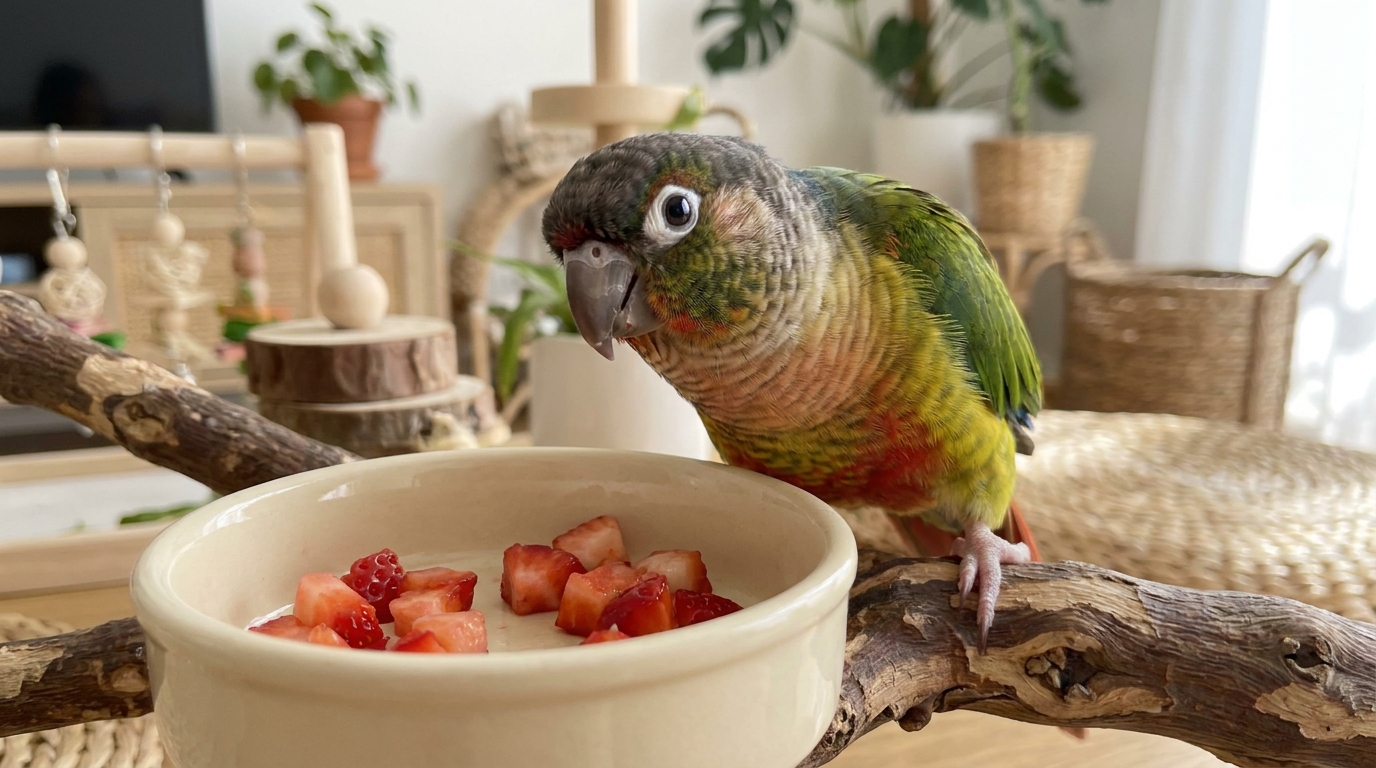
A ripe strawberry usually doesn’t stay unnoticed for very long. Set one on the table while you’re getting the food ready, and chances are there’s already a parrot leaning over, trying to figure out whether it’s meant to be shared. Curiosity seems to kick in long before the first bite.
Around my house, strawberries have never been a problem. They end up in the fruit rotation every now and then, and the birds seem happy whenever they show up. Some finish every piece without leaving a crumb behind. Others take a few bites, wander off for a while, then come back as though they’ve just remembered it was there. That’s pretty normal. Parrots have their own ideas about mealtime.
The messy part comes with the territory. A bright red berry has a way of leaving little reminders all over the cage. A bit on the perch, another on the food bowl, maybe one tiny splash somewhere you weren’t expecting. Anyone who’s shared strawberries with a parrot has probably wiped away those little red spots more than once.
A bowl filled with different fresh foods has always felt like the better approach. Strawberries get their turn, then something else takes their place the next day. That little bit of variety keeps mealtime interesting, and the birds never seem to lose their excitement when an old favorite shows up again.
Why Strawberries Are a Healthy Treat
Strawberries have stayed in my birds’ fruit rotation for one simple reason—they’re one of those foods that offer a little bit of everything. Plenty of moisture, a nice amount of vitamin C, natural antioxidants, and just enough sweetness to keep things interesting without feeling over the top.
I don’t really think about strawberries as a “health food.” They’re simply another fresh option that helps bring a bit of variety to the bowl. One day it might be strawberries, the next day blueberries or apple slices. Changing things around keeps the birds curious, and mealtime never feels repetitive.
The tiny seeds on the outside seem to catch more attention from people than they ever do from parrots. Mine have never stopped to inspect them. They head straight for the soft center, take a few bites, wander off for a minute, then come back to finish what they started. That’s a pretty familiar sight in my house.
Fresh fruit has always worked best as part of the bigger picture. Strawberries, leafy greens, colorful vegetables, sprouts, pellets—they all have a place. None of them need to carry the whole meal on their own, and that’s probably the easiest way to keep a parrot eating well for years to come.
Can Parrots Eat Strawberry Leaves and Tops?
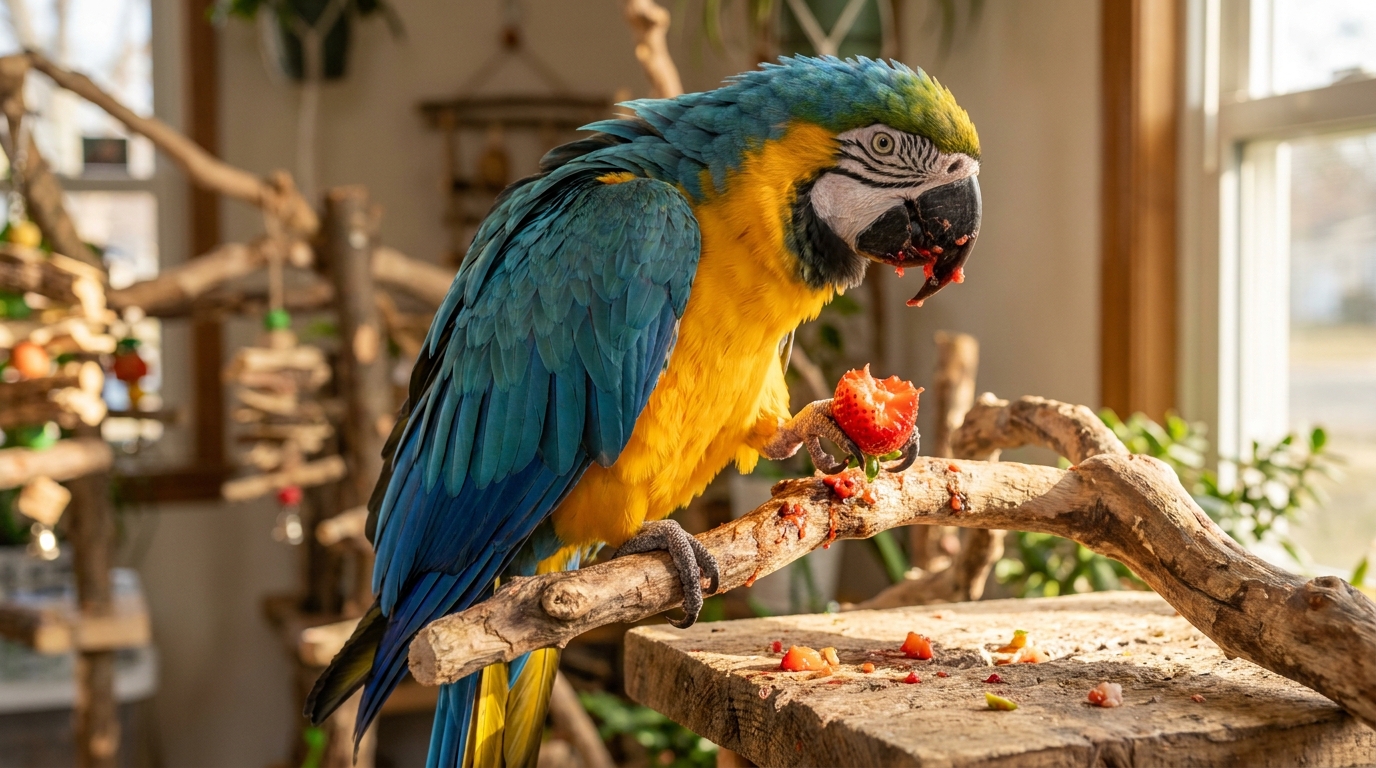
I used to cut the green tops off without giving them a second thought. It was simply part of washing and slicing strawberries before they went into the bowl. After a while, I noticed the birds weren’t interested in that part anyway. They’d go straight for the soft fruit and leave the leafy bit behind.
Now that’s just become a habit. The strawberry gets a good wash, the top comes off, and the fruit is cut into bite-sized pieces. It isn’t a complicated routine, but it saves a little mess and keeps everything ready to eat.
The fruit itself is what usually gets all the attention. One bird might carry a piece to the highest perch, another might stop halfway through to wipe sticky juice all over its beak, and somebody always seems to drop a chunk on the cage floor before picking it up again. Watching parrots eat is rarely a tidy experience.
Strawberries are one of those fruits I always rinse a little longer than most. They grow close to the ground, and they’re often sprayed during farming, so giving them a thorough wash has become second nature. It only takes a minute, and I’d rather spend that minute at the sink than wonder later whether I should have cleaned them better.
How Much Strawberry Should a Parrot Eat?
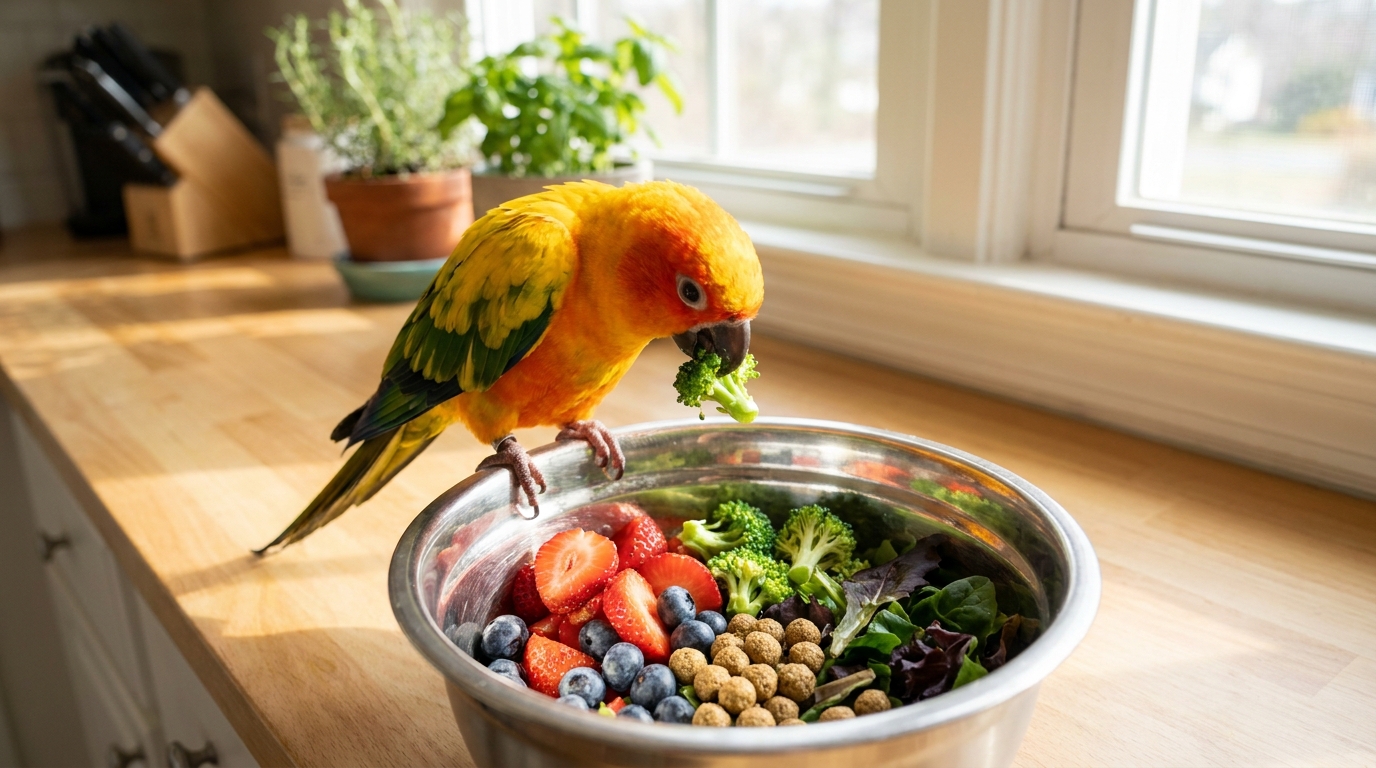
One strawberry can disappear surprisingly fast around a curious parrot, especially once they discover how sweet and juicy it is. That doesn’t mean the whole punnet needs to end up in the food bowl.
A few small pieces have always been more than enough in my house. Budgies and lovebirds are happy with bite-sized chunks, while larger parrots can enjoy a little more without any fuss. The rest of the fruit goes back into the fridge for another day—usually for the humans.
Fresh fruit has never been the biggest part of mealtime here. The bowl still starts with pellets, vegetables, leafy greens, and whatever else is on the menu that day. Strawberries simply join the mix now and then, adding a splash of color and something different to look forward to.
Changing the fruit every few days has worked well over the years. Strawberries might make an appearance this week, then blueberries, apple slices, grapes, or papaya take their place next time. The birds stay interested, and breakfast never feels exactly the same two days in a row.
Funny enough, the excitement never seems to fade. No matter how often strawberries come back into the rotation, somebody always hurries over to claim the first piece before anyone else gets the chance.
Can Baby Parrots Eat Strawberries?
Baby parrots always seem to make me slow down a little. Everything is new to them, even something as simple as a piece of fruit. They might stare at it for a while, give it one tiny peck, then lose interest completely. A day or two later, that same piece suddenly becomes the most interesting thing in the bowl.
Strawberries usually come into the picture after a young parrot has finished weaning and is comfortable eating solid foods. Soft, ripe pieces are easy to hold and easy to nibble, which makes them a nice fruit to introduce alongside other fresh foods. Tiny pieces are all that’s needed. There’s no rush to see how much they can eat.
Young birds learn by exploring. Some will taste a strawberry straight away, while others seem more interested in pulling it apart than actually swallowing it. That’s part of the learning process. They aren’t only discovering new flavors—they’re also figuring out different textures, shapes, and even how food feels in their feet and beak.
Watching a young parrot become more confident with fresh foods is one of those little milestones that never gets old. One week a strawberry might be ignored completely. A short time later, the bowl is empty before you’ve even finished cleaning the cages. That’s usually a sign they’re growing, becoming more curious, and settling into a healthy routine with fresh foods.
Common Mistakes When Feeding Strawberries

A strawberry doesn’t usually stay untouched for long once it lands in the bowl. The funny part comes afterward. Half of it ends up where it belongs, and the other half somehow finds its way onto the perch, the cage floor, or stuck to a toy. Fresh fruit can turn messy pretty quickly, so I got into the habit of clearing away anything left over after breakfast instead of letting it sit there all day.
The other mistake is a little harder to notice. Strawberries are sweet, and parrots are smart enough to remember that. Offer them too often, and it’s amazing how quickly a bird starts digging through the bowl looking for the red pieces first. Mine have tried that more than once. They eventually learned the strawberries weren’t arriving until everything else had a fair chance.
Washing the fruit well has become second nature in my kitchen. Strawberries grow close to the ground, and they’re one of those fruits I never rush through when I’m rinsing them. It only adds a minute or two, but it’s a minute well spent.
Looking back, none of the little mistakes ever came from giving the birds strawberries. They came from getting carried away because the birds enjoyed them so much. That’s easy to understand. Watching a happy parrot tuck into a favorite snack is one of the best parts of sharing your home with them. A little balance keeps that excitement alive every time strawberries make another appearance.
Easy Ways to Serve Strawberries
There isn’t much to do before a strawberry is ready to share. Mine usually get a good rinse, the green top comes off, and the fruit is cut into a few small pieces. That’s about as complicated as breakfast gets around here.
Some mornings the strawberry goes into the bowl by itself. Other days it’s mixed with chopped broccoli, bell peppers, leafy greens, a few blueberries, or whatever fresh food happens to be on the menu. I like changing things around because the birds seem to enjoy a little surprise every now and then. The bowl looks different, and they spend more time exploring before deciding what to eat first.
A whole strawberry can be fun for larger parrots. They’ll grab it with one foot, take little bites, turn it around, then somehow manage to paint half the perch pink before they’re finished. Smaller birds seem happier with bite-sized pieces they can pick up without much effort.
Every now and then, I’ll tuck a few pieces into a foraging toy instead of placing them in the food bowl. Breakfast suddenly lasts a lot longer. Rather than finishing everything in a couple of minutes, the birds spend time pulling, climbing, and figuring out how to reach the fruit. Watching them work it out is almost as enjoyable as watching them eat.
By the time breakfast is over, there are usually a few strawberry stains waiting to be wiped away. That has never bothered me much. A messy cage is often a pretty good sign that the birds had a morning they genuinely enjoyed.
Frequently Asked Questions
Can parrots eat strawberries every day?
I wouldn’t put them on the menu every day. Strawberries are much more enjoyable when they show up once in a while, mixed in with plenty of vegetables, pellets, and other fresh foods.
Are strawberry seeds safe for parrots?
The tiny seeds on the outside have never caused any trouble with my birds. They usually head straight for the juicy part without paying much attention to the seeds at all.
Can parrots eat frozen strawberries?
They can, although I prefer letting them thaw until they’re soft again. The texture is easier to bite, and it doesn’t leave such a cold surprise for the bird.
Can parrots eat dried strawberries?
Fresh strawberries are the better choice. Dried versions often contain added sugar or preservatives, and even the unsweetened ones are far more concentrated than fresh fruit.
Why won’t my parrot eat strawberries?
Some parrots need a little time before deciding a new food is worth trying. I’ve had birds ignore strawberries more than once, only to come back a few days later and finish every piece. They like making their own decisions, and that’s part of their charm.


Write Your Review
No reviews yet. Be the first to share your experience!