

[wpsm_toplist]
A Cherry That Caught My Parrot’s Attention
A bowl of cherries was sitting on the kitchen counter when I noticed my parrot watching every move I made. It wasn’t begging for food or making a fuss. It just kept staring at those bright red cherries, tilting its head as if it was trying to decide whether they were worth investigating.
I picked one up, and the bird shuffled a little closer. The shiny skin and rich color were obviously interesting, but there was one thing that made me stop before offering a bite. Right in the middle was a hard pit. It made me wonder how many people had shared cherries with their parrots without giving that part a second thought.
From that day on, cherries became one of those fruits I prepared a little differently. The sweet flesh often disappeared in minutes, while the pit and stem went straight into the trash before the food bowl ever reached the cage. It only takes a few extra seconds, and it lets both me and the birds enjoy breakfast without worrying about what was left hidden inside the fruit.

Which Parts of a Cherry Are Safe?
The part my parrots actually eat is the soft flesh. Once the pit is removed, a cherry is just another fresh fruit that can be worked into breakfast alongside vegetables and pellets. It’s juicy, slightly sweet, and easy for most parrots to nibble into small pieces.
The pit never goes anywhere near the food bowl. Besides being hard enough to become a choking hazard, cherry pits contain compounds called cyanogenic glycosides. When the pit is cracked or crushed, these compounds can release cyanide. That’s why veterinarians and animal poison centers recommend removing the pit before sharing cherries with pets, including birds.
The stem comes off as well. My birds have a habit of picking up anything long and skinny just to see what they can do with it. A cherry stem quickly turns into a toy instead of food, so it’s easier to remove it before breakfast starts.
Leaves and small branches are another story. They stay outside with the tree. Like the pit, cherry leaves and stems can contain cyanogenic compounds, especially after they’ve been damaged or started to wilt. There’s simply no reason to let a curious parrot chew on them when the fruit itself is the only part worth serving.

Preparing a cherry doesn’t take much time. I rinse it under running water, pull off the stem, cut it in half, remove the pit, and give each bird a few small pieces.
For example, an African Grey might happily hold half a cherry in one foot and nibble away until only the skin is left. A budgie or cockatiel usually finds bite-sized pieces much easier to manage. The fruit is exactly the same—only the serving size changes to match the bird.
Those few extra seconds of preparation have become such a habit that I barely think about them anymore. The birds get the part they enjoy, and everything that doesn’t belong in the food bowl stays on the cutting board.
How I Prepare Cherries for My Parrots
After learning a little more about cherries, I settled into a routine that only takes a minute or two. Every time can you feed cherries to your parrot comes up in conversation, this is the routine I end up describing.
The cherries get a good rinse under cool running water first. Then I remove every stem, cut each cherry in half, and take out the pit before anything goes near the food bowl. It has become such a habit that I hardly think about it anymore.
Larger parrots don’t need much help after that. An African Grey or a macaw is usually happy holding half a cherry in one foot while picking away at the juicy flesh. Smaller birds are a little different. For my cockatiel, I cut each half into a few smaller pieces. It makes breakfast easier to manage, and there are fewer bits of cherry scattered around the cage afterward.
A cherry never replaces the rest of breakfast. It simply joins everything else that’s already there.
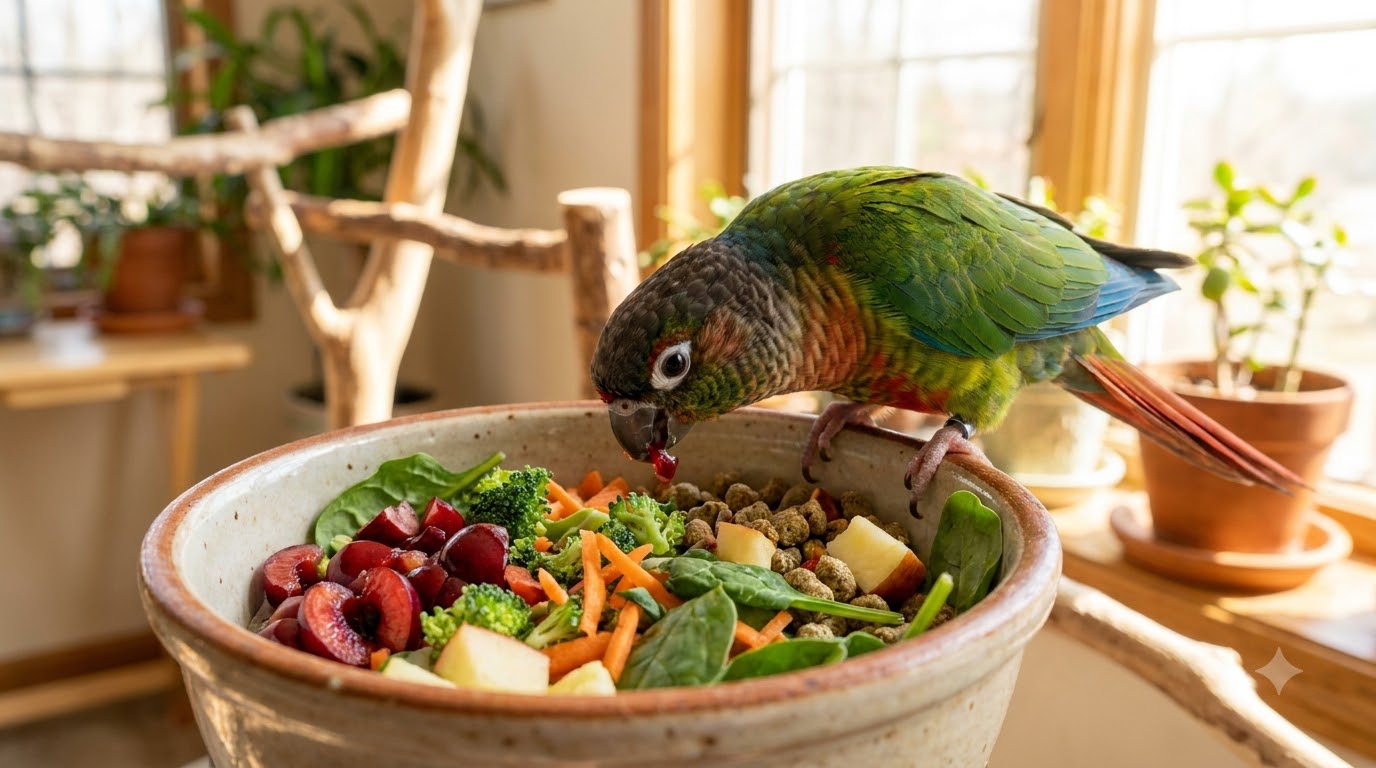
One bowl might look like this:
- Pellets
- Chopped broccoli
- Bell pepper
- A few spinach leaves
- Half a cherry, cut into small pieces
Another morning could be:
- Pellets
- Carrot
- Zucchini
- A slice of apple
- Two small pieces of cherry
Fresh cherries are the only ones I keep for the birds. The jars of cherries packed in syrup stay on the supermarket shelf. They’re made for desserts, not parrots. Even frozen cherries only make it into the bowl after they’ve thawed completely and the pit has been checked one more time.
That small bit of preparation has become part of breakfast, just like washing the food bowl afterward. It doesn’t take long, and it means I never have to wonder whether I missed something that shouldn’t have been there.
A Few Questions That Always Come Up
Can young parrots eat cherries?
They can, as long as they’re already eating solid food on their own. I just make the pieces much smaller than I would for an adult bird.
I still remember one young cockatiel that spent more time chasing a piece of cherry around the bowl than actually eating it. After cutting the fruit into tiny pieces, breakfast suddenly became much easier.
My parrot doesn’t seem interested. Should I keep trying?
That happens more often than people think.
One of my parrots ignored cherries for days. Every morning the cherry pieces were still sitting in the bowl while everything else had disappeared.
About a week later, something changed. The bird picked up a piece, took one bite, then came back for another. Since then, cherries have become one of the first fruits to disappear.
Parrots can be slow to trust unfamiliar food. Sometimes they just need to see it a few times before curiosity wins.
Fresh or frozen?
Fresh cherries are always my first choice.
Frozen cherries can work too, but I let them thaw completely before serving. I also check each piece one more time to make sure no pit was missed before freezing.
Canned cherries never make it into my birds’ breakfast. Most are packed in syrup or contain added sugar, and that’s something I simply avoid.
How many cherries are enough?
A little goes a long way.
One or two cherries, cut into small pieces, are plenty for most parrots when they’re already eating pellets, vegetables, and other fresh foods.
Breakfast has never been about filling the bowl with one fruit. It’s about offering a little variety. Some mornings cherries are there, other mornings they’re replaced with blueberries, apple, kiwi, or a slice of pear.
The birds don’t seem to mind which fruit shows up. They’re usually more interested in discovering what’s different today than eating the exact same thing every morning.


Write Your Review
No reviews yet. Be the first to share your experience!