

Squash is one of those foods that often ends up in the kitchen but may leave parrot owners wondering whether it belongs in their bird’s food bowl too. The good news is that most parrots can enjoy squash as part of a varied diet. It can be served in several simple ways, and different types of squash offer useful nutrients that can complement the fruits, vegetables, pellets, and other foods your parrot already eats.
The main thing is how the squash is prepared. Plain squash is very different from the seasoned dishes people commonly eat. Salt, butter, sugar, sauces, and other seasonings have no place in a parrot’s portion. Freshness and portion size also matter, especially when introducing a new food.
[wpsm_toplist]
1. Can Parrots Eat Squash?
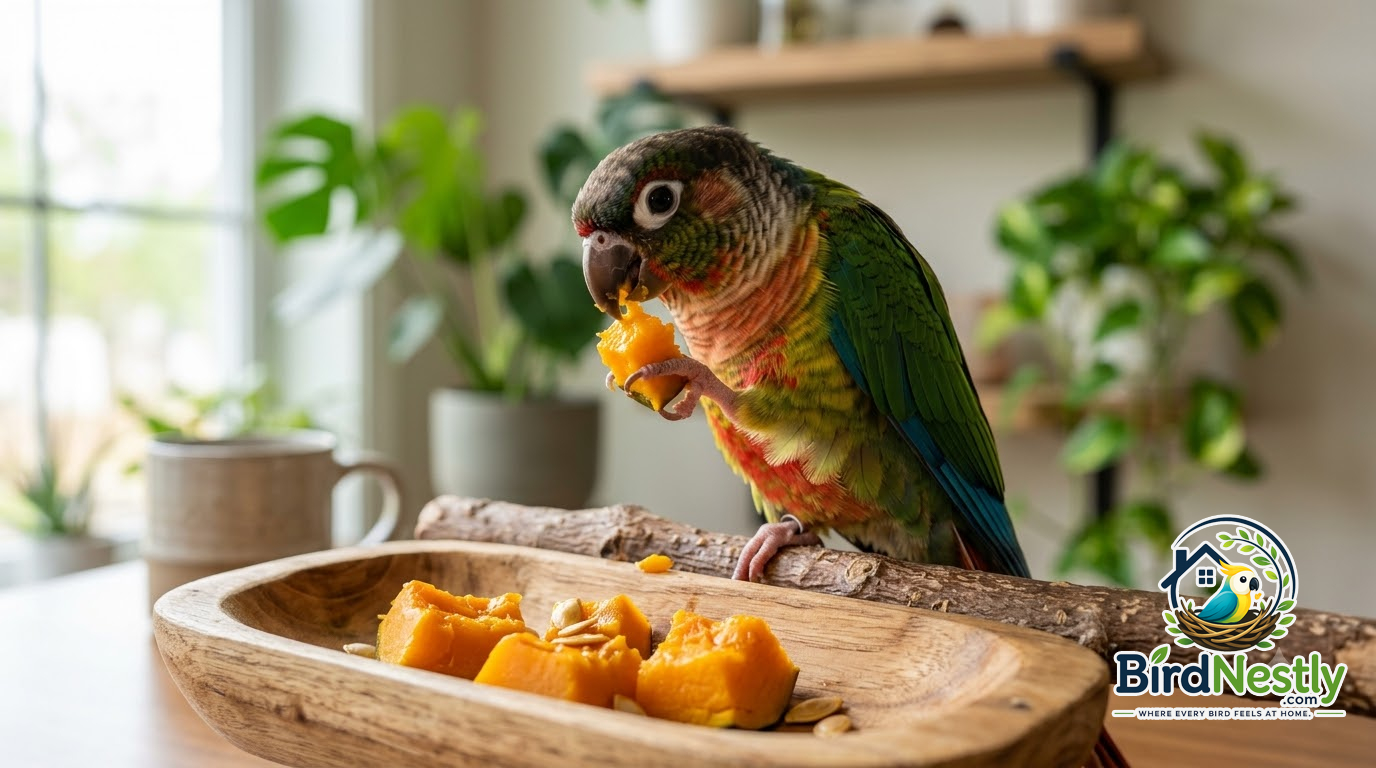
Yes, parrots can eat squash. Most common varieties are safe for parrots when they are fresh, clean, and prepared without added salt, sugar, butter, or seasoning.
Squash can be offered raw or cooked, depending on the type and what your parrot prefers. Softer cooked squash can be easier for some birds to handle, while small pieces of raw squash can provide a different texture and encourage natural chewing.
There are several varieties that can be included in a parrot’s diet, including butternut squash, acorn squash, spaghetti squash, yellow squash, and zucchini. Pumpkin is also commonly enjoyed by many parrots.
Squash should not replace a parrot’s regular balanced diet. Think of it as one vegetable among many rather than something that needs to appear in every meal. Offering different vegetables throughout the week gives your bird a wider range of nutrients and textures.
When serving squash for the first time, start with a small amount. This makes it easier to see how your parrot reacts to the new food. Remove any uneaten fresh squash after a reasonable period, particularly in warm conditions, since moist foods can spoil quickly.
2. Is Squash Safe for Parrots?
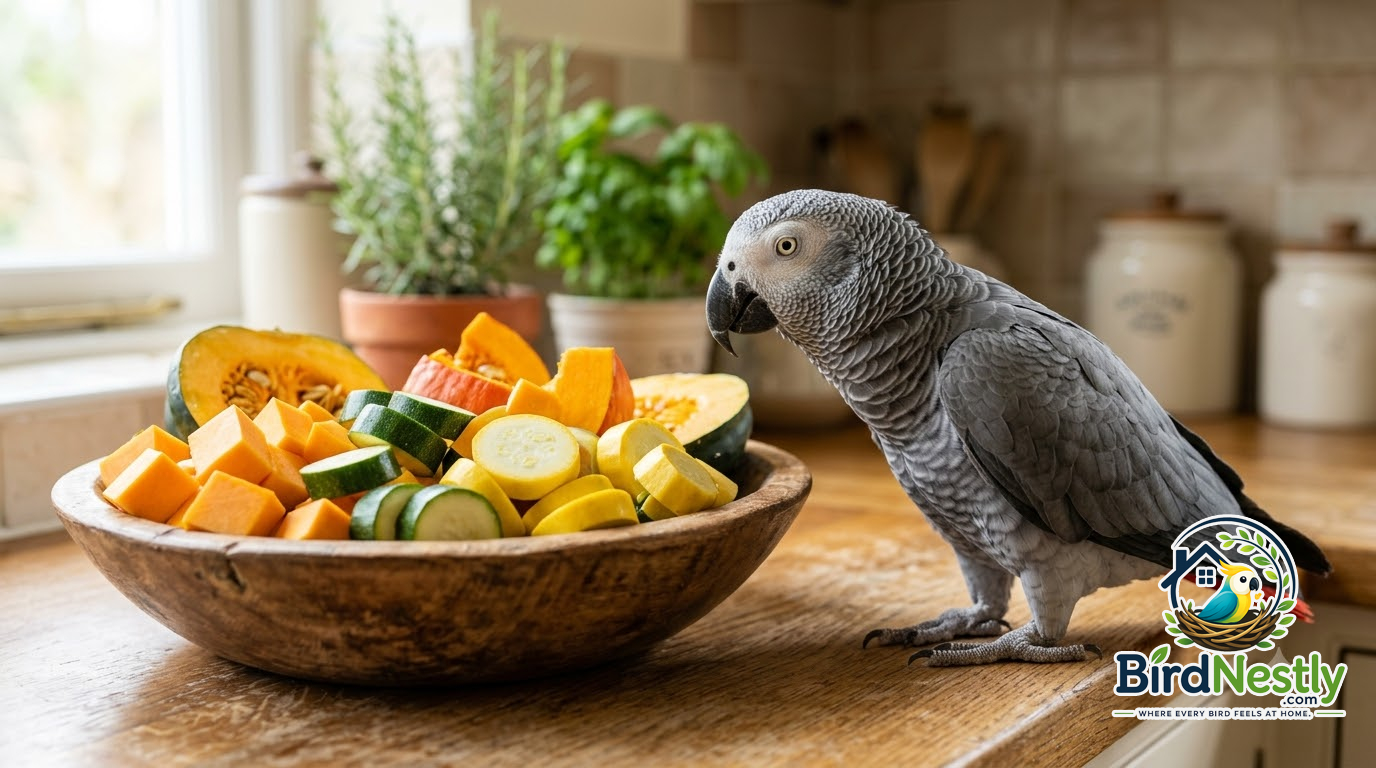
Squash is generally safe for parrots when it is prepared properly. The flesh of common edible squash varieties contains nutrients that can be useful in a varied diet, including fiber and carotenoids such as beta-carotene, which the body can convert into vitamin A.
Vitamin A is particularly important for birds because it supports normal vision, skin, feathers, and the immune system. Offering vegetables that naturally contain carotenoids can therefore be a useful part of providing dietary variety.
The safest way to serve squash is plain. Wash it thoroughly before cutting, remove any spoiled or damaged areas, and cut it into pieces appropriate for your parrot’s size. Cooked squash should be allowed to cool completely before it reaches the food bowl.
Avoid giving your parrot squash that has been prepared for human meals with salt, butter, sugar, cream, sauces, garlic, onion, or heavy seasoning. A small amount of plain squash is much more suitable than sharing a seasoned side dish from the dinner table.
The seeds and skin can depend on the particular squash and how they have been prepared, so they deserve separate consideration rather than assuming every part is suitable in every situation.
3. What Types of Squash Can Parrots Eat?
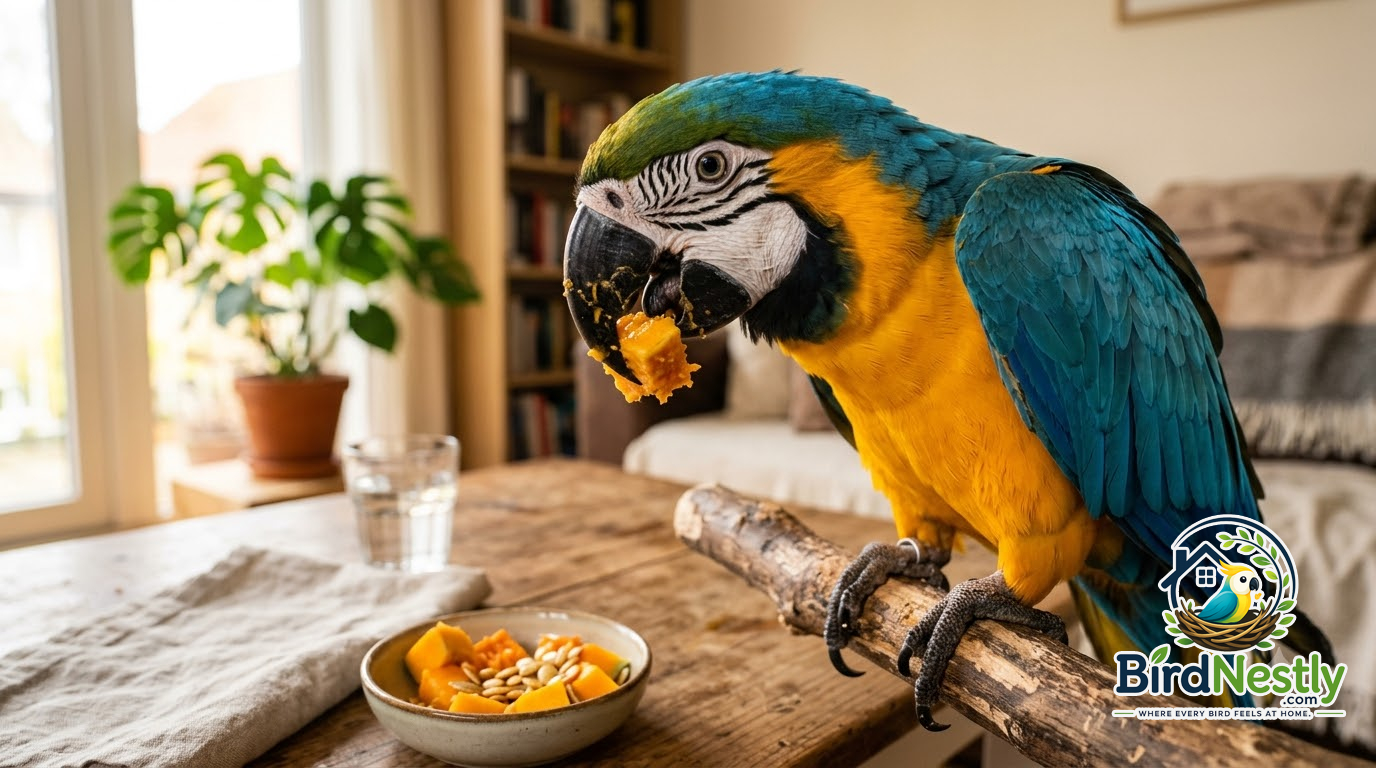
Parrots can enjoy several common types of squash. Each variety has a slightly different texture, flavor, and nutrient profile, so offering different kinds can add variety to your bird’s meals.
Butternut Squash
Butternut squash is a popular choice because its flesh becomes soft and slightly sweet when cooked. It can be steamed, baked, or boiled without any seasoning and then cooled before serving.
Small pieces of plain cooked butternut squash are often easy for parrots to pick up and eat.
Acorn Squash
Acorn squash can also be offered to parrots. The flesh is naturally mild and can be served in small pieces after cooking.
Remove any parts that are hard, spoiled, or difficult for your bird to handle.
Spaghetti Squash
Spaghetti squash has a different texture from most other varieties. Once cooked, its flesh separates into soft strands, which some parrots may enjoy picking apart.
Allow it to cool completely and serve it plain.
Yellow Squash
Yellow squash is another suitable vegetable for parrots. It has a relatively soft texture and can be offered raw in small pieces or cooked without seasoning.
Wash it thoroughly before serving, especially when the skin is left on.
Zucchini
Zucchini belongs to the same broader squash family and can be a simple addition to a parrot’s vegetable rotation. It contains a high amount of water and can be served in small raw pieces or lightly cooked.
Because zucchini is soft, it can work well for parrots that prefer vegetables that are easy to bite.
Pumpkin
Pumpkin is another type of squash that parrots can eat. Plain cooked pumpkin can be served in a small amount, while fresh pumpkin flesh can also be offered when properly prepared.
Avoid canned pumpkin products that contain added sugar, salt, spices, or other ingredients. Plain pumpkin is the better choice.
4. Can Parrots Eat Raw Squash?
Yes, many parrots can eat raw squash. Raw squash can provide a firm texture that gives birds something to bite and tear apart, which can make mealtime more interesting.
Raw squash should be washed thoroughly before serving. Cut it into small, manageable pieces rather than giving your parrot a large chunk that may be difficult to handle.
Zucchini and yellow squash are particularly convenient to serve raw because their flesh is relatively soft. Other varieties, such as butternut or acorn squash, are firmer and may be easier for some parrots to eat after cooking.
There is no need to add salt, oil, seasoning, or any other ingredient. Plain raw squash is all your parrot needs.
Watch your bird the first few times it tries raw squash. Some parrots will take to it immediately, while others may ignore it at first. That is normal. Parrots can be surprisingly particular about new foods, especially when the texture is unfamiliar.
5. Can Parrots Eat Cooked Squash?
Yes, parrots can eat cooked squash, and many birds find the softer texture easier to handle than raw squash. Cooking can also make firm varieties such as butternut and acorn squash much softer.
The best method is to cook squash without adding anything else. Steaming, boiling, or baking are simple options. Once the squash is tender, let it cool completely before offering it to your parrot.
Avoid seasoning the squash. Ingredients that are common in human recipes, such as salt, butter, sugar, cream, garlic, onion, and spice blends, should not be added to a parrot’s serving.
You also do not need to cook squash until it becomes extremely soft. A slightly firm texture can give your bird something to hold and tear apart.
When introducing cooked squash for the first time, offer only a small portion. This gives your parrot an opportunity to get used to the taste and texture without making a large change to its usual diet.
6. Can Parrots Eat Squash Seeds?
Parrots can eat the seeds from some squash varieties, but preparation matters. Fresh squash seeds should be clean and free from salt, oil, spices, and other ingredients.
Never offer salted or seasoned squash seeds from packaged snacks. These products are made for people and can contain far more sodium and other ingredients than a parrot needs.
If you choose to offer fresh squash seeds, wash them thoroughly and make sure they are suitable for your particular bird to handle. Some parrots enjoy cracking seeds, while others may prefer the soft flesh instead.
Portion size is also important. Seeds are more concentrated than the watery flesh of squash, so they should be treated as a small part of the diet rather than something offered in large amounts.
For younger birds or parrots that have difficulty handling harder foods, the soft flesh may be a simpler choice.
As with any new food, watch how your parrot responds the first time. A bird may happily eat squash flesh but show no interest in the seeds, and there is nothing wrong with that.
7. Can Parrots Eat Squash Skin?
Parrots may be able to eat the skin of some squash varieties, but the skin should be washed very well before it is offered. Squash can carry dirt or residue on its surface, so cleaning it thoroughly is important.
Whether the skin is a good choice also depends on the type of squash. Thin-skinned varieties such as zucchini and yellow squash are easier for parrots to chew. The skin of harder varieties can be tougher and less pleasant for some birds.
You can leave the skin on when serving soft varieties if it has been cleaned properly. For thick or very hard-skinned squash, removing the skin is usually the simpler option.
Never give your parrot squash skin that is moldy, damaged, or visibly spoiled. The same applies to any part of the vegetable that does not look fresh.
8. How Much Squash Can a Parrot Eat?
Squash should be offered as part of a varied diet rather than making up a large portion of your parrot’s meals. A small serving is usually enough, especially when your bird is trying squash for the first time.
The right amount depends on the size of the parrot and what else it eats during the day. A large macaw naturally needs a different portion from a budgie or cockatiel.
For a first serving, a few small pieces are a sensible place to start. If your parrot enjoys the squash and handles it well, you can continue offering small portions alongside other suitable vegetables and foods.
There is no need to give squash every day. Rotating different vegetables can provide more variety and keeps your parrot from relying too heavily on one particular food.
Fresh squash should also be removed from the cage after it has been sitting out for too long. Moist fruits and vegetables can spoil much faster than dry foods, particularly in a warm room.
The goal is simple: offer enough for your parrot to enjoy without allowing squash to crowd out the other foods that make up a balanced diet.
Frequently Asked Questions
Can parrots eat butternut squash?
Yes. Butternut squash is safe for parrots when it is fresh and properly prepared. It can be served raw in small pieces or cooked until tender without salt, butter, sugar, or seasoning.
Can parrots eat zucchini?
Yes. Zucchini is a type of squash that parrots can eat. It can be served raw or lightly cooked after being washed thoroughly.
Can parrots eat pumpkin?
Yes. Pumpkin is a type of squash and can be offered to parrots in small amounts. Plain fresh or cooked pumpkin is preferable to canned pumpkin containing added sugar, salt, or spices.
Can parrots eat squash seeds?
Parrots can eat fresh squash seeds when they are clean and free from salt, oil, and seasoning. Offer only a small amount because seeds are more concentrated than the flesh.
Can parrots eat squash skin?
Some parrots can eat the skin of soft-skinned squash such as zucchini and yellow squash. Wash the squash thoroughly first. Thick or tough skin is better removed.
Can parrots eat raw squash?
Yes. Many parrots can eat raw squash. Softer varieties such as zucchini and yellow squash are easier to serve raw, while harder varieties may be more suitable after cooking.
Can parrots eat cooked squash?
Yes. Plain cooked squash is safe for parrots and can be easier to eat than raw squash. Steam, boil, or bake it without adding salt, butter, sugar, garlic, onion, or spices.
Is squash good for parrots?
Squash can be a nutritious addition to a varied parrot diet. It provides nutrients such as fiber and carotenoids, including beta-carotene, which can be converted into vitamin A.
Can parrots eat squash every day?
There is no need to feed squash every day. Offering a variety of suitable vegetables throughout the week is a better approach than relying heavily on one vegetable.
How should I prepare squash for my parrot?
Wash the squash thoroughly, remove any damaged areas, and cut it into small pieces. It can be served raw or cooked without seasoning. Let cooked squash cool completely before giving it to your parrot.
Can baby parrots eat squash?
Young parrots have different nutritional needs depending on their age and stage of development. Squash should not replace a properly formulated diet for a growing bird. Consult an avian veterinarian if you are unsure what foods are appropriate for a young parrot.
Can parrots eat seasoned squash?
No. Squash prepared with salt, butter, sugar, sauces, garlic, onion, or strong seasonings should not be shared with parrots. Plain squash is the safer choice.


Write Your Review
No reviews yet. Be the first to share your experience!