

Figs are soft, sweet, and easy for a parrot to bite into, so it’s natural to wonder whether they belong in the food bowl. The good news is that parrots can eat figs when the fruit is fresh, clean, and served in a small amount.
Figs can add some variety to a parrot’s fruit selection, but they should not take the place of the main diet or become a large part of daily meals. Fresh figs contain natural sugars, so portion size matters. Dried and processed figs are a different matter because they can be much more concentrated or contain added ingredients.
For a first serving, choose a fresh fig, wash it thoroughly, remove any damaged area, and cut off a small piece. Your parrot can eat the soft flesh along with the tiny seeds inside, and the skin does not necessarily need to be removed.
[wpsm_toplist]
1. Can Parrots Eat Figs?
Yes, parrots can eat fresh figs in small amounts. Figs are included among the fruits that can be offered to pet birds by VCA, along with fruits such as apples, bananas, blueberries, grapes, kiwi, mango, papaya, pineapple, plums, and strawberries.
The safest choice is a fresh, ripe fig that has been washed thoroughly. Cut it into a piece that your parrot can easily hold and eat. A small parrot needs a much smaller piece than a Macaw or Amazon, so the serving should always be appropriate for the bird’s size.
There is no need to remove the tiny seeds found throughout the inside of a fig. They are part of the fruit and can be eaten with the soft flesh. The skin can also be left on when the fig has been cleaned properly.
Keep the fruit plain. Do not add sugar, syrup, salt, seasoning, chocolate, cream, or other ingredients. A fresh fig by itself is all that is needed.
When introducing figs for the first time, offer only a small piece and watch how your bird responds. Some parrots will immediately enjoy the soft texture and sweetness, while others may show little interest.
Figs should also be treated as one fruit among many rather than the only fruit offered. A varied selection can include bananas, blueberries, papaya, or mango.
2. Are Figs Good for Parrots?
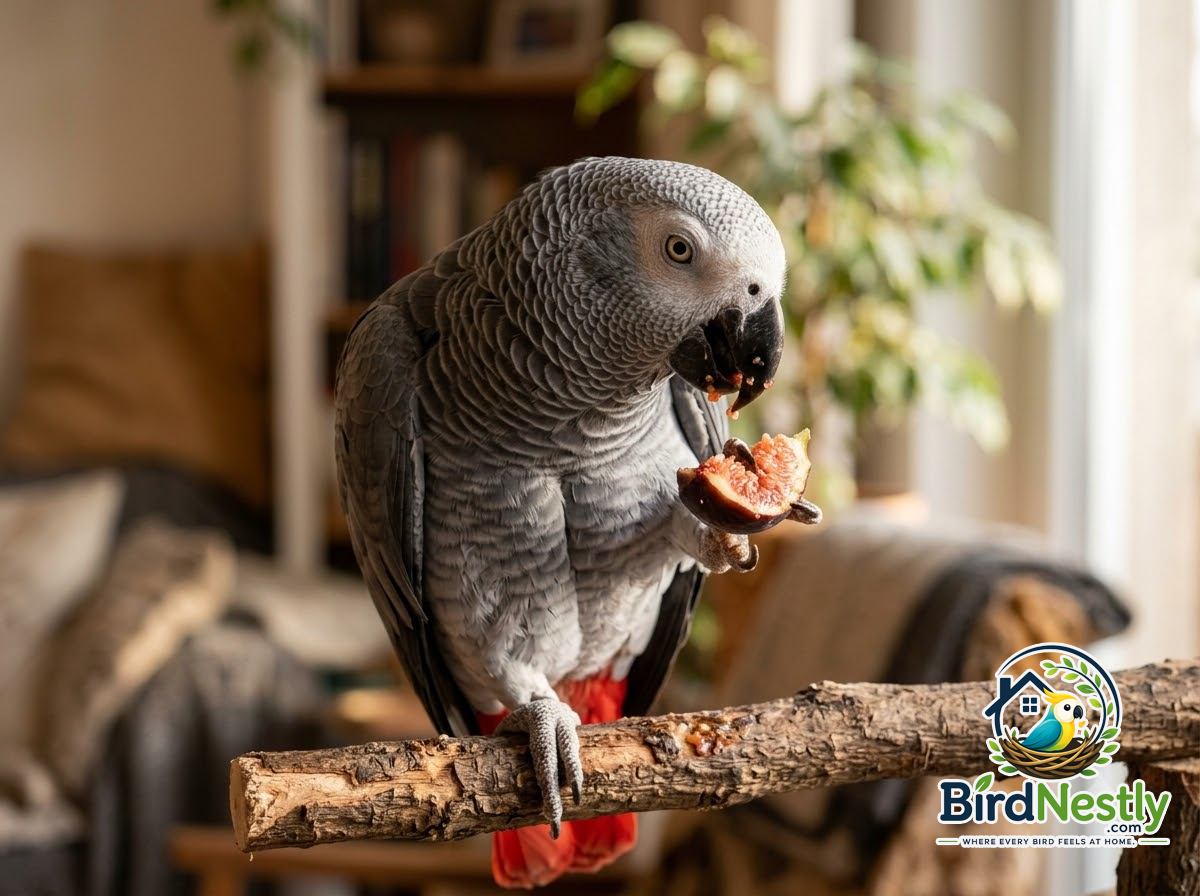
Figs can be a useful addition to a parrot’s fruit selection, particularly because they provide water, carbohydrates, and dietary fiber. USDA food data lists raw figs as a source of dietary fiber, while fresh fruit also provides water and naturally occurring sugars.
The important part is not to confuse “good in small amounts” with “better in large amounts.” Fruit contains natural sugar, and VCA recommends keeping fruit to around 10% or less of the daily diet for Amazon and African Grey parrots.
That makes portion size particularly important when serving sweet fruits such as figs. A small piece alongside a balanced diet is very different from giving a large amount of figs every day.
Fresh figs also have a useful texture. The soft flesh is easy for many parrots to bite, while the tiny seeds give the fruit a slightly different texture. A parrot may hold the piece with one foot and tear it apart with its beak, or simply take a few bites and leave the rest.
Figs should therefore be viewed as a small fruit addition, not a replacement for nutritionally complete food. Other fruits can be rotated through the diet, while vegetables and the bird’s regular complete food provide additional nutrients.
Fresh vegetables such as kale, carrots, and broccoli can provide useful variety alongside a small amount of fruit.
For a healthy adult parrot, a small piece of fresh fig can be an enjoyable occasional treat. Birds with medical conditions, weight concerns, or special dietary requirements may need a different fruit allowance, so their diet should be discussed with an avian veterinarian.
3. Can Parrots Eat Fresh Figs?
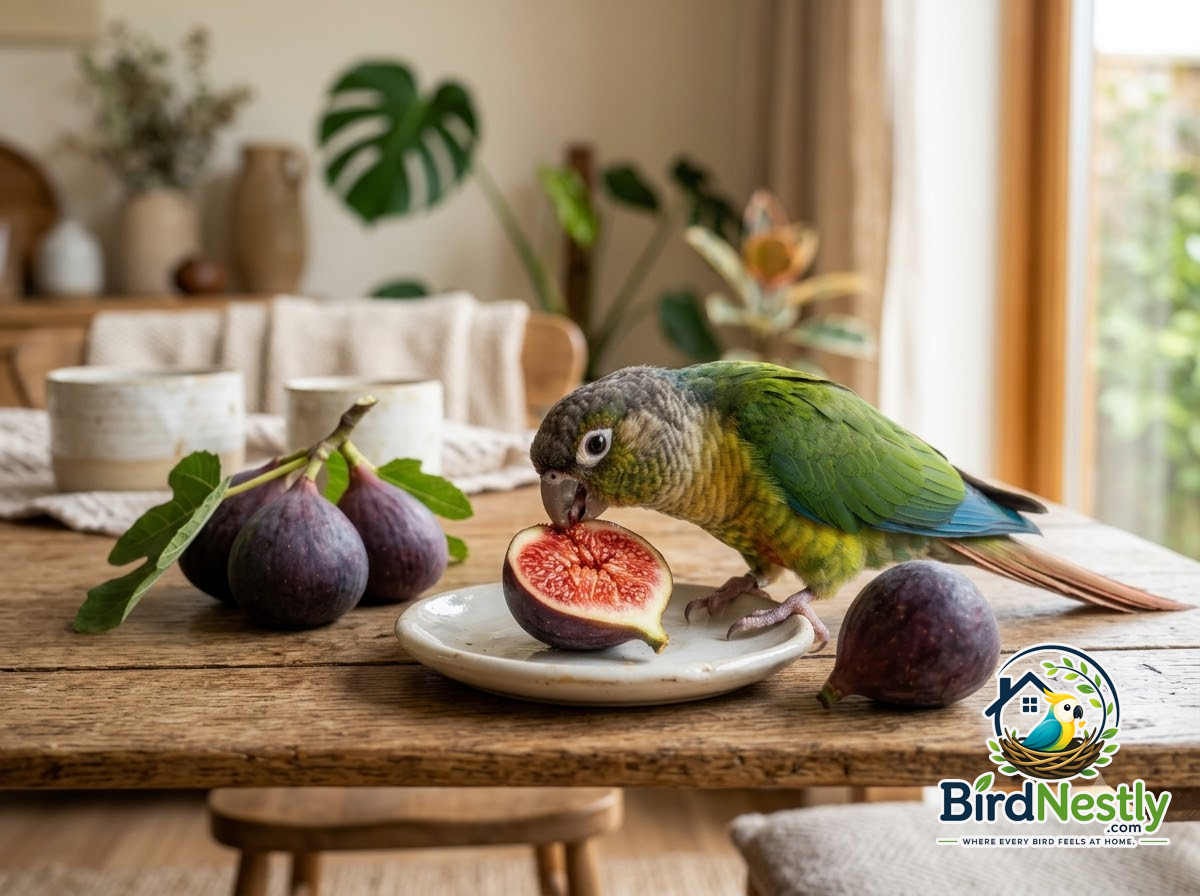
Yes, fresh figs can be offered to parrots. A ripe fig is soft enough for many birds to bite and tear apart, making it quite different from firmer fruits such as apples or pears.
Choose a fig that looks fresh and has no mold, sour smell, leaking juice, or badly damaged areas. Wash the whole fruit under running water before cutting it. After washing, remove any bruised or spoiled sections and cut the remaining fruit into a small piece.
There is no need to add anything. Fresh fig should be served on its own rather than mixed with sugar, syrup, salt, cream, chocolate, or other ingredients. VCA recommends washing fruits thoroughly and cutting them into pieces that are appropriate for the size of the bird.
Your parrot can eat the soft flesh, tiny seeds, and clean skin. Some birds may prefer the inside and leave the skin behind, while others will chew through the whole piece. There is no need to make your bird eat every part.
Start with a small amount when figs are new to your bird. This is especially useful because figs are naturally sweet. VCA recommends keeping fruit to around 10% or less of the daily diet for Amazon and African Grey parrots.
Fresh figs can be rotated with other fruits such as blueberries, strawberries, grapes, or papaya. This gives your parrot different flavors and textures without relying heavily on one type of fruit.
4. Can Parrots Eat Fig Skin and Seeds?
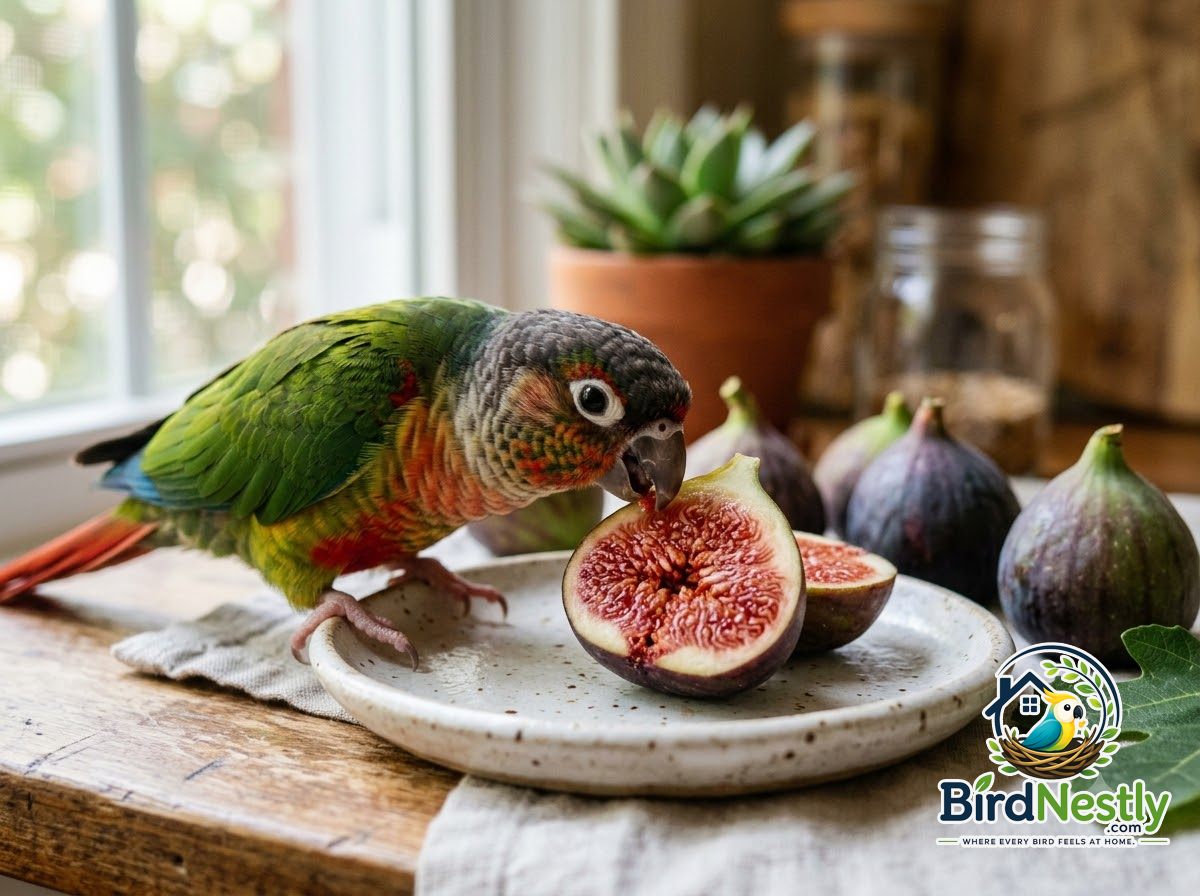
Parrots can eat the skin of a fresh fig when the fruit has been washed properly. The skin does not need to be peeled away before serving. VCA notes that the skin of fruits and vegetables does not necessarily have to be removed, provided the produce is cleaned thoroughly.
The tiny seeds inside figs can also be eaten with the fruit. They are naturally part of the soft interior, so there is no practical reason to remove them one by one before giving a small piece to your bird.
The main concern is cleanliness. Wash the fig before cutting it, even if you plan to remove the skin. Cutting the fruit first can spread dirt or anything on the outside to the flesh inside.
For smaller parrots, cut the fig into tiny pieces. A large parrot can usually manage a somewhat bigger piece, but a whole fig is unnecessary. A small serving is enough for your bird to enjoy the taste and texture.
Pay attention to the condition of the fruit as well. Do not offer a fig that has started to ferment, developed mold, become slimy, or smells unusual. Fresh fruit should look and smell fresh.
There is also no need to give your parrot dried fig simply because it can eat fresh fig. Dried fruit has much less water, making its natural sugars more concentrated. Fresh fig is the simpler choice when introducing this fruit to your bird.
5. Can Parrots Eat Dried Figs?
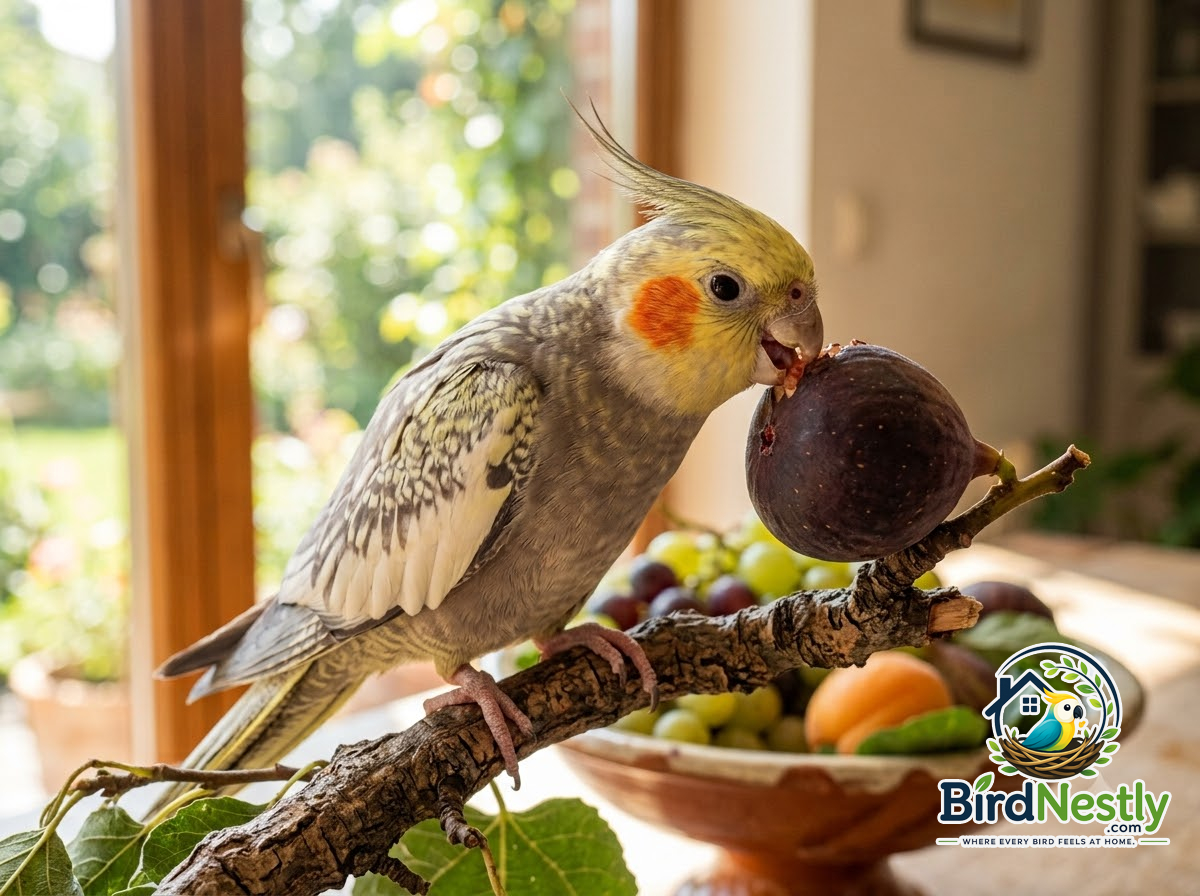
Dried figs are different from fresh figs and should be offered much more sparingly. When the water is removed, the fruit becomes smaller and its natural sugars become more concentrated. A small dried piece can therefore contain considerably more sugar per bite than a similar-sized piece of fresh fig.
Fresh fig is the better choice when you want to give your parrot this fruit. It provides the soft texture and moisture of the whole fruit without the same concentration that comes with drying.
Check the ingredient label before giving any dried fig to your bird. Some packaged products contain added sugar, syrup, preservatives, or other ingredients that are unnecessary for parrots. A plain dried fig with no added ingredients is preferable, but even then, only a tiny portion is needed.
Avoid giving your parrot fig bars, fig cookies, fig jam, or other processed foods made with figs. These products may contain sugar, salt, oils, flour, flavorings, or other ingredients that are not appropriate for a bird’s normal diet.
Fruit should remain a limited part of the overall diet. VCA recommends keeping fruit at around 10% or less of the daily diet for Amazon and African Grey parrots because fruit contains naturally occurring sugars.
For that reason, dried figs are best treated as an occasional tiny treat rather than something to put in the food bowl every day.
6. How Much Fig Can a Parrot Eat?
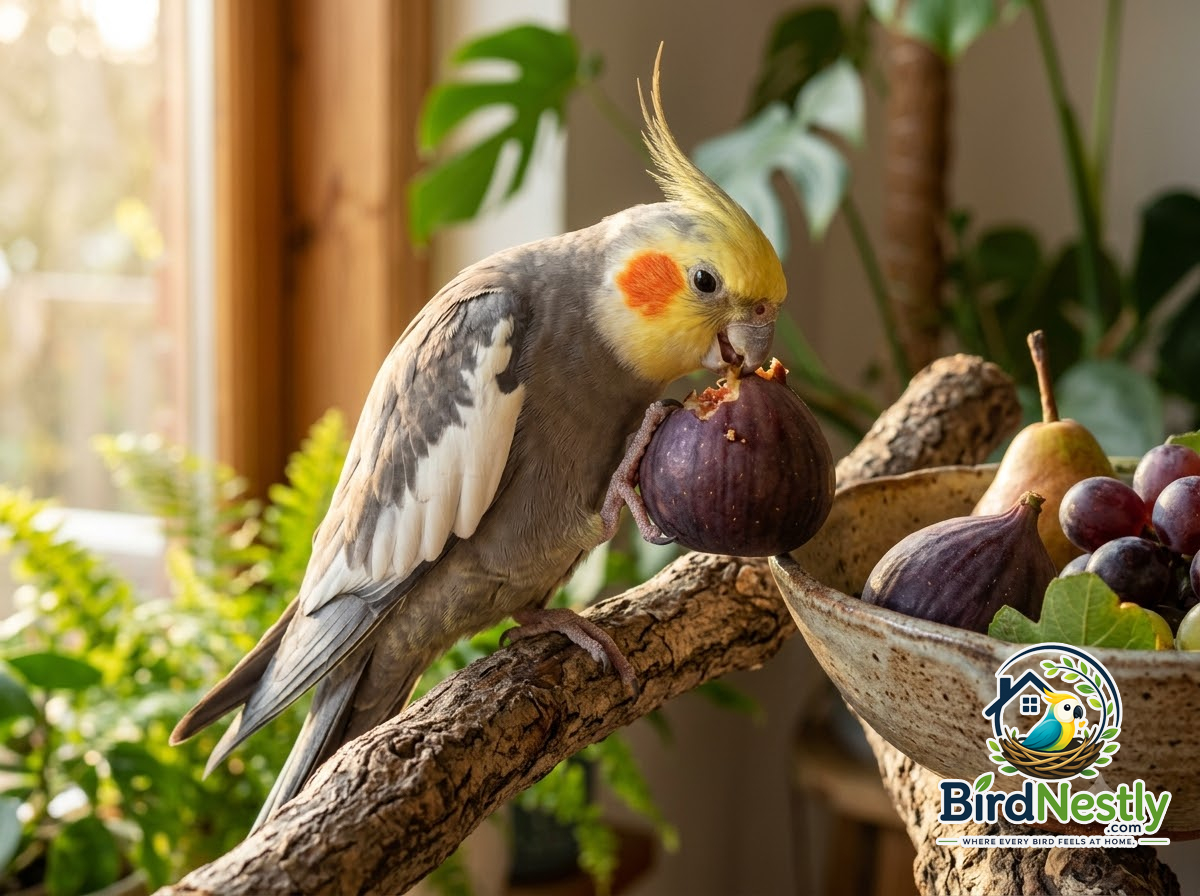
The amount of fig your parrot can have depends on its size, age, health, and the rest of its diet. A Budgie and a Macaw obviously cannot be given the same portion.
For a small parrot, start with a tiny piece. A few bites are enough to introduce the fruit. Medium and large parrots can handle somewhat larger pieces, but there is still no reason to offer a whole fig at once.
The total amount of fruit eaten during the day matters more than the size of one particular piece. If your bird has already eaten bananas, grapes, mango, or another sweet fruit, there is little reason to add a large serving of figs on top of that.
A simple approach is to cut one fresh fig into several small pieces and offer only a portion to your parrot. The remaining fruit can be kept for human consumption rather than leaving a large amount inside the cage.
VCA recommends that fresh fruits and vegetables form only part of a parrot’s overall diet and stresses the importance of offering a variety of foods. For Amazon and African Grey parrots, its feeding guidance places fruit at 10% or less of the daily diet.
Figs can therefore fit comfortably into a varied fruit rotation. One day you might offer a small piece of fig, while another day your bird could have blueberries, raspberries, or blackberries.
If your parrot has diabetes, obesity, liver problems, or another condition affected by diet, don’t use a general serving recommendation. An avian veterinarian can help determine how much fruit is appropriate for that particular bird.
FAQs
Can parrots eat figs?
Yes. Fresh figs can be offered to parrots in small amounts. Wash the fruit thoroughly and serve it plain.
Are figs safe for parrots?
Fresh figs are listed among fruits that can be offered to pet birds. They should be treated as part of a varied diet rather than a main food.
Can parrots eat fresh figs?
Yes. Fresh figs are the preferred form. Choose ripe fruit without mold, spoilage, or an unusual smell, then wash and cut it into a suitable size.
Can parrots eat dried figs?
Parrots can have a tiny amount of plain dried fig, but fresh fig is a better choice. Dried figs contain much less water, so their natural sugars are more concentrated.
Can parrots eat fig skin?
Yes. The skin can be left on a fresh fig after it has been washed thoroughly.
Can parrots eat fig seeds?
Yes. The tiny seeds inside a fresh fig can be eaten together with the flesh. There is no need to remove them individually.
How much fig can a parrot eat?
Start with a small piece. The appropriate amount depends on the bird’s size and overall diet. Fruit should remain a limited part of the daily food intake.
Can parrots eat figs every day?
A small amount of fig can be included in a fruit rotation, but there is no need to give figs every day. VCA recommends keeping fruit to around 10% or less of the daily diet for Amazon and African Grey parrots.
Can figs cause diarrhea in parrots?
Eating a new fruit can sometimes change a bird’s droppings, particularly when the fruit contains considerable moisture. Persistent diarrhea or other signs of illness should be discussed with an avian veterinarian.
Can parrots eat canned figs?
Fresh figs are preferable. Canned fruit may contain syrup, added sugar, or other ingredients that are unnecessary for parrots.
Can parrots eat fig jam?
No. Fig jam is not a suitable food for parrots because it commonly contains a large amount of added sugar and may contain other ingredients.
Can baby parrots eat figs?
Young parrots have different nutritional requirements from adults. Fig should not replace the nutritionally complete food needed during growth. Ask an avian veterinarian before adding fruit regularly to a young bird’s diet.
Can African Grey parrots eat figs?
Yes, fresh figs can be offered in small portions. Fruit should remain limited; VCA recommends fruit at 10% or less of the daily diet for African Grey parrots.
Can parrots eat fig leaves?
Fig fruit and fig leaves should not automatically be treated as the same food. There is much less feeding guidance for fig leaves than for the fruit itself, so it is safer to stick with the fresh fruit when offering figs to a parrot.



Write Your Review
No reviews yet. Be the first to share your experience!