

Spinach is one of those vegetables that often leaves parrot owners wondering whether it’s actually a good choice for their bird. It looks healthy, it’s easy to find, and many parrots enjoy tearing fresh leaves apart. The short answer is yes, parrots can eat spinach, but it’s better to keep the amount small and offer it alongside other vegetables. Spinach contains useful vitamins and minerals, but it also has oxalates, so giving your parrot a huge serving every day isn’t a good idea.
[wpsm_toplist]
Can Parrots Eat Spinach?
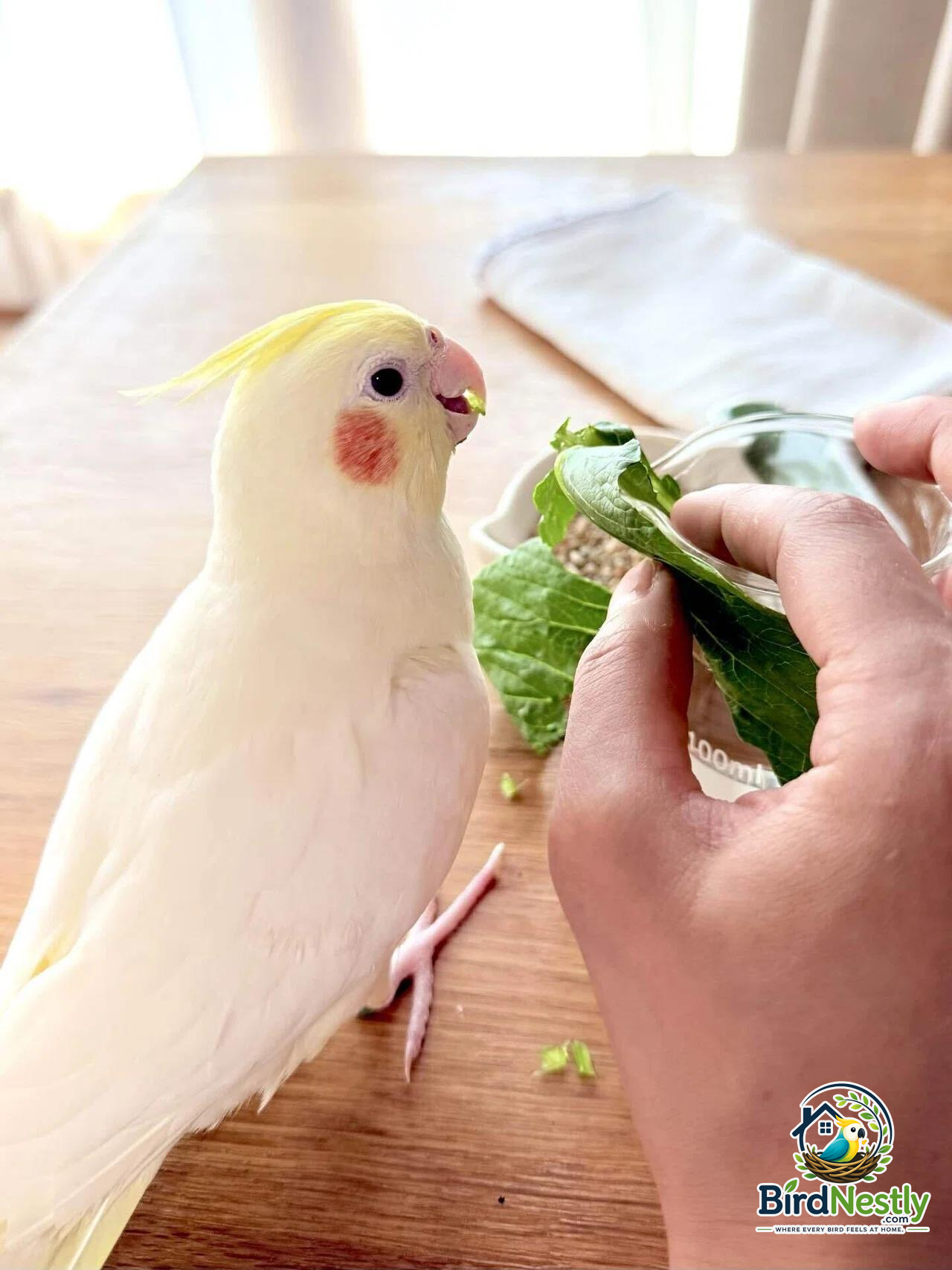
Yes, parrots can eat fresh spinach. A clean leaf can be offered as part of a varied diet, and many birds enjoy the soft texture and fresh taste. You can leave a small leaf whole or tear it into pieces that are easier for your parrot to pick up.
Before giving spinach to your bird, wash it well under running water. Take away any leaves that are wilted, slimy, damaged, or starting to spoil. There’s no need to add salt, butter, oil, sauce, or seasoning. Plain spinach is all your parrot needs.
You don’t have to make spinach the star of the vegetable bowl, either. It can sit alongside foods your parrot already knows and enjoys. For example, you could offer a little spinach with carrots, broccoli, or cauliflower. Different vegetables bring different flavors and textures, which can make mealtimes more interesting for your bird.
Some parrots will attack a spinach leaf the second you put it down. Others will shred it into tiny pieces and leave the whole mess behind. Don’t be surprised by either reaction. Birds can be very particular about what they eat, and sometimes playing with a new vegetable comes before actually tasting it.
Is Spinach Good for Parrots?

Spinach has plenty going for it. It contains nutrients such as vitamin A, vitamin K, folate, iron, magnesium, potassium, and calcium. It also contains plant compounds such as lutein and other carotenoids. Those nutrients make spinach a useful vegetable to have in the rotation.
But there’s a catch worth knowing about.
Spinach is also high in oxalates. These compounds can bind to calcium and make some of the calcium in food harder for the body to absorb. That’s why spinach makes more sense as one vegetable among many rather than the only leafy green your parrot eats.
This doesn’t mean spinach needs to be completely removed from the food bowl. A small amount from time to time is very different from feeding large portions every day. Your parrot can have spinach on one occasion and lettuce or another suitable vegetable on another day.
It’s also worth remembering that spinach doesn’t provide everything a parrot needs. Keep the regular diet balanced and use vegetables as part of the overall food selection. If your bird already has a health problem involving calcium or the kidneys, talk with an avian veterinarian before making spinach a regular part of its meals.
For a healthy parrot, the simple approach works best: wash the spinach, keep the portion small, and give your bird plenty of vegetable variety.
Can Parrots Eat Raw Spinach?
Yes, parrots can eat raw spinach. In fact, there’s no need to cook it before giving your bird a small amount. A fresh leaf can simply be washed, dried, and offered as it is. Some parrots enjoy grabbing the leaf with one foot and pulling pieces off with their beak. Others would rather have it torn into smaller pieces and mixed with vegetables they already like.
Raw spinach should always be washed well before it goes into the cage. Dirt, bacteria, and residues from growing or handling can end up on the leaves, so don’t skip this step. Give the leaves a good rinse under running water and remove anything that looks damaged or spoiled.
There’s also no reason to dress spinach up for your bird. Salt, butter, cooking oil, garlic, onion, sauces, and seasoning aren’t needed. Your parrot doesn’t need the same spinach preparation you might make for dinner. A clean, plain leaf is much easier to deal with.
Keep the portion modest, too. Spinach contains oxalates, so it makes more sense to offer a little and then switch to other vegetables rather than filling the entire bowl with spinach. You could serve a few pieces with broccoli or carrots and use another vegetable the next time.
If your parrot has never tasted spinach before, start with a small piece. Your bird may love it immediately, or it may stare at the leaf as though you’ve put something completely ridiculous in the bowl. Either reaction is normal. Give it time and don’t force the food.

Can Parrots Eat Cooked Spinach?
Cooked spinach can also be given to parrots, but keep the preparation very simple. If you cook spinach for your bird, don’t add salt, butter, oil, cream, garlic, onion, or any seasoning. Plain cooked spinach is enough.
Boiling spinach can reduce some of its oxalate content. How much is reduced depends on how the spinach is prepared, but studies have reported substantial reductions after boiling. That doesn’t mean cooked spinach suddenly becomes something your parrot should eat every day. It still belongs in the occasional vegetable rotation.
Let cooked spinach cool completely before giving it to your bird. Never put hot food into the cage. You can offer a small amount by itself or alongside another vegetable your parrot already eats.
One thing to keep in mind is texture. Cooked spinach becomes soft and can stick together, while raw spinach is easier for many parrots to grab and tear. Some birds prefer the softer texture, while others won’t touch cooked greens at all. There’s no need to argue with a parrot about it — if your bird prefers fresh leaves, stick with fresh leaves.
Whether you choose raw or cooked spinach, the same basic rules still apply. Keep the portion sensible, don’t add ingredients meant for human meals, and give your parrot other vegetables throughout the week. Cauliflower and cabbage are two more vegetables you can rotate into the menu.
If your parrot has kidney problems, calcium-related issues, or a diet that requires special nutritional care, don’t make spinach a regular food without speaking to an avian veterinarian first.
How Much Spinach Can a Parrot Eat?
A small amount is enough. You don’t need to put a big pile of spinach in your parrot’s bowl. For a Budgie or Lovebird, a few small pieces can be plenty. A larger parrot can have a little more, but there’s still no reason to give it a whole handful at once.
When your bird is trying spinach for the first time, start with a small piece. Some parrots will eat it right away. Others will tear the leaf into pieces and drop them everywhere. If your parrot enjoys it, you can offer a little more on another day.
Spinach is better mixed into a wider range of vegetables rather than served as the main green food. You can give spinach occasionally and offer broccoli, carrots, or cauliflower at other meals.
There’s no need to measure every piece of spinach with a scale. Just keep the serving small and make sure your parrot is eating a good range of foods.
If your parrot has kidney problems, calcium problems, or follows a special diet, ask an avian veterinarian about spinach before giving it regularly.
Can Parrots Eat Spinach Every Day?
It’s better to give spinach from time to time rather than every day. Spinach contains oxalates, which can bind to calcium and make it harder for the body to absorb. That’s one reason it’s a good idea to switch between different vegetables.
You might give your parrot a little spinach one day, then offer lettuce, cabbage, broccoli, or carrots another day. This gives your bird different flavors, textures, vitamins, and minerals throughout the week.
There’s no need to stop feeding spinach altogether. A small serving now and then is very different from giving large amounts every day.
Your parrot’s normal food should still provide most of what it needs. Vegetables are there to add variety and extra nutrients, not to replace the main diet.
For a healthy bird, a little spinach once in a while is fine. If your parrot has a health problem that affects calcium or kidney function, get advice from an avian veterinarian before making spinach a regular part of its meals.



Write Your Review
No reviews yet. Be the first to share your experience!