

Lettuce might seem like a harmless food to share with your parrot. It’s fresh, crunchy, and probably already sitting in your fridge. So can your bird have some? Yes, parrots can eat lettuce, but not every type offers the same nutritional value. Romaine and darker leafy varieties are generally more worthwhile than iceberg lettuce, which is mostly water. A little lettuce can be a nice change from the usual vegetables, especially for parrots that enjoy tearing leaves apart with their beaks. The main thing is not to let lettuce take over the vegetable part of the diet. Your bird will get more from having several different vegetables rather than eating a large amount of one type.
[wpsm_toplist]
Can Parrots Eat Lettuce?
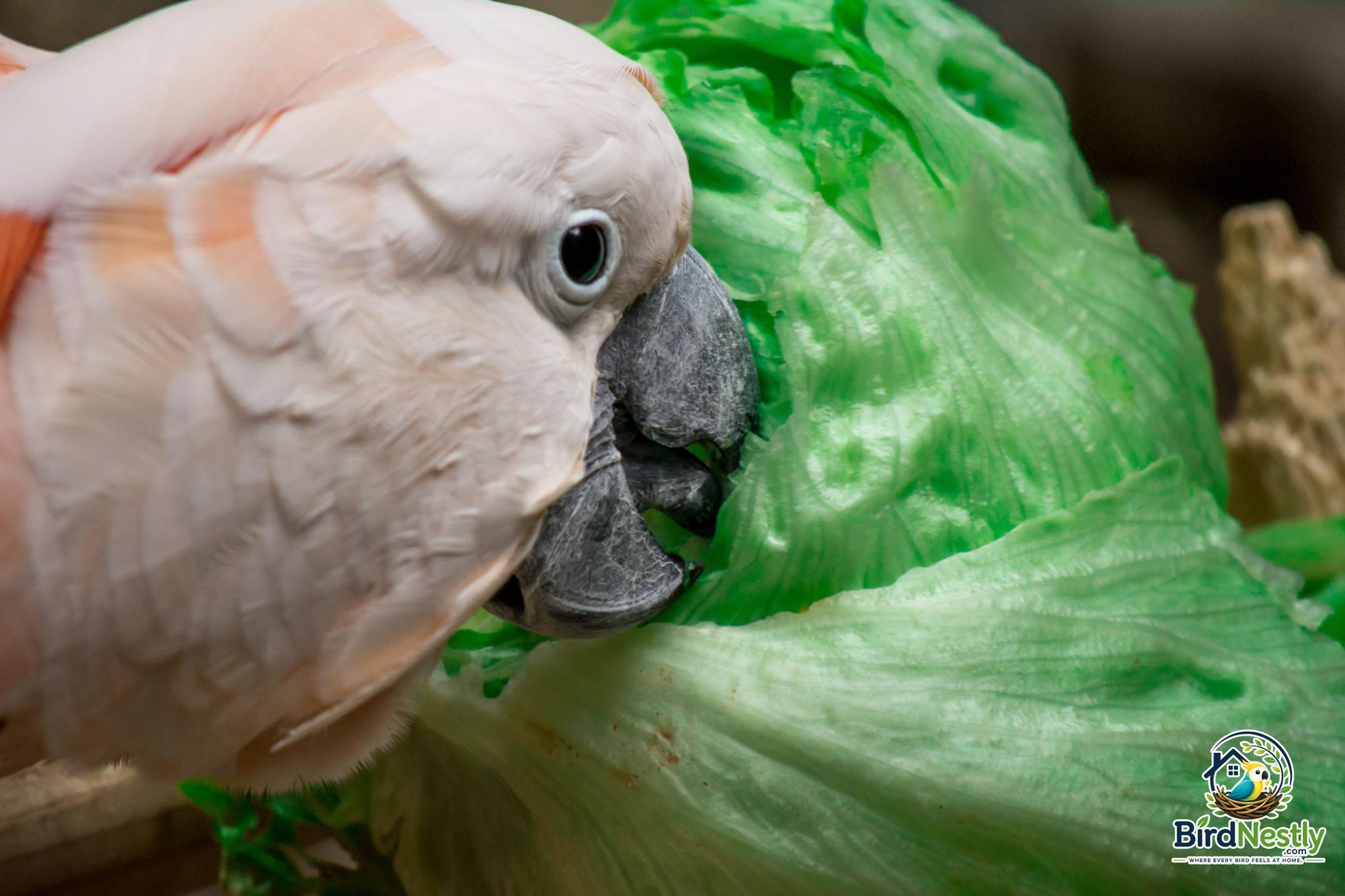
Yes, lettuce is safe for parrots when it is fresh, washed properly, and served plain. You can give your bird a small piece of lettuce as part of its fresh food selection. Some parrots will bite into a leaf right away, while others may spend more time shredding it than actually eating it. That’s pretty common. Birds can be surprisingly picky about the texture of their food.
Before putting lettuce in the cage, wash it well under running water. Remove any wilted, slimy, damaged, or spoiled parts, then tear off a piece that suits the size of your parrot. A small bird doesn’t need a huge leaf. A larger parrot may enjoy holding a bigger piece with its foot and pulling it apart.
Romaine lettuce is a particularly good option because it contains more nutrients than iceberg lettuce. You can also switch things around with other leafy varieties instead of buying the same type every time. There’s no need to cook lettuce or add anything to it. Salt, butter, dressing, sauces, and seasoning have no place in your parrot’s bowl.
Lettuce can also sit alongside vegetables your bird already enjoys. A little broccoli, cauliflower, or carrots can give your parrot different tastes and textures throughout the week.
Is Lettuce Good for Parrots?
Lettuce isn’t a bad food for parrots, but it’s not one of the most nutritious vegetables either. One of its biggest features is simply its water content. Lettuce contains a lot of water, which can make it a refreshing food on a warm day. It also provides some fiber, vitamins, and minerals, although the amounts depend on the variety.
Romaine is a better pick when you’re choosing lettuce for your parrot. It has more fiber, calcium, potassium, and protein than iceberg lettuce. Iceberg isn’t poisonous or something your bird must avoid completely, but it doesn’t bring as much to the bowl nutritionally. If your parrot likes iceberg, a little piece now and then is fine, but there’s no reason to make it the main leafy vegetable.
The same goes for lettuce in general. Your parrot can enjoy it, but it shouldn’t replace the more nutritious foods in its regular diet. Think of lettuce as one more option rather than the vegetable your bird needs at every meal.
Another thing to watch is how much your parrot eats. Lettuce contains a lot of water, and eating a large amount at once may make the droppings look wetter than usual. That doesn’t automatically mean your bird is sick. Still, keeping the serving small makes more sense, especially when you’re introducing lettuce for the first time.
A little lettuce mixed into a varied selection is plenty. Your parrot can have some lettuce one day and try another vegetable later. That way, it gets different flavors and nutrients instead of filling up on a food that is mostly water.
What Types of Lettuce Can Parrots Eat?

There are quite a few types of lettuce at the grocery store, and most of the common ones can be offered to parrots. Romaine is probably the one I’d reach for first. The leaves are firm enough for a parrot to grab and tear, and it has more nutritional value than pale iceberg lettuce. Green leaf and red leaf lettuce are also fine choices. Butterhead lettuce has softer leaves, which some birds may prefer if they don’t like tougher greens.
You don’t have to stick with one kind. Try a little romaine one day and a different leafy green another time. Your parrot may surprise you. Some birds will happily chew through a crisp romaine leaf, while others seem much more interested in the softer leaves of butterhead lettuce.
The color of the lettuce can also make a difference to how interested your bird is. Parrots notice changes in color, shape, smell, and texture, so putting a different leaf in the bowl can sometimes get their attention when the usual vegetables are being ignored.
Whatever variety you choose, give it a good wash first. Take off leaves that are wilted, slimy, moldy, or damaged. There’s no reason to cook lettuce or mix it with anything. Tear off a piece your parrot can comfortably hold and let it investigate the food at its own pace.
Can Parrots Eat Iceberg Lettuce?
Yes, parrots can eat iceberg lettuce. It isn’t toxic, but it isn’t the most useful type of lettuce to offer either. Iceberg contains a lot of water and fewer nutrients than darker varieties such as romaine. So if you have both sitting in the refrigerator, romaine would be the better pick.
That doesn’t mean you have to throw iceberg lettuce away if your parrot likes it. A small piece is perfectly reasonable. The problem comes when a bird fills up on iceberg and misses out on foods that provide more nutrients. It’s much better to use iceberg as an occasional addition rather than relying on it as the main vegetable.
Iceberg can also make droppings look wetter because of its high water content. Don’t panic if you notice more liquid after your parrot has eaten some. Keep an eye on your bird and see whether things return to normal after the food is gone. If watery droppings keep happening or your parrot seems unwell, stops eating, or behaves differently, it’s worth speaking with an avian veterinarian.
For everyday meals, I’d choose romaine or another darker leafy vegetable more often and use iceberg for variety. Your parrot doesn’t need a huge leaf, either. A small piece is enough to let it have a nibble without filling up on a food that doesn’t offer much nutrition.
And whichever lettuce ends up being your bird’s favorite, serve it plain. No ranch dressing, salt, butter, mayonnaise, seasoning, or salad dressing. A clean leaf is all your parrot needs.
How Much Lettuce Can a Parrot Eat?
You don’t need to give your parrot a huge pile of lettuce. A small leaf or a few pieces are enough, especially for a smaller bird. The right amount also depends on the size of your parrot. A Budgie or Lovebird may only need a couple of small pieces, while a larger parrot can handle a bigger section of leaf.
When lettuce is new to your bird, start with a little. Put a small piece in the food bowl and see what your parrot does with it. Some birds will eat it straight away, while others will tear it into shreds and leave most of it behind. Either way, there’s no need to keep adding more.
Lettuce is also very watery, so giving too much at once isn’t a great idea. You may notice the droppings look wetter after your parrot has eaten a lot of leafy greens. A small serving is usually enough to let your bird enjoy the crunch without filling up on lettuce.
There’s no need to give lettuce every day. You can offer it from time to time and switch it with other vegetables. Broccoli, cauliflower, and carrots are easy options to rotate through the week.
The main food your parrot eats should still provide the nutrition it needs each day. Lettuce is simply one fresh food you can add to the mix. If your bird enjoys it, great. If it ignores it completely, that’s fine too.
How to Prepare Lettuce for Your Parrot
Preparing lettuce for a parrot doesn’t have to be complicated. Start with a fresh leaf and wash it well under running water. Rub the surface gently with your fingers and remove any dirt or damaged sections. Once it’s clean, tear off a piece that’s easy for your bird to hold.
You can leave the leaf whole if you have a larger parrot that enjoys grabbing food with its foot. Smaller birds may find thin strips or small pieces easier to manage. There’s no special cooking method needed. Lettuce can be served raw and doesn’t need salt, oil, butter, or seasoning.
Don’t turn it into a salad made for people. Salad dressing, mayonnaise, sauces, salt, garlic, onion, and other seasonings aren’t needed for your bird. Plain lettuce is the way to go.
It’s also better to use fresh lettuce rather than anything that’s been sitting around for too long. If the leaves have become slimy, brown, moldy, or have an unpleasant smell, throw them away instead of giving them to your parrot.
After your bird has finished eating, check the cage and food bowl for leftover lettuce. Fresh produce can spoil when it sits around, especially in warm conditions. Removing uneaten pieces keeps the food area cleaner.
One simple way to serve lettuce is to offer a small leaf alongside another vegetable your parrot already likes. You can try romaine with a few pieces of carrot or offer lettuce on a different day with broccoli. There is no need to make every meal complicated. A few fresh foods, prepared plainly and served in sensible portions, are more than enough.
FAQs
Can parrots eat lettuce?
Yes. Parrots can eat fresh lettuce in small amounts. Wash it well and serve it plain without dressing, salt, butter, or seasoning.
Can parrots eat romaine lettuce?
Yes. Romaine is one of the better lettuce choices for parrots because it generally provides more nutrients than iceberg lettuce.
Can parrots eat iceberg lettuce?
Yes, but it isn’t as nutritious as darker varieties such as romaine. A small amount is fine, but it’s better not to make iceberg the main vegetable in your parrot’s diet.
Can parrots eat lettuce every day?
There’s no need to give lettuce every day. Rotate it with other vegetables such as broccoli, cauliflower, and carrots.
How much lettuce can a parrot eat?
A small leaf or a few pieces are enough for most parrots. Smaller birds need less than larger parrots. Start with a small amount when introducing lettuce for the first time.
Can lettuce cause diarrhea in parrots?
Eating a lot of watery lettuce may make your parrot’s droppings look wetter than usual. If loose or watery droppings continue after your bird stops eating lettuce, or your parrot seems unwell, contact an avian veterinarian.
Can parrots eat raw lettuce?
Yes. Lettuce can be served raw after being washed thoroughly. There’s no need to cook it.
Can parrots eat lettuce stems?
Tender parts of the lettuce stem can generally be eaten, but tough pieces may be difficult for smaller parrots. Remove particularly hard sections and give your bird pieces that are easy to manage.
Can parrots eat red leaf lettuce?
Yes. Red leaf lettuce can be included in a varied selection of fresh vegetables. Wash the leaves well before serving.
Can parrots eat butterhead lettuce?
Yes. Butterhead lettuce has softer leaves and can be offered in small amounts. Some parrots may prefer its softer texture over crisp varieties.
Can parrots eat lettuce from a salad?
Plain lettuce is fine, but don’t give your parrot leftover salad that contains dressing, salt, mayonnaise, sauces, or seasoning. Give your bird a clean piece of lettuce instead.
Should lettuce be washed before giving it to a parrot?
Yes. Wash lettuce thoroughly under running water before serving it. Remove any leaves that are moldy, slimy, spoiled, or badly damaged.
Is lettuce better than broccoli for parrots?
Not necessarily. Lettuce can add variety and water to the diet, while vegetables such as broccoli can provide a different nutritional profile. Offering several suitable vegetables is a better approach than relying on one.
What vegetables can parrots eat besides lettuce?
Parrots can enjoy a range of fresh vegetables. Broccoli, cauliflower, and carrots are some options that can be rotated with lettuce.



Write Your Review
No reviews yet. Be the first to share your experience!