

Pumpkin is one of those foods that often ends up in the kitchen during the cooler months, and it is natural to wonder whether your parrot can have some too. The good news is that parrots can eat pumpkin. Plain pumpkin can be a nice addition to a bird’s vegetable selection when it is prepared properly.
The easiest option is fresh pumpkin that has been cleaned, cooked until soft, and served without salt, sugar, butter, or seasoning. Some parrots also enjoy small pieces of raw pumpkin. The seeds are another part owners often ask about, while pumpkin skin is usually better left out because it can be quite tough.
Pumpkin should still be treated as one food among many. Your parrot does not need a bowl filled with pumpkin every day. A mix of suitable vegetables gives your bird more variety and helps keep meals interesting.
[wpsm_toplist]
1. Can Parrots Eat Pumpkin?
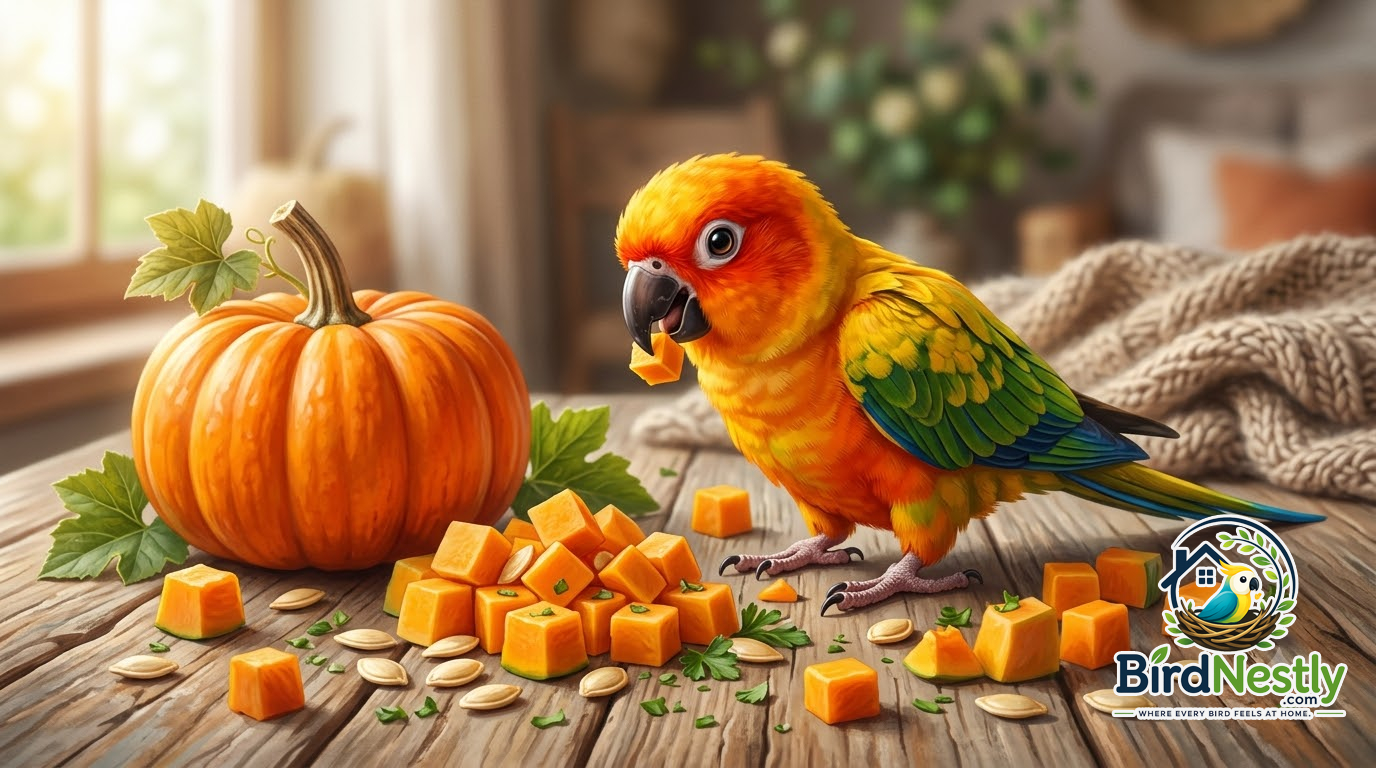
Yes, parrots can eat pumpkin. Pumpkin is included among the vegetables that can be offered to pet birds, and its orange color is a sign that it contains carotenoids that the body can use in relation to vitamin A.
Fresh pumpkin is the simplest choice. Remove the hard outer skin, scoop out the stringy center if needed, and cut the flesh into small pieces. You can offer it raw, although many parrots find cooked pumpkin easier to eat because it becomes soft.
Cooking is not complicated. Steaming or lightly baking the pumpkin is enough. Once it has cooled, place a small amount in your parrot’s food bowl. There is no reason to add salt, sugar, butter, oil, spices, or sauces.
Be careful with pumpkin foods made for people. Pumpkin pie, sweetened pumpkin puree, pumpkin soup with salt or cream, and pumpkin-spiced desserts are very different from plain pumpkin. They may contain ingredients that are not appropriate for parrots.
If your bird has never tasted pumpkin before, start with a small piece. Some parrots take to it immediately, while others may ignore it at first. Offering it again another day is often enough to see whether your bird becomes interested.
2. Is Pumpkin Good for Parrots?
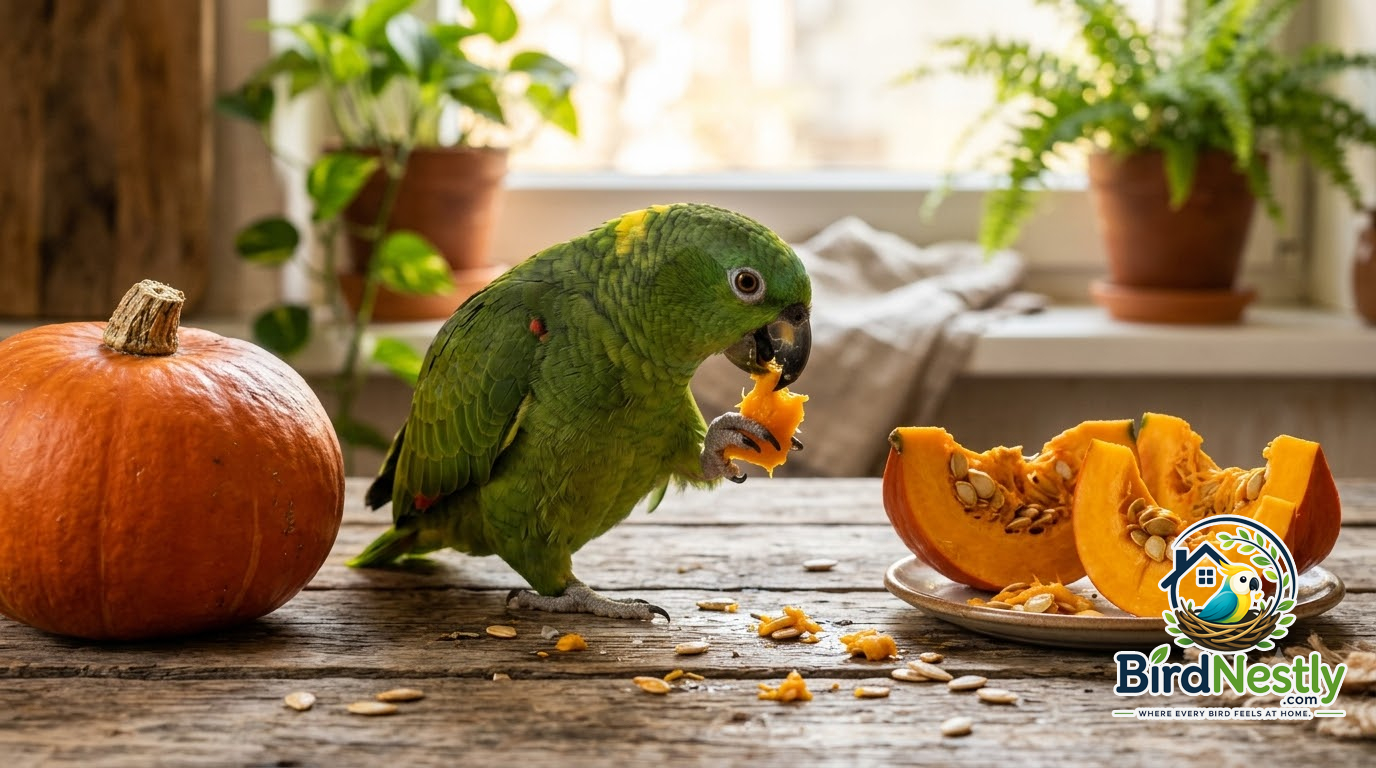
Pumpkin can be a useful vegetable for parrots, particularly because orange vegetables are an important source of carotenoids and vitamin A-related nutrients. VCA specifically includes pumpkin among the yellow, red, and orange vegetables recommended for birds.
Vitamin A is important for parrots. Poorly balanced diets, especially diets based heavily on seeds, can leave birds short of important vitamins and minerals. Adding suitable vegetables to the diet helps provide nutrients that may be missing from a seed-heavy menu.
Pumpkin also contains water and fiber, making it a soft vegetable that can be easy for many parrots to eat. Cooked pumpkin has a smooth texture, while small pieces of fresh pumpkin give birds something firmer to pick up and chew.
That does not mean pumpkin should become the main food. A parrot still needs a balanced everyday diet, with different vegetables offered alongside its regular nutritionally complete food. Pumpkin is best viewed as one useful vegetable in the rotation, not a replacement for everything else.
You can combine small amounts of pumpkin with vegetables your parrot already enjoys, such as carrots, broccoli, kale, or zucchini. This gives your bird different tastes, textures, and nutrients instead of relying on the same vegetable at every meal.
3. Can Parrots Eat Raw Pumpkin?
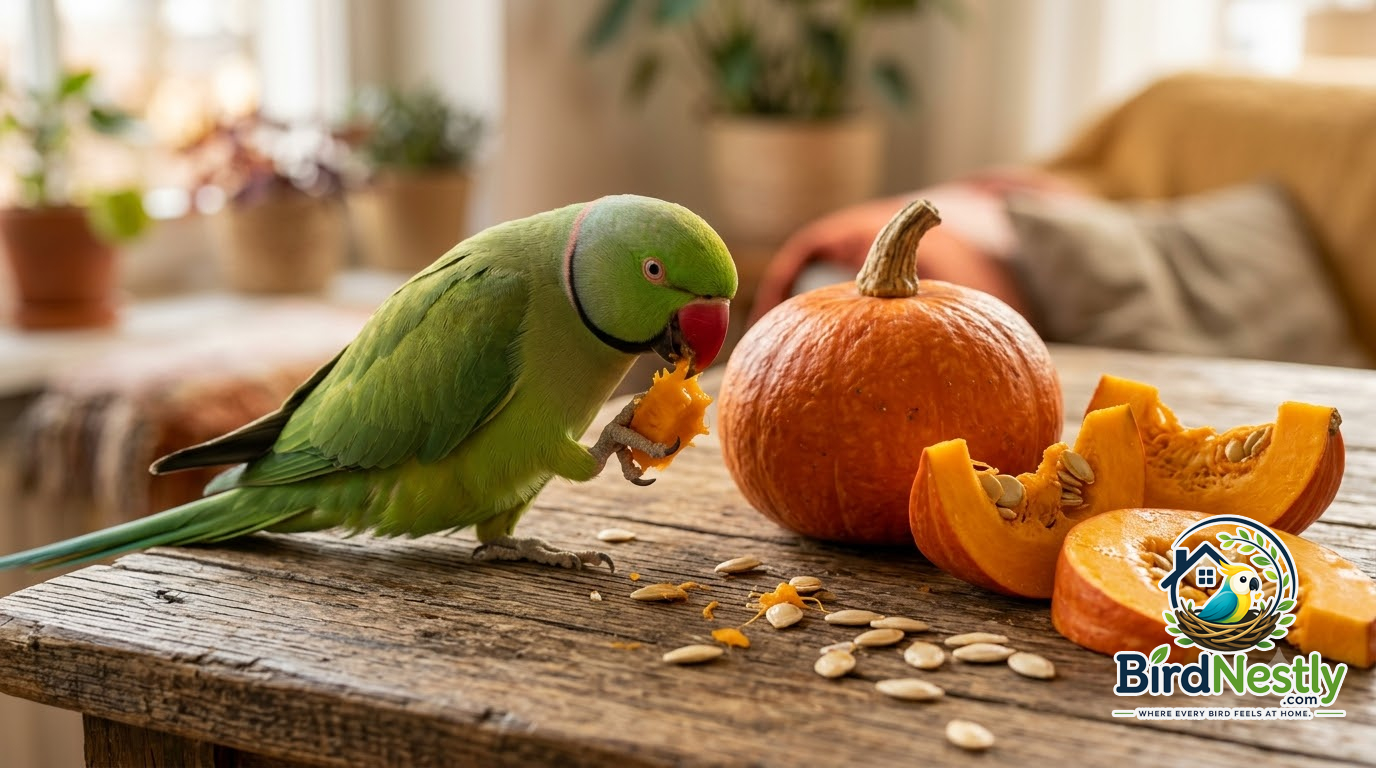
Yes, parrots can eat raw pumpkin, provided it is fresh, clean, and cut into manageable pieces. Raw pumpkin is quite firm, so smaller parrots may do better with thin slices or very small cubes.
Before serving, wash the outside of the pumpkin well. Cut away the hard skin and remove any damaged or spoiled areas. The flesh can then be cut into pieces that your bird can comfortably pick up.
Some parrots enjoy the crunchy texture of raw pumpkin, while others prefer it after cooking. There is no need to force your bird to eat it one way or the other. Let your parrot decide which texture it prefers.
Keep raw pumpkin plain. Do not add salt, sugar, oil, butter, seasoning, or sauce.
Because pumpkin can be quite firm, watch your bird the first time it tries a piece. A large chunk may be difficult for a smaller parrot to handle, so the size of the piece should match the bird.
4. Can Parrots Eat Cooked Pumpkin?

Yes. Cooked pumpkin is often easier for parrots to eat because the flesh becomes soft. Steaming, boiling, or baking the pumpkin without added ingredients are simple ways to prepare it.
Once the pumpkin is soft, allow it to cool completely before giving it to your bird. You can leave it in small pieces or mash it with a fork if your parrot prefers softer food.
The important thing is to keep the pumpkin plain. A portion prepared for people may contain ingredients that are not suitable for birds, so avoid pumpkin cooked with:
- salt
- sugar
- butter
- oil
- cream
- milk
- garlic
- onion
- sauces
- spices
Plain cooked pumpkin is very different from pumpkin pie filling or a sweet pumpkin dessert.
Cooking can also change some nutrients in vegetables, so there is no need to cook pumpkin for a long time. Lightly steaming it until tender is enough.
If your parrot already enjoys vegetables such as carrots or broccoli, a little cooled pumpkin can be mixed with them. This is an easy way to introduce a new food without changing the whole meal at once.
5. Can Parrots Eat Pumpkin Seeds?
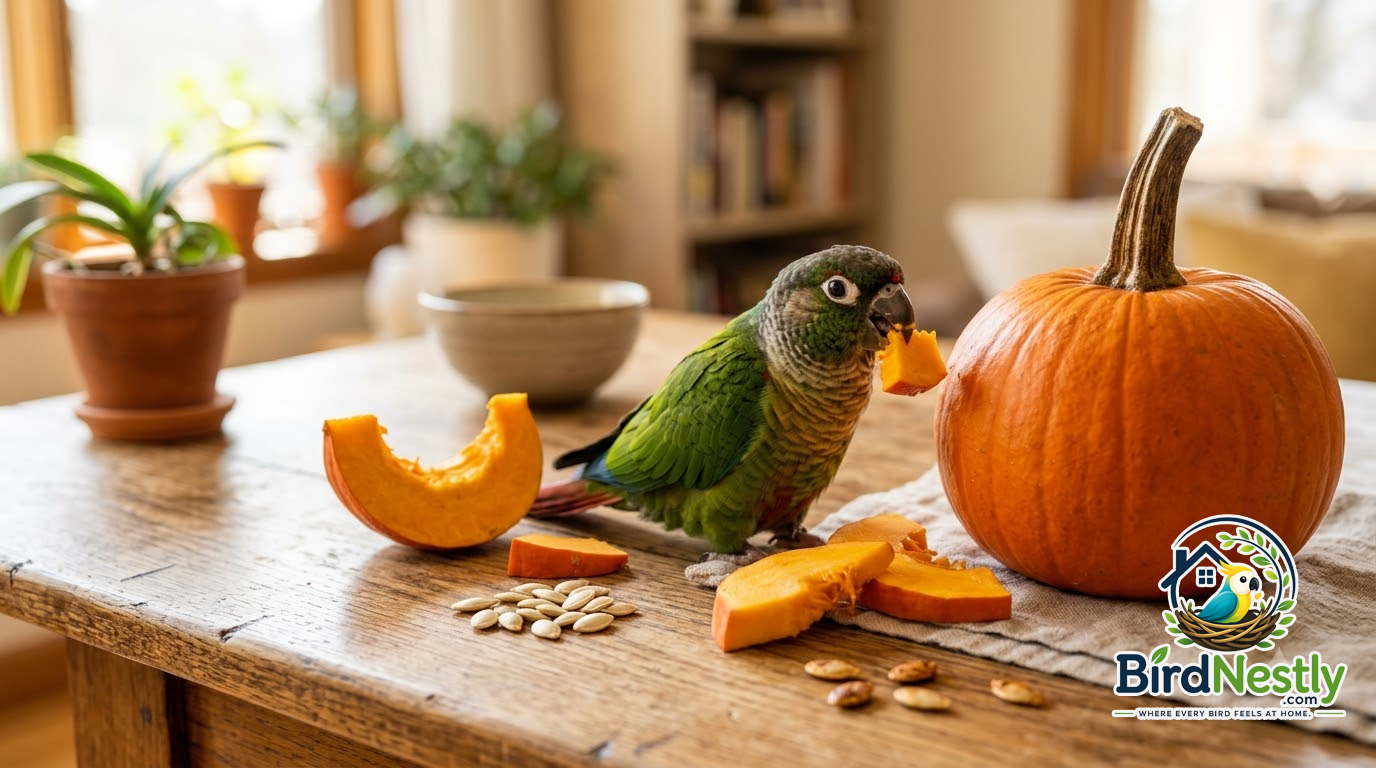
Yes, parrots can eat pumpkin seeds, but they should be given in small amounts. Pumpkin seeds are quite different from the soft pumpkin flesh because they contain more fat and calories.
The safest choice is plain pumpkin seeds. They should not be salted, coated with sugar, fried in oil, or covered with spices. Seeds prepared as snacks for people are often heavily seasoned, so check the package carefully before offering them to your bird.
You can remove the seeds from a fresh pumpkin, rinse them, and offer a small amount once they are clean and properly prepared. There is no need to turn pumpkin seeds into a regular part of every meal.
This is especially important for parrots that already eat a seed-heavy diet. LafeberVet notes that seed-based diets can be nutritionally unbalanced and may provide excessive fat when seeds make up too much of the diet.
For most parrots, the soft pumpkin flesh is the more useful part to focus on. Pumpkin seeds can be an occasional extra rather than something your bird needs every day.
6. Can Parrots Eat Pumpkin Skin?
It is better to serve the soft pumpkin flesh and remove the hard outer skin before giving pumpkin to your parrot.
Pumpkin skin can be tough and difficult for smaller parrots to tear apart. There is also little reason to make the skin part of the meal when the inside of the pumpkin is soft and easy to prepare.
Start by washing the pumpkin thoroughly, then cut away the outer skin and remove the stringy center and seeds if you are preparing only the flesh. Cut the remaining pumpkin into small pieces.
If the pumpkin has any mold, soft rotten areas, or an unusual smell, do not offer it to your bird. Fresh produce should always be in good condition before it goes into the food bowl.
For a small parrot, thin pieces or a little cooked pumpkin may be easier to manage. Larger parrots can handle bigger pieces, but the pumpkin should still be served in a reasonable amount.
The simplest option is often the best: clean pumpkin flesh, prepared plain, with the tough skin removed.


Write Your Review
No reviews yet. Be the first to share your experience!