

Kale is one of those vegetables that looks like it should be good for a parrot. The leaves are dark green, crisp, and packed with nutrients. The good news is that parrots can eat kale. It can be a useful addition to their vegetable selection when it is washed well and served in a sensible amount.
There’s no need to cook kale or turn it into something fancy for your bird. A fresh leaf, cleaned and torn into a comfortable size, is often all that’s needed. Some parrots will happily grab the leaf and tear it apart, while others may need a few tries before deciding they like it.
Kale shouldn’t replace the main food your parrot eats, and it doesn’t need to be the only vegetable in the bowl. Mixing it with other suitable vegetables gives your bird more variety and different nutrients.
[wpsm_toplist]
Can Parrots Eat Kale?

Yes, parrots can eat fresh kale. It can be offered raw after being washed thoroughly. The leaves can be left whole for a larger parrot or torn into smaller pieces for a smaller bird.
Before serving it, rinse the kale well under running water. Check the leaves and remove anything that is yellow, wilted, slimy, moldy, or damaged. You don’t need to add salt, butter, oil, sauce, or seasoning. Plain kale is the better choice for your bird.
Some parrots enjoy the texture of kale because the leaves are fairly sturdy. They may hold a piece with one foot and pull it apart with their beak. Others may ignore it completely the first time. Don’t be surprised if your bird spends more time shredding the leaf than eating it.
Kale also works well alongside vegetables your parrot already knows. You can offer a little with broccoli, carrots, or cauliflower rather than serving kale at every meal.
For a small parrot, a few pieces may be enough. A larger parrot can handle a larger piece, but there’s still no reason to fill the food bowl with kale. The rest of the diet matters just as much.
Is Kale Good for Parrots?
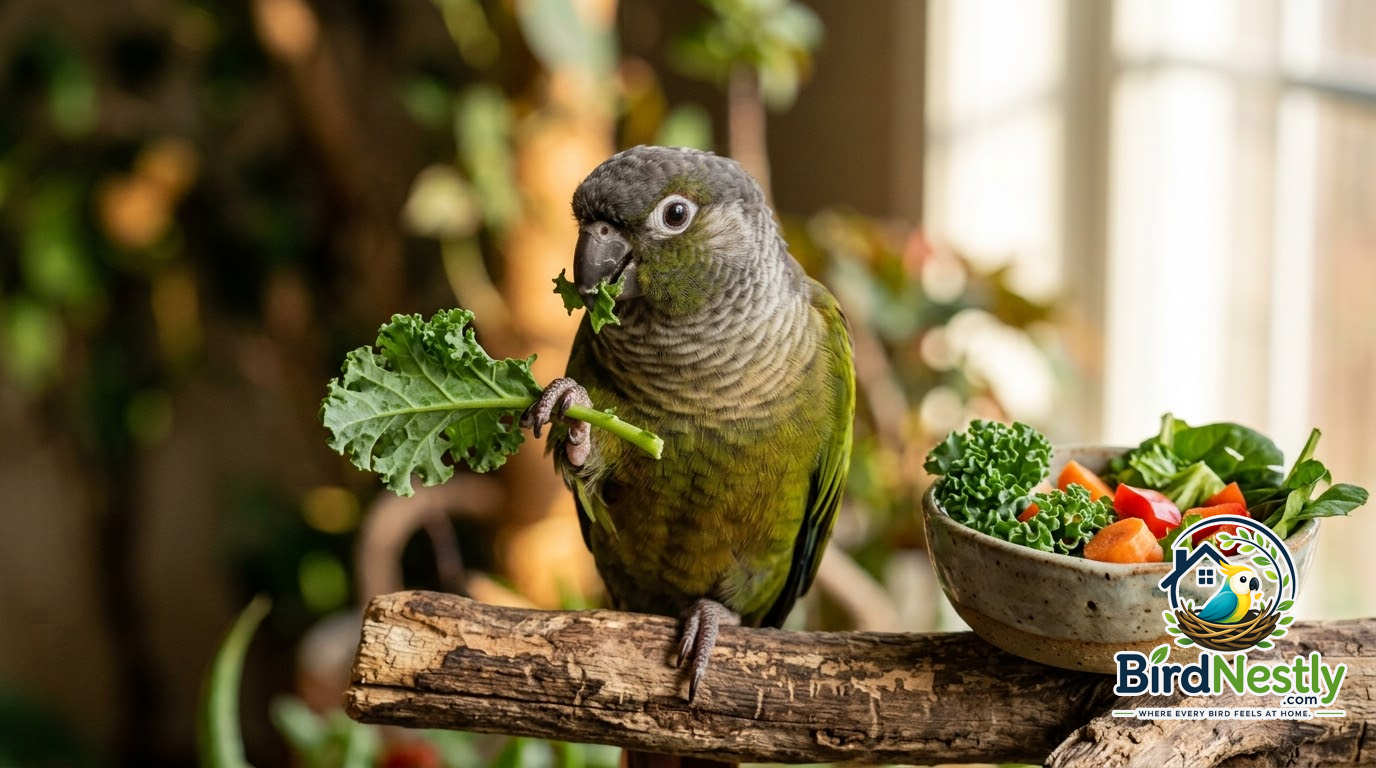
Kale has quite a lot going for it. Its dark green leaves provide nutrients such as vitamin A, vitamin C, vitamin K, folate, calcium, potassium, and fiber. It also contains plant compounds that add to its nutritional value.
Vitamin A is particularly useful in a parrot’s diet. It plays a role in normal immune function and helps support healthy skin and feathers. Kale can contribute to the vegetable portion of the diet, but it shouldn’t be treated as the only source of vitamin A.
Calcium is another nutrient found in kale. However, giving your parrot more kale isn’t a substitute for a properly balanced diet. Calcium needs vary between birds, and birds with particular health or reproductive needs may require a diet planned with an avian veterinarian.
One of the best things about kale is simply that it gives your parrot another vegetable to choose from. You can offer kale on one day and switch to spinach or lettuce another time. This keeps your bird from relying on just one type of vegetable.
Kale is a good addition, but it doesn’t need to become the star of every meal. A varied diet with different vegetables, fresh foods, and a suitable main food is a much better way to feed a parrot.
Can Parrots Eat Raw Kale?
Yes, raw kale is fine for parrots. You don’t need to cook it before giving it to your bird. A fresh leaf can be washed, dried, and offered as it is. Many parrots enjoy the firm texture and like to pull the leaf apart with their beak.
Start by washing the kale thoroughly under running water. Look over the leaves and remove anything that is wilted, slimy, damaged, or spoiled. Once the kale is clean, you can leave a small leaf whole or tear it into pieces that your parrot can easily hold.
There’s no need to add anything to it. Salt, butter, oil, dressing, garlic, onion, and seasoning should stay out of your parrot’s bowl. A plain piece of kale is all you need.
If your parrot has never tried kale before, start with a small piece. Some birds will eat it immediately, while others may spend several minutes tearing it apart without swallowing much. That’s normal. You can offer it again another day without forcing your bird to eat it.
Kale can also be mixed with other vegetables your parrot already enjoys. A few pieces of broccoli or carrots alongside kale can make the food bowl more interesting.
Can Parrots Eat Cooked Kale?

Parrots can eat cooked kale too, but there’s no need to prepare it the way you would prepare a meal for yourself. If you cook kale for your bird, keep it plain. Don’t add salt, butter, cooking oil, sauces, garlic, onion, or spices.
Let the kale cool completely before giving it to your parrot. Hot food can burn the mouth and tongue, so check the temperature first. A small amount of cooled kale is enough.
Cooking also changes the texture. Raw kale stays firm and gives your parrot something to grab and tear, while cooked kale becomes much softer. Your bird may prefer one texture over the other. If your parrot turns its beak up at cooked kale but happily eats a raw leaf, there’s no reason to keep offering the cooked version.
For most owners, raw kale is simply easier. Wash it, tear off a suitable piece, and put it in the food bowl. There’s less preparation and no need to worry about extra ingredients.
Whether you serve kale raw or cooked, keep the portion sensible. Kale is one vegetable among many, not something that needs to fill the entire bowl. You can rotate it with spinach, lettuce, cauliflower, or cabbage throughout the week.
How Much Kale Can a Parrot Eat?
A small amount of kale is enough for most parrots. You don’t need to fill the food bowl with leafy greens just because your bird enjoys them. The right portion depends on the size of the parrot, so a Budgie will need much less than an African Grey, Amazon, or Macaw.
For a small parrot, a few small pieces of kale can be plenty. A medium-sized bird can have a somewhat larger portion, while a larger parrot can handle a bigger piece of leaf. The important thing is that kale remains part of the vegetable selection rather than becoming most of the meal.
When your parrot tries kale for the first time, start with a small piece. This also gives you a chance to see whether your bird actually likes it. Some parrots will nibble happily, while others will grab the leaf, shred it, and drop every piece onto the floor.
You don’t need to give kale at every meal. Rotate it with other vegetables such as broccoli, carrots, cauliflower, and cabbage. Offering different vegetables throughout the week gives your parrot different tastes and nutrients.
If your parrot is on a special diet or has a health condition, don’t rely on a general serving size. An avian veterinarian can help you decide what amount makes sense for your bird.
Can Parrots Eat Kale Every Day?
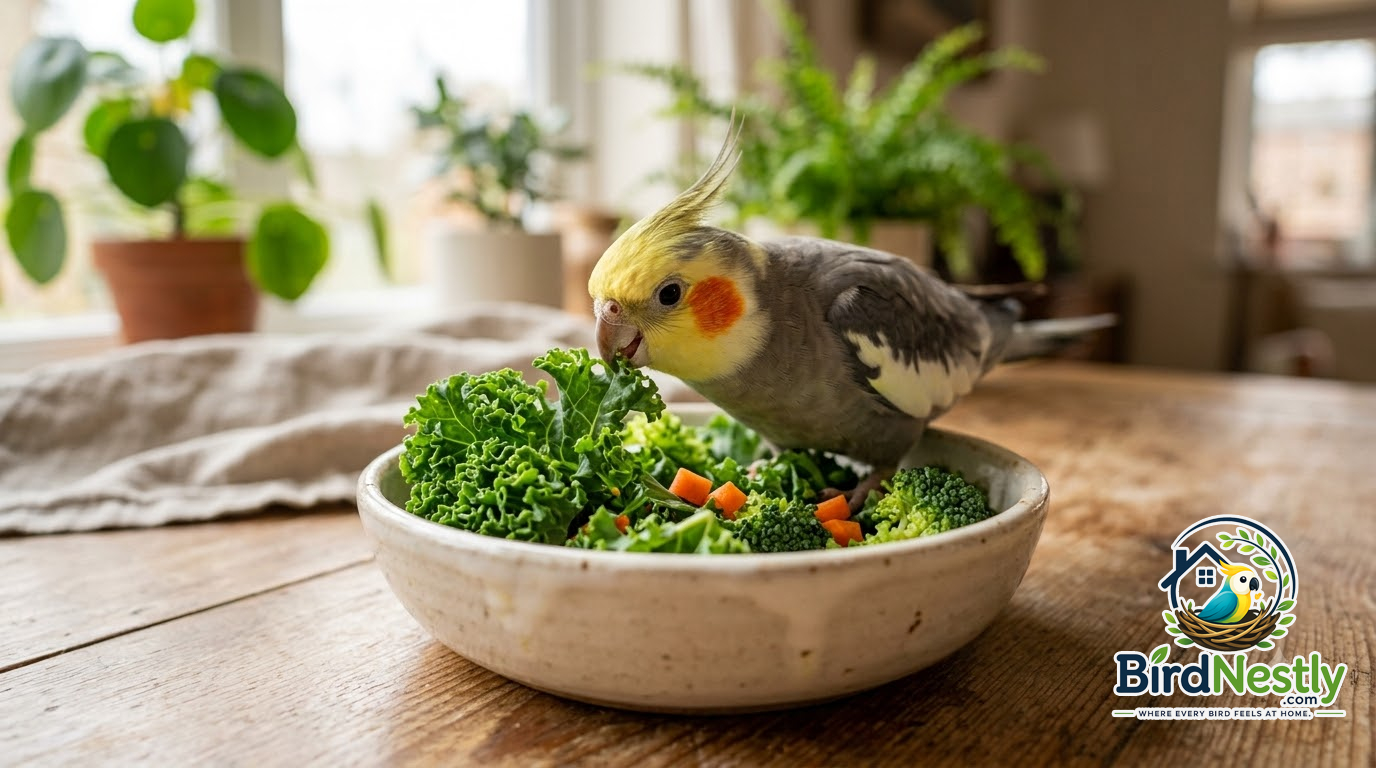
Kale can be part of a regular vegetable rotation, but there’s no reason to make it the only vegetable your parrot eats every day. Variety is much more useful than relying heavily on one food.
Your parrot can have a little kale on one day and another vegetable the next. Spinach and lettuce can provide different textures, while broccoli, cauliflower, carrots, and cabbage give you even more choices.
There’s also a practical reason to rotate vegetables. Your parrot may suddenly decide that it doesn’t like kale anymore. Birds can be wonderfully unpredictable when it comes to food. Keeping several vegetables in the rotation means you won’t be left trying to convince your bird to eat the same green leaf every day.
Kale should also stay alongside your parrot’s normal balanced food rather than replacing it. Fresh vegetables add variety and useful nutrients, but they aren’t a complete diet on their own.
For a healthy parrot, a sensible amount of kale as part of a varied diet is a straightforward choice. If your bird has kidney problems, calcium-related issues, is laying eggs, or has been placed on a special diet, check with an avian veterinarian before making kale a regular part of its meals.
FAQs
Can parrots eat kale?
Yes. Parrots can eat fresh kale as part of a varied diet. Wash it well and serve it plain.
Is kale good for parrots?
Yes. Kale contains nutrients such as vitamins A, C, and K, along with calcium, potassium, and fiber. It should still be one of several vegetables offered to your bird.
Can parrots eat raw kale?
Yes. Raw kale is perfectly suitable when washed thoroughly. Many parrots enjoy tearing the firm leaves apart with their beaks.
Can parrots eat cooked kale?
Yes. Cooked kale can be given after it has cooled completely. Don’t add salt, butter, oil, garlic, onion, sauces, or spices.
Can parrots eat kale every day?
Kale can be included regularly in a varied vegetable rotation, but there’s no need to rely on it as the only vegetable. Rotate it with broccoli, carrots, cauliflower, and other suitable vegetables.
How much kale can a parrot eat?
The amount depends on the size of the bird. A small parrot may only need a few small pieces, while a larger parrot can handle a larger piece of leaf.
Can parrots eat kale stems?
Tender stems can be eaten, but thick stems can be tough for smaller birds. Removing or cutting the harder parts makes them easier to manage.
Should kale be washed before giving it to a parrot?
Yes. Rinse kale thoroughly under running water before serving it. Remove leaves that are moldy, slimy, wilted, or spoiled.
Can baby parrots eat kale?
A young parrot that is already eating solid foods may be offered a small amount of properly prepared kale. Very young birds still being hand-fed need food appropriate for their stage of development.
Is kale better than spinach for parrots?
Both can provide useful nutrients, but they aren’t identical. Spinach contains oxalates, while kale can be a useful leafy green to include in a wider vegetable rotation.
Is kale better than lettuce for parrots?
Kale is generally a more nutrient-rich leafy green than iceberg lettuce. Lettuce can still be offered as another source of variety.
Can parrots eat kale and broccoli together?
Yes. Kale and broccoli can be served together as part of a varied selection of vegetables.
Can parrots eat kale with carrots?
Yes. Small pieces of kale and carrots can be offered together. Wash the vegetables first and don’t add seasoning.
Can parrots with kidney problems eat kale?
A parrot with kidney disease may need a diet adjusted to its specific condition. Ask an avian veterinarian before making kale or any other particular vegetable a regular part of the diet.


Write Your Review
No reviews yet. Be the first to share your experience!