

Lemons aren’t the first fruit most people think of when preparing a snack for a parrot. They’re much more sour than apples, grapes, or berries, so it’s easy to wonder whether they’re suitable at all. You might even notice your bird becoming curious the moment you cut one open, drawn in by the fresh citrus scent, only to back away after the first taste.
So, can parrots eat lemons? Yes, they can, but only in small amounts. Lemon is best treated as an occasional treat rather than a regular part of your parrot’s diet. There are plenty of milder fruits, such as oranges, mandarins, and mangoes, that many birds enjoy more readily.
[wpsm_toplist]
Can Parrots Eat Lemons?
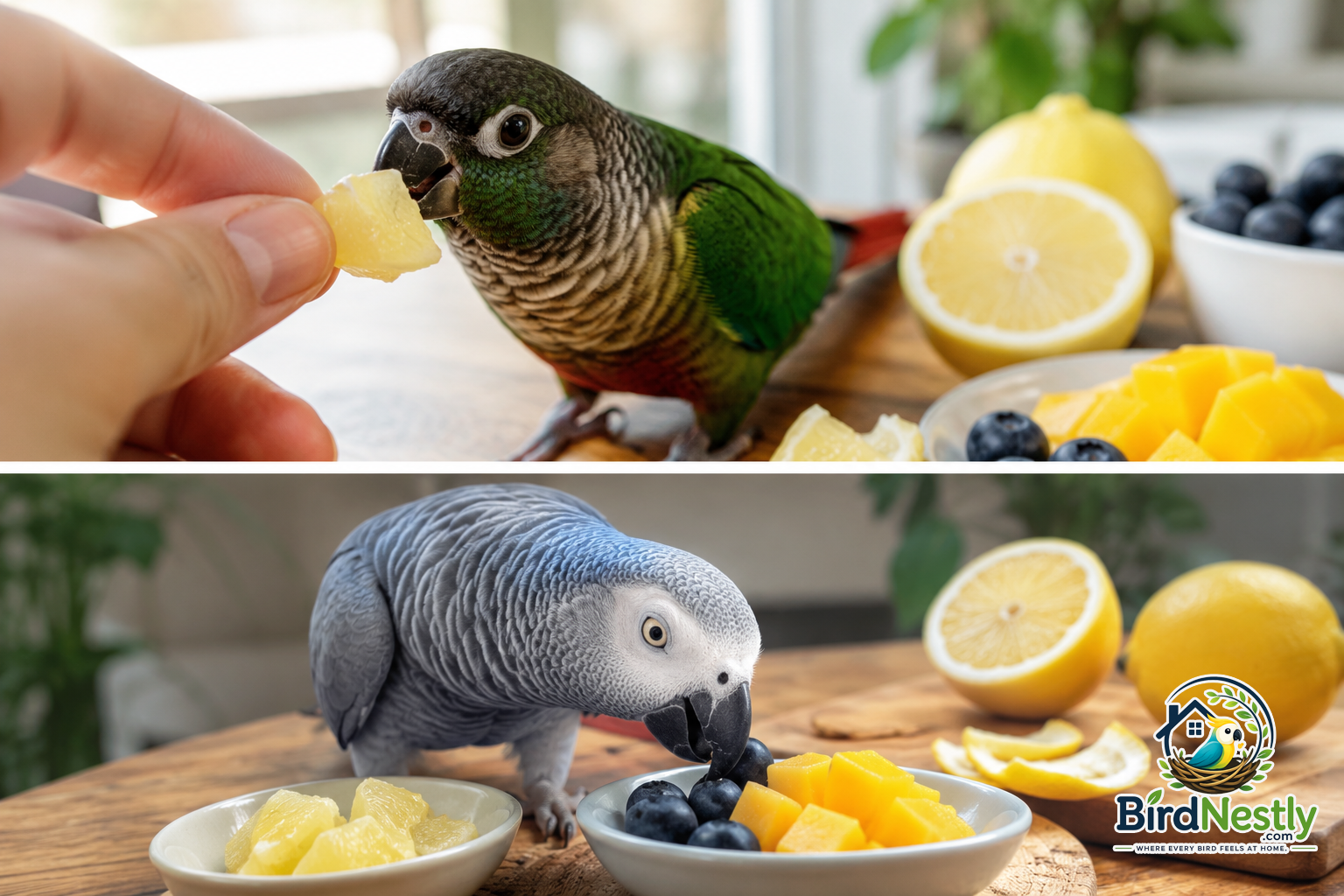
A small piece of fresh lemon flesh is generally suitable for many healthy parrots. The fruit isn’t poisonous, but its sharp, sour taste usually means most birds will only nibble a little before deciding they’ve had enough.
If you’re offering lemon for the first time, keep it simple. Wash the fruit, remove the peel, check for seeds, and cut a small piece from one segment. That’s enough for your parrot to explore the flavor without being overwhelmed.
Every bird reacts differently. One Conure may eagerly investigate anything new that lands in the food bowl, while a Cockatiel might stare at the lemon for a few minutes before walking away. An African Grey may take one careful bite, pause, and never touch it again. Those reactions are completely normal. Parrots have individual likes and dislikes, just as people do.
Lemon also shouldn’t become your bird’s favorite fruit simply because it accepted a taste. Offering a range of fruits over the course of the week is a better approach. One day your parrot might enjoy a few pieces of papaya, another day blueberries, or kiwi. Rotating fruits keeps mealtimes interesting while preventing your bird from filling up on just one type.
If your parrot turns its beak away from lemon, don’t worry. Many birds simply prefer sweeter fruit, and there’s no reason to encourage them to eat something they clearly don’t enjoy.
Are Lemons Good for Parrots?
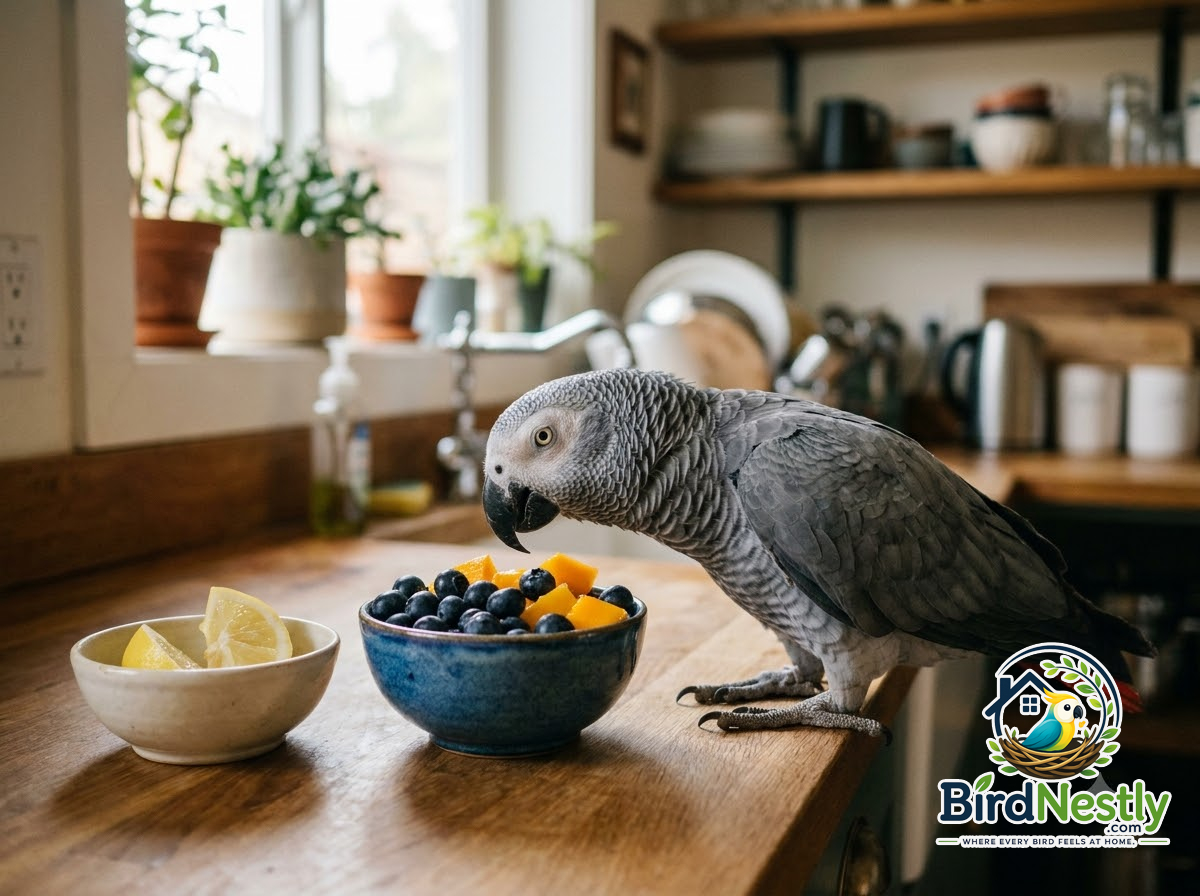
Lemons do contain nutrients, but that doesn’t automatically make them one of the best fruits for parrots. Because they’re so acidic, most birds only eat a bite or two before losing interest, and that’s usually enough.
If your parrot enjoys the occasional taste of lemon, there’s no reason to panic. A small piece of fresh flesh can fit into a balanced diet. The key is remembering that lemon is only a treat, not something your bird needs every week.
In fact, many parrots naturally choose sweeter fruit when given a few options. Put a piece of lemon beside mango, papaya, or mandarin, and there’s a good chance the sweeter fruit disappears first.
I’ve seen birds react very differently to lemon. One Conure might keep going back for another tiny bite, while another tastes it once, shakes its head, and goes straight for a blueberry instead. Neither reaction is unusual. Parrots have their own preferences, and sour fruit simply isn’t a favorite for every bird.
Rather than looking for a single “super fruit,” it’s better to offer variety throughout the week. Rotating fruits like blueberries, strawberries, kiwi, and small pieces of lemon gives your bird different flavors and textures without relying too heavily on one choice.
If your parrot ignores lemon completely, that’s perfectly fine. There are plenty of other fruits that provide the same opportunity for enrichment, and forcing a bird to eat something it clearly dislikes rarely ends well. The goal is to build a varied menu your parrot actually enjoys, not to check every fruit off a list.
Can Parrots Eat Lemon Peel?

The peel is one part of the lemon that I always leave out. While the flesh can be offered in small amounts, the peel doesn’t really add anything useful to your parrot’s diet, and most birds won’t enjoy chewing on it anyway.
Lemon peel is thick, tough, and packed with natural citrus oils. Even if your parrot is curious enough to nibble at it, there’s little reason to let it. The soft fruit inside is much easier to eat and far more appealing.
Preparing lemon only takes a minute. Wash the fruit well, peel it completely, remove any seeds you find, and cut a small piece of the flesh into bite-sized portions. That’s all most parrots need.
The same habit is worth following with other citrus fruits as well. If you’re serving mandarins or oranges, peeling them first keeps things simple and leaves your bird with the part it’s most likely to enjoy.
Some parrots will try to play with anything new that lands in the food bowl, including bits of peel. Mine have tossed pieces across the cage more than once without actually eating them. It’s another reason I prefer to prepare the fruit before serving it instead of letting the bird figure it out.
Once your parrot has finished, remove any leftover lemon from the bowl. Fresh citrus dries out quickly, and uneaten pieces don’t stay appetizing for long. A clean bowl and fresh fruit each time will always be a better choice than leaving leftovers behind.
Can Parrots Drink Lemon Juice?
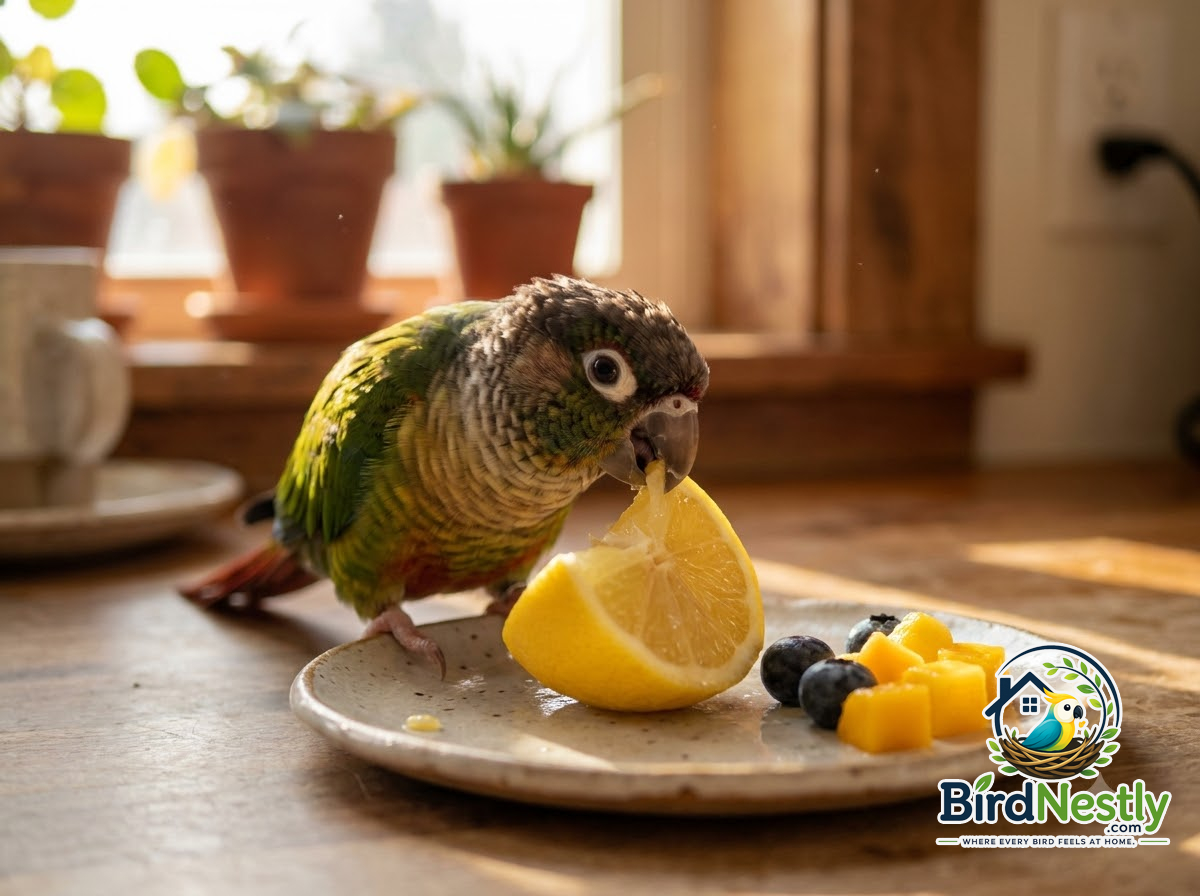
A few drops of juice from a fresh piece of lemon aren’t usually a problem if your parrot is already eating the fruit. What I wouldn’t do is pour lemon juice into your bird’s water dish or make lemon water on purpose.
Parrots need clean, fresh water throughout the day. Changing the taste of their drinking water can discourage some birds from drinking as much as they normally would. Even a parrot that enjoys nibbling on a piece of lemon may ignore a water bowl that smells strongly of citrus.
It’s also best to avoid bottled lemon juice. Many commercial products contain preservatives or other ingredients that have no place in a parrot’s diet. Fresh fruit is always the better choice.
The same goes for homemade drinks. There’s no reason to squeeze lemon into water or mix it with honey or sugar for your bird. Those recipes are made for people, not parrots.
If you want your parrot to enjoy lemon, simply offer a small piece of the fresh fruit. Your bird can decide whether it wants a bite, a quick taste of the juice, or nothing at all. Some parrots will lick the juicy surface and walk away, while others won’t touch it after the first sniff.
After your parrot has finished eating, replace the drinking water with a fresh bowl if any fruit or juice has splashed into it. Clean water should always be available, regardless of what treats are on the menu that day.
Are Lemons Too Sour for Parrots?
If you’ve ever watched a parrot taste a lemon for the first time, you’ll probably remember the expression. Some birds take a tiny bite, pause for a second, and decide that’s enough. Others surprise you by going back for another nibble. There’s no single reaction that every parrot has to sour fruit.
The biggest difference between lemons and fruits like oranges or mandarins is the level of acidity. Lemons are noticeably more tart, which is why most parrots naturally eat less of them. In many cases, the flavor limits the portion better than the owner ever could.
That doesn’t mean the fruit is dangerous for a healthy parrot. It simply means it’s not a fruit most birds will want to eat in large amounts. If your parrot takes one bite and walks away, let it. There’s no benefit in encouraging another mouthful.
Fresh fruit should only make up a small part of a balanced diet anyway. The Merck Veterinary Manual recommends that parrots receive most of their nutrition from a complete, balanced diet rather than relying heavily on fruit. Fruits are valuable for variety, but they shouldn’t replace the foods your bird depends on every day. (Merck Veterinary Manual)
I’ve noticed that many parrots are much happier with sweeter fruit. Put a small piece of lemon beside a slice of mango or a few blueberries, and the sweeter option often disappears first. That’s not a rule, of course, but it’s a pattern many owners recognize.
The best approach is to let your bird decide. Offer a tiny piece once, watch the reaction, and move on if it isn’t interested. A parrot doesn’t need to like every fruit you bring home, and there’s no prize for finishing a slice of lemon. Sometimes the simplest answer is also the right one: if your bird would rather eat something else, there are plenty of other fresh fruits to choose from.


Write Your Review
No reviews yet. Be the first to share your experience!