

Limes usually aren’t the first fruit people think about sharing with a parrot. They’re small, packed with juice, and much sharper in flavor than most fruits birds commonly enjoy. If your parrot has ever wandered over while you were cutting one, chances are it was more interested in the smell than the fruit itself.
So, can parrots eat limes? Yes, they can, but only in small amounts. The flesh isn’t considered harmful for healthy parrots, although the strong sour taste means many birds lose interest after a bite or two. If you’re looking for fruit your parrot is likely to enjoy more, oranges, mandarins, and mangoes are usually much easier to win them over.
[wpsm_toplist]
Can Parrots Eat Limes?

Healthy parrots can have a small piece of fresh lime from time to time. The fruit isn’t something they need in their diet, but a tiny taste is generally fine if your bird seems curious.
Before offering any, wash the lime thoroughly, peel away the rind, remove any seeds you find, and cut the flesh into small pieces. A single bite is plenty for a first try.
Some parrots surprise their owners by taking another bite after the first taste. Others quickly decide the fruit isn’t for them. Both reactions are common. Birds, just like people, develop their own likes and dislikes over time, and sour fruit isn’t everyone’s favorite.
Rather than serving the same fruit over and over, it’s worth mixing things up. A few pieces of kiwi, papaya, blueberries, or pineapple on different days gives your bird new flavors and textures without relying too heavily on one choice.
If your parrot sniffs the lime and walks away, don’t read too much into it. Plenty of birds simply prefer sweeter fruit. There’s no benefit in trying to persuade them otherwise when there are so many other fresh fruits they’ll happily eat.
Are Limes Good for Parrots?

Limes contain vitamin C, small amounts of fiber, and plenty of moisture, but that doesn’t make them one of the best fruits for parrots. Because they’re so sour, most birds only eat a tiny amount before deciding they’ve had enough. In a way, the flavor helps keep portions small without you having to step in.
If your parrot enjoys a little piece now and then, there’s no reason to worry. The fruit can add something different to its weekly menu, but it shouldn’t replace fruits that birds usually eat more willingly. Many parrots will happily finish a serving of papaya, mango, or blueberries long before they reach for another bite of lime.
Fresh fruit should always play a supporting role in a balanced diet. According to the Merck Veterinary Manual, parrots do best when the majority of their nutrition comes from a complete and balanced diet, while fruits and vegetables provide variety rather than serving as the main source of nutrition. That means even healthy fruits should be offered in moderation instead of filling a large part of the food bowl.
You’ll probably notice that your bird’s opinion about lime becomes obvious within seconds. Some parrots nibble the edge of a slice, blink a couple of times, and walk away. Others keep coming back for another taste out of curiosity, even if they never eat very much. Both reactions are completely normal.
Instead of searching for the “healthiest” fruit, it’s better to focus on offering a wide selection over time. Rotating fruits like kiwi, pineapple, grapes, and the occasional piece of lime gives your parrot different flavors, textures, and enrichment without relying too heavily on any single fruit.
At the end of the day, a parrot that eagerly eats a balanced diet and enjoys a variety of fresh foods is in a much better position than one that only accepts a single favorite fruit. Lime can be part of that variety—it just doesn’t need to be the star of the bowl.
Are Limes Too Sour for Parrots?
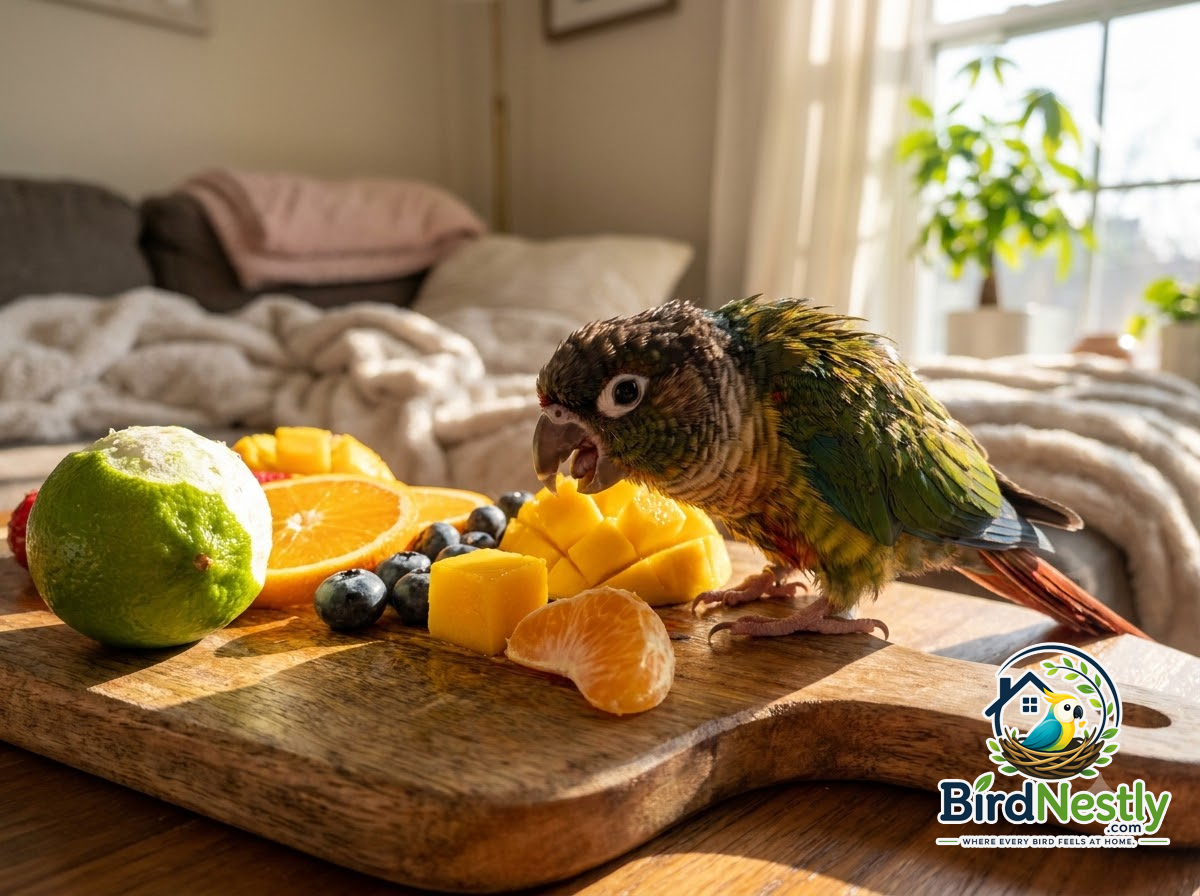
There’s no question about it—limes are one of the sourest fruits you can put in front of a parrot. That’s exactly why most birds don’t eat very much of them.
The first bite is often enough to tell the whole story. A curious Conure might take a small nibble, pause for a second, then decide it would rather have something sweeter. An African Grey may investigate the fruit for several minutes before walking away without taking another bite. Budgies and Cockatiels are often even more selective when it comes to strong citrus flavors.
That doesn’t mean the lime has harmed your bird. It simply means your parrot has made its choice.
You’ll probably notice a big difference if you offer a few fruits at the same time. Put a slice of lime beside a piece of orange, mandarin, or cantaloupe, and many parrots head for the sweeter fruit first. That’s a pattern plenty of owners see at home.
Every bird has its own personality, though. Some parrots seem determined to sample anything new that appears in the food bowl. Others stick with the fruits they already know and trust. Neither habit is a problem as long as your bird is eating a balanced diet overall.
If your parrot spits out the first bite of lime or drops it on the cage floor, don’t keep offering more in the hope that it will change its mind. Food should be something your bird looks forward to, not a test of patience. There are plenty of other fresh fruits, from pineapple to strawberries and blackberries, that can add just as much variety to the diet.
Sometimes the simplest answer is the right one. If your parrot likes lime, let it enjoy a small taste once in a while. If it doesn’t, move on to another fruit and don’t think twice about it. A healthy diet is built on variety, not on convincing a bird to eat every fruit in the produce aisle.
Can Parrots Eat Lime Peel?
When it comes to limes, the peel is the one part I leave out every time. Even if your parrot enjoys the fruit itself, there’s no real advantage to letting it chew on the rind.
Lime peel is thick, fibrous, and full of aromatic oils that give the fruit its strong citrus scent. Those oils make the peel useful in cooking, but they don’t make it a good snack for a pet bird. Most parrots take a few curious bites, realize it’s tough to chew, and drop it anyway.
There’s another reason to skip the peel. Like many citrus fruits, limes are often coated with wax or treated during handling and transport to help them stay fresh on store shelves. Washing the fruit removes dirt from the surface, but it doesn’t guarantee that every trace of residue is gone. Since your parrot doesn’t gain anything nutritionally from the peel, it’s easier to remove it before serving the fruit.
Preparing a lime only takes a minute. Wash it under running water, peel away the rind, remove any seeds, and cut the flesh into small pieces that match your bird’s size. The soft fruit is much easier to eat and far more likely to be accepted.
The same habit works well with other citrus fruits, too. Whether you’re serving oranges, mandarins, or lemons, removing the peel keeps things simple and leaves only the part your bird is most likely to enjoy.
If your parrot grabs a discarded piece of peel before you can pick it up, there’s usually no need to panic over a quick nibble. Just take it away and replace it with a small piece of the fresh flesh instead. Over time, most birds learn which part is actually worth eating.
Can Parrots Drink Lime Juice?
A few drops of juice that come from a fresh piece of lime aren’t usually a concern if your parrot is already nibbling on the fruit. That’s very different from pouring lime juice into a water bowl or making lime water for your bird.
Fresh drinking water should always taste like…water.
If the water bowl smells strongly of citrus, some parrots simply won’t drink as much as they normally would. Others may take a sip, decide they don’t like it, and wait until fresh water is available. Either way, there’s no benefit to changing something your bird depends on every day.
Commercial lime juice is another story altogether. Bottled products often contain preservatives, concentrates, or other ingredients that aren’t meant for parrots. Even varieties labeled “100% juice” are far more concentrated than a bird would naturally encounter.
The safest choice is fresh fruit.
If your parrot enjoys a tiny bite of lime, let it experience the fruit the way nature intended. There’s no need to squeeze the juice into a dish, mix it with water, or add sweeteners in an attempt to make it more appealing.
Example:
Imagine placing two bowls inside the cage. One contains clean, fresh water. The other contains water with a squeeze of lime. Most parrots will head straight for the plain water, even if they were curious enough to taste a small piece of lime a few minutes earlier.
Keeping the water bowl separate from treats also makes it easier to notice whether your bird is drinking normally. If fresh fruit falls into the bowl while your parrot is eating, empty it, rinse the dish, and refill it with clean water.
How Much Lime Can a Parrot Eat?
When it comes to limes, less really is more.
Most parrots aren’t interested in eating very much because the sharp, tangy flavor is enough to satisfy their curiosity after a bite or two. That’s one reason owners rarely run into trouble with limes—birds usually know when they’ve had enough.
The first time you offer one, keep the serving tiny. A small cube or a thin slice of the flesh is more than enough to see whether your parrot likes it. There’s no need to hand over an entire wedge or leave several pieces in the food bowl.
The amount can vary a little depending on the size of your bird.
- Budgies and Parrotlets: one small bite is plenty.
- Cockatiels and Lovebirds: one or two bite-sized pieces.
- Conures, Quakers, and Caiques: two or three small pieces if they enjoy the taste.
- African Greys, Amazons, Macaws, and Cockatoos: a few small pieces are enough, even for larger parrots.
A bigger bird doesn’t need a bigger serving simply because it has a larger beak. Fruit should still make up only a small part of the overall diet.
One habit that’s worth developing is removing any leftover fruit after an hour or two. Lime dries out quickly once it’s cut, and warm temperatures can cause fresh fruit to spoil faster than many people realize. Offering a fresh piece next time is always better than leaving yesterday’s leftovers in the cage.
You’ll also learn a lot by watching your bird instead of focusing on exact measurements. A parrot that eagerly takes one bite and then moves on to its pellets or vegetables is telling you it has had enough. There’s no reason to encourage another serving.
Think of lime the same way you would any other occasional fruit treat. Rotate it with sweeter options like kiwi, mango, papaya, or blueberries. That variety keeps meals interesting and exposes your parrot to different flavors without relying too heavily on any single fruit.
A parrot doesn’t need to finish every piece you offer. In fact, if there’s one thing most experienced bird owners learn, it’s that a healthy bird often leaves the table before the owner thinks the meal is over—and that’s perfectly fine.
Can Parrots Eat Limes Every Day?
Even if your parrot seems to enjoy limes, they shouldn’t become part of the daily menu.
Limes are simply too acidic to earn a permanent spot in your bird’s fruit rotation. A small taste once in a while is one thing, but serving them every day doesn’t offer any real advantage. There are plenty of other fruits that provide more variety and are usually much easier for parrots to enjoy.
Think about it this way. If you stocked your own fruit bowl with nothing but limes, you’d probably get tired of them pretty quickly. Parrots are no different. They benefit from seeing different colors, textures, and flavors throughout the week.
One simple routine might look like this:
- Monday: Blueberries
- Tuesday: Papaya
- Wednesday: Mango
- Thursday: Kiwi
- Friday: Orange
- Weekend: A tiny piece of lime if your bird enjoys it
With a routine like this, no single fruit takes over the diet, and your parrot gets the chance to experience a wide range of natural flavors.
You’ll probably notice another benefit as well. Birds that are offered different fruits regularly are often more willing to try something unfamiliar. On the other hand, parrots that receive the same treat every day can become surprisingly picky, refusing anything that doesn’t look like their favorite snack.
Veterinarians generally recommend treating fruit as a supplement to a balanced diet rather than the main course. According to the Association of Avian Veterinarians (AAV), a healthy diet for most companion parrots should be built around nutritionally balanced foods, with fresh vegetables and fruits offered as complementary items rather than staples. A few pieces of fresh fruit are valuable, but they shouldn’t crowd out the foods that provide complete daily nutrition.
If your parrot eagerly waits for fruit each morning, that’s a great opportunity to keep things interesting. Some days it might be a slice of pineapple. Other days it could be a few blackberries or grapes. When lime appears every now and then, it stays something special instead of becoming just another routine snack.


Write Your Review
No reviews yet. Be the first to share your experience!