

A ripe plum can be hard for a curious parrot to ignore. The bright color, sweet smell, and soft flesh are enough to make many birds want to see what you’re eating. But before you cut off a piece and hand it over, there are a couple of things worth knowing.
Yes, parrots can eat fresh plums in moderation. The juicy flesh can be a nice little treat, but the plum needs to be prepared properly first. The most important thing is to remove the pit completely. You should also wash the fruit well and cut it into a size your bird can comfortably handle.
A plum doesn’t need to become part of your parrot’s daily meal. Think of it more like a small change from the usual fruits you offer. A little piece here and there is enough, especially when your bird already has a varied diet.
[wpsm_toplist]
Can Parrots Eat Plums?
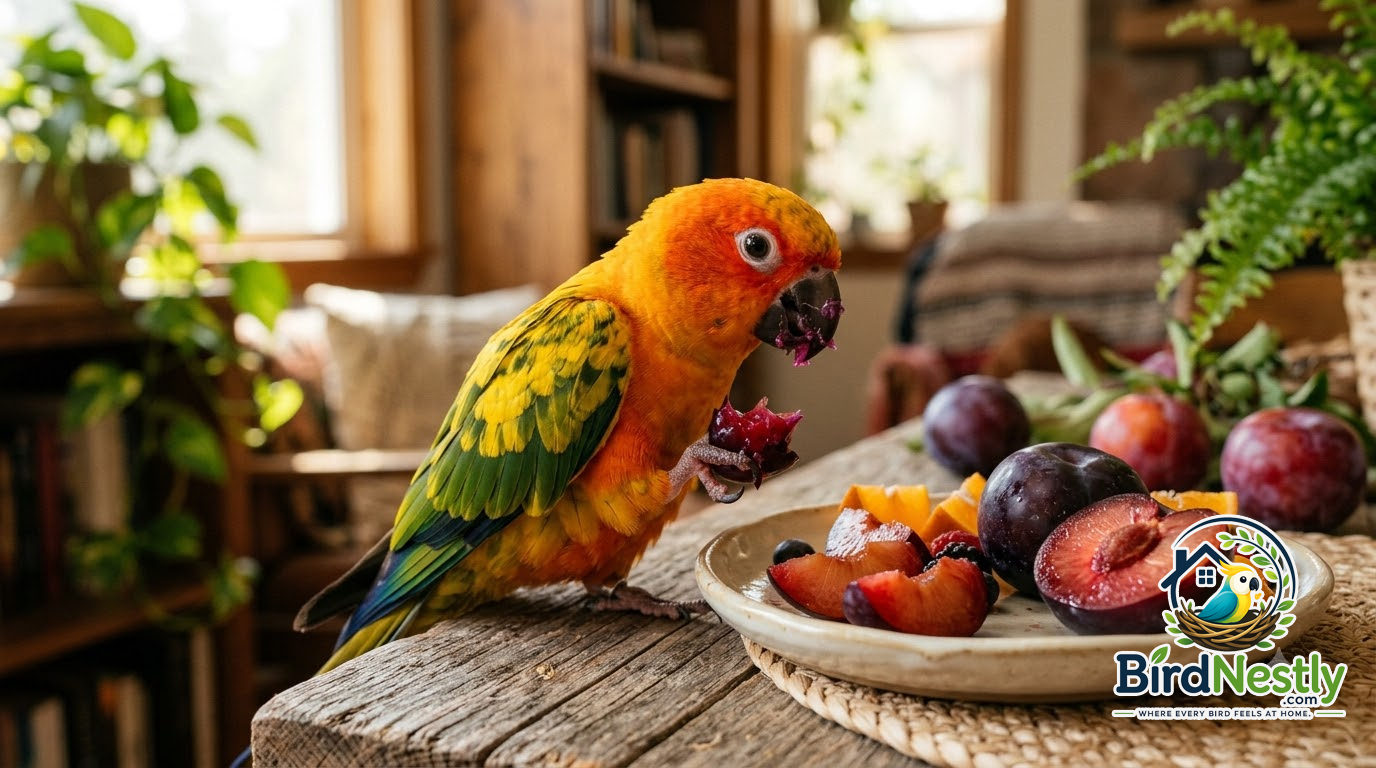
Yes, fresh plum flesh is safe for parrots when given in reasonable amounts. The fruit is soft and juicy, and many parrots enjoy its naturally sweet taste. A Cockatiel may sit there carefully nibbling at a small piece, while a Conure might grab it and make a complete mess in seconds. That’s pretty normal when fruit and parrots meet.
Plums contain plenty of water and provide fiber along with nutrients such as vitamin C, vitamin K, and potassium. They can add some variety to your bird’s fruit choices, particularly when you rotate them with other options such as pears, apples, or blueberries.
Different parrots can enjoy plum, too. Budgies and Lovebirds should receive tiny pieces because of their small size. Cockatiels and Conures can manage slightly larger pieces, while bigger parrots such as African Greys, Amazons, Cockatoos, and Macaws can have a little more. The amount still needs to stay modest regardless of the bird’s size.
Before putting plum in the food bowl, cut it open and take out the pit. Don’t hand your parrot a whole plum and let it work its way through the fruit. The hard pit is the part you don’t want your bird chewing on.
A fresh, ripe plum is the simplest choice. Wash it thoroughly, remove the pit, cut the flesh into manageable pieces, and offer a small amount alongside your parrot’s regular food. If your bird has never tried plum before, start with just one or two pieces and see how it gets along with it.
Are Plums Good for Parrots?

Plums can be a nice little addition to a parrot’s fruit bowl, especially when the fruit is ripe and fresh. They’re juicy, soft, and naturally sweet, which is probably why some parrots get rather excited when they see a piece coming their way.
The fruit also contains water, fiber, vitamin C, vitamin K, and potassium. Those nutrients can add a little variety to the diet, but plum isn’t something your bird needs in large amounts. A parrot’s everyday food should still make up most of what it eats, with fruit taking a smaller place alongside it.
One thing to keep in mind is the sweetness. Plums contain natural sugars, so giving your parrot several pieces at once isn’t necessary. A few small bites can be enough to satisfy a curious bird without turning a simple treat into a large part of the meal.
It’s also nice to rotate fruits instead of sticking with the same one all the time. You might offer a little plum one day and pear or strawberry another day. Your parrot gets different tastes and textures, and you don’t have to worry about one fruit taking over the menu.
And don’t be surprised if your bird seems more interested in making a mess than actually eating the plum. Juice on the beak, bits of skin dropped onto the floor, and a half-eaten piece abandoned in the bowl are all pretty familiar sights for anyone who has shared fresh fruit with a parrot.
The important thing is to keep the portion sensible and serve the fruit fresh. A small piece of ripe plum can be an enjoyable treat, but it should stay exactly that—a treat.
Can Parrots Eat Plum Skin?
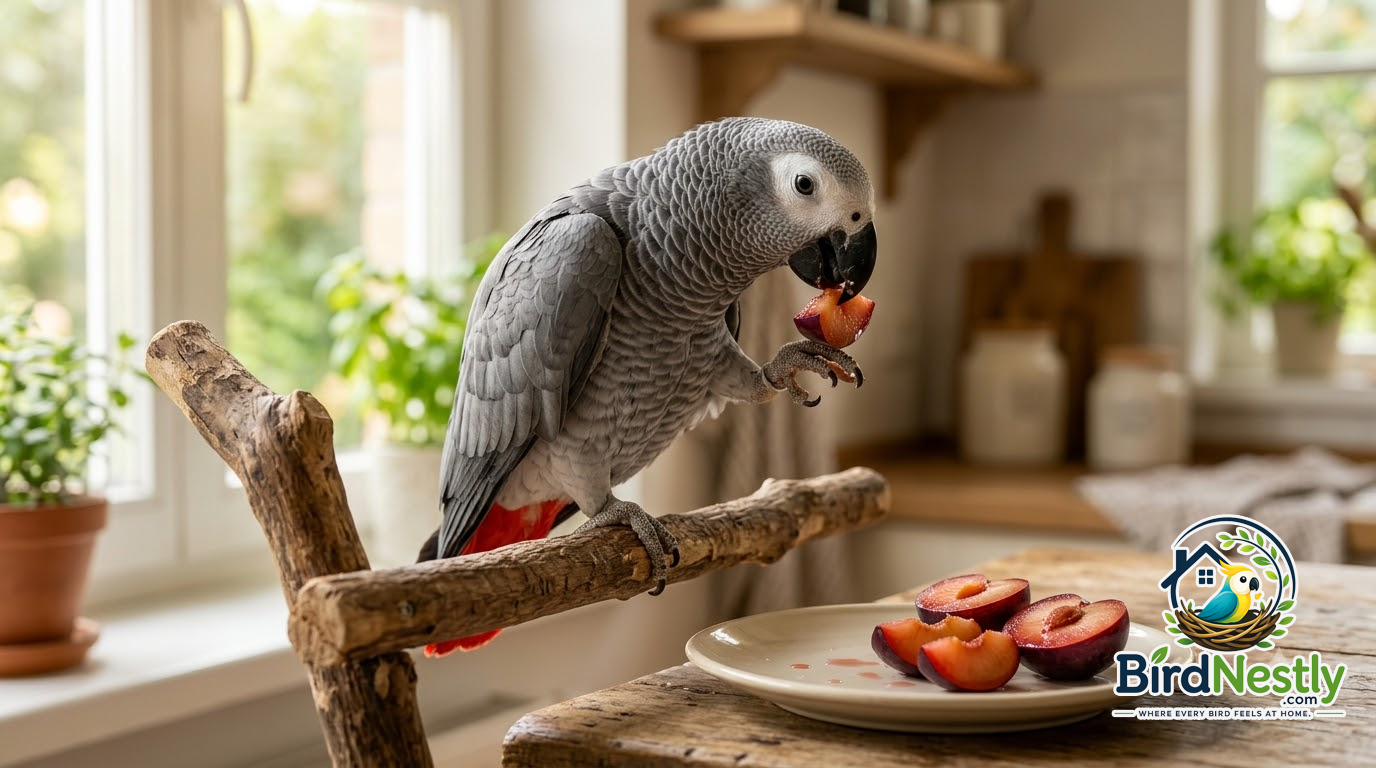
Yes, the skin of a fresh plum is fine for parrots to eat. There’s no need to peel the fruit every time you want to give your bird a little piece. Some parrots will happily nibble through the skin, while others will eat the soft flesh and leave the skin behind.
The important thing is to wash the plum well first. Give it a good rinse under running water and gently rub the outside before cutting it. Once it’s clean, cut the plum open and remove the pit completely.
You don’t have to make your parrot eat the skin, either. If your bird seems to prefer the soft inside, just cut the fruit into small pieces and leave the skin off. There’s nothing special about the skin that makes it necessary for a healthy diet.
Take a look at the fruit before serving it, too. A plum that’s moldy, badly bruised, leaking, or starting to ferment belongs in the bin, not in your parrot’s bowl. Fresh, ripe fruit is always the better choice.
And remember that the pit is different from the skin. The skin can be eaten; the hard pit should be removed. Cut the plum yourself rather than giving your parrot the whole fruit to pull apart. That small extra step makes the treat much safer and saves you from finding a chewed-up pit at the bottom of the cage.
Can Parrots Eat Plum Pits?
This is the part of the plum you don’t want your parrot getting into. The soft flesh is fine, and the skin can be left on after a good wash, but the hard pit should always be removed before serving.
Plum pits are tough enough that a small parrot can struggle to break them apart. Even larger parrots shouldn’t be encouraged to chew on them. The pit also contains compounds known as cyanogenic glycosides, which can release cyanide when the seed material is crushed or chewed.
That’s why it’s much better to cut the plum open yourself instead of giving your bird the whole fruit. Take out the pit, check that no small pieces have been left behind, and then cut the flesh into a few manageable pieces.
The same little precaution is useful with other stone fruits, too. Peaches and nectarines also have hard pits that should be removed before they’re offered to a parrot.
If your parrot manages to chew or swallow part of a plum pit, don’t give it any more and keep an eye on the bird. If you know it swallowed a pit or a significant piece, or if it starts behaving strangely, contact an avian veterinarian promptly for advice.
The easy rule is simple: give your parrot the plum flesh, but leave the pit out of the bowl.
How Much Plum Can a Parrot Eat?
A little plum goes a long way with a parrot. You don’t need to fill the food bowl with it, even if your bird seems to love the sweet, juicy taste. A few small pieces are usually plenty for a treat.
For a Budgie, Lovebird, or other small parrot, start with one or two tiny pieces. Their bodies are small, so even a small amount of fruit can be quite a lot compared with what they normally eat.
Cockatiels, Conures, and other medium-sized parrots can have a few small pieces at a time. Larger parrots such as African Greys, Amazons, Cockatoos, and Macaws can handle somewhat bigger portions, but there is still no need to offer a large amount.
If plum is new to your bird, start with a small piece and see how it reacts. Some parrots will eat it straight away, while others may sniff it, take one bite, and throw the rest onto the floor. That’s nothing unusual.
It’s also worth remembering that plums contain natural sugar and plenty of water. Too much fruit at once can sometimes lead to softer or wetter droppings. That doesn’t mean you need to avoid plum; it simply makes a good reason to keep the serving modest.
You can rotate plum with other fruits throughout the week rather than giving it every day. A little plum one day, some pear another day, and a few blackberries later in the week gives your parrot some variety without letting any one fruit take over its diet.
Whatever the size of your bird, the basic rule stays the same: small serving, fresh fruit, and always remove the pit before it reaches the bowl.
an Parrots Eat Plums Every Day?
There’s no need to give your parrot plum every day, even if it turns out to be one of its favorite fruits. A little variety is better than filling the bowl with the same fruit over and over again.
Plums contain natural sugar, so keeping the serving small makes sense. Your parrot can enjoy a few pieces as a treat while its usual food continues to make up most of the diet. On another day, you could offer a little mango, papaya, or blueberry instead.
Rotating fruits also gives your parrot different flavors, textures, and nutrients. You don’t have to follow a strict schedule. Just think of plum as one option among several rather than the fruit that has to appear in the bowl every morning.
There’s another practical reason not to overdo it. Because plums are juicy, eating a lot at once can make your parrot’s droppings look wetter than usual. A small change after eating fruit isn’t necessarily a problem, but persistent changes or other signs that your bird isn’t feeling well are worth discussing with an avian veterinarian.
So, can your parrot have plum regularly? Yes, it can be part of a varied diet, but it doesn’t need to be an everyday treat. A few pieces from time to time are more than enough.


Write Your Review
No reviews yet. Be the first to share your experience!