

Table of Contents
A ripe peach is hard to ignore. It’s sweet, juicy, and soft enough that many parrots become curious the moment they see it on the kitchen counter. If your bird has ever watched you cut fresh fruit, chances are it has already wondered whether a peach is worth a taste.
It is. Fresh peach flesh is safe for healthy parrots when it’s served in small amounts. The only part that should never be offered is the pit. Once that’s removed, peaches can be another enjoyable fruit to mix into your bird’s routine alongside favorites like mango, papaya, or blueberries.
[wpsm_toplist]
Can Parrots Eat Peaches?
Yes, fresh peaches are safe for parrots as long as they’re prepared properly.
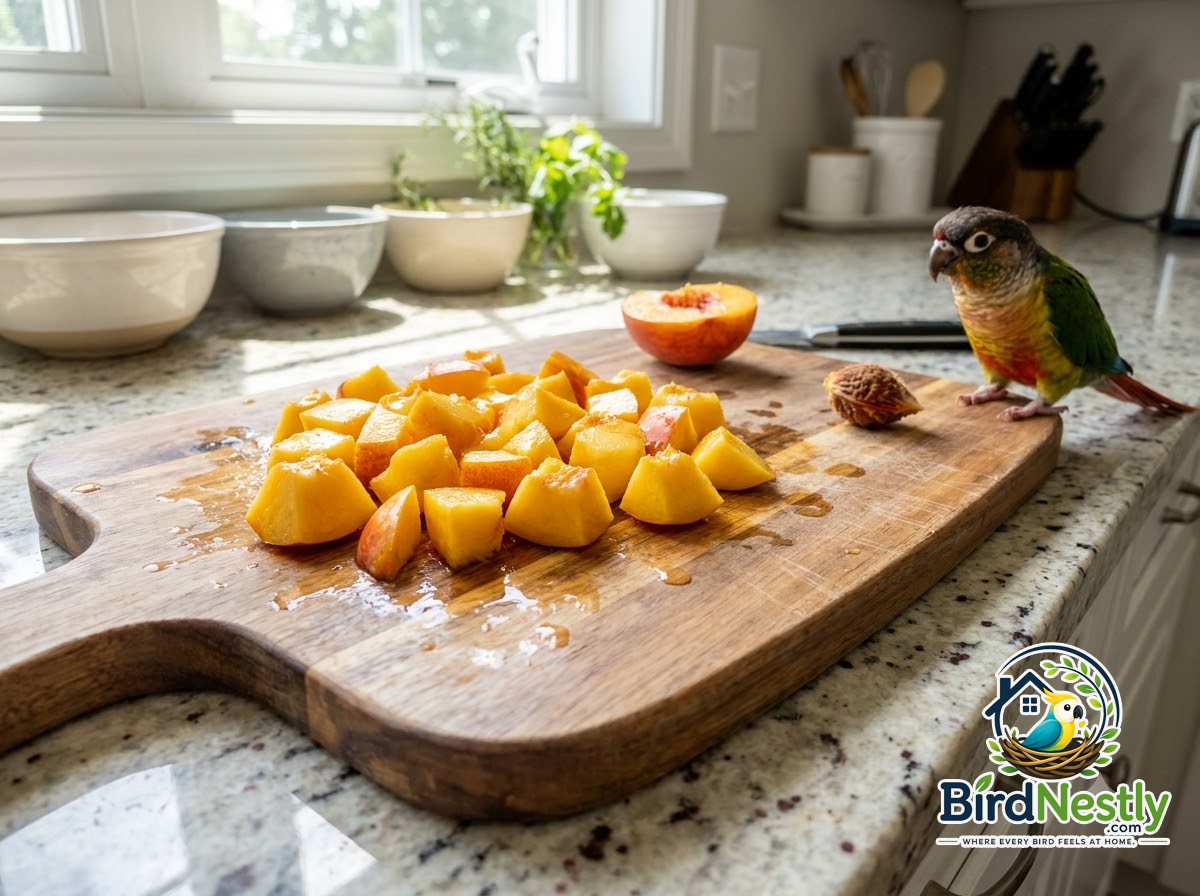
Wash the fruit well, remove the pit, and cut the flesh into pieces that are easy for your bird to hold and eat. That’s really all there is to it.
Peaches have a soft texture that many parrots seem to enjoy. They don’t have the sharp acidity of citrus fruits or the firm bite of apples, so they’re often accepted more quickly by birds that are cautious about trying something new.
Not every parrot reacts the same way, though. One bird may finish every piece you offer, while another takes a single bite before wandering back to its pellets. Some birds would rather have a few grapes or a slice of apple instead. That’s simply part of living with parrots—each one develops its own preferences.
A small serving is more than enough, especially the first time. Let your bird decide whether it likes peaches instead of trying to encourage it to eat more. If the fruit disappears in a few minutes, you know it’s a winner. If it gets ignored, put it down to experience and offer something different next time.
One thing never changes, no matter how much your parrot enjoys peaches: the pit should always be removed before the fruit goes anywhere near the food bowl. That’s the only part of the fruit that should never be treated as a snack.
Are Peaches Good for Parrots?
Peaches bring a little more to the food bowl than just a sweet flavor. They’re full of water, making them a refreshing treat on warm days, and they also provide small amounts of fiber, vitamin A, and vitamin C. While those nutrients are helpful, peaches shouldn’t be looked at as a “superfood.” They’re simply one healthy option among many.
What matters more than any single fruit is the variety your parrot gets over time.
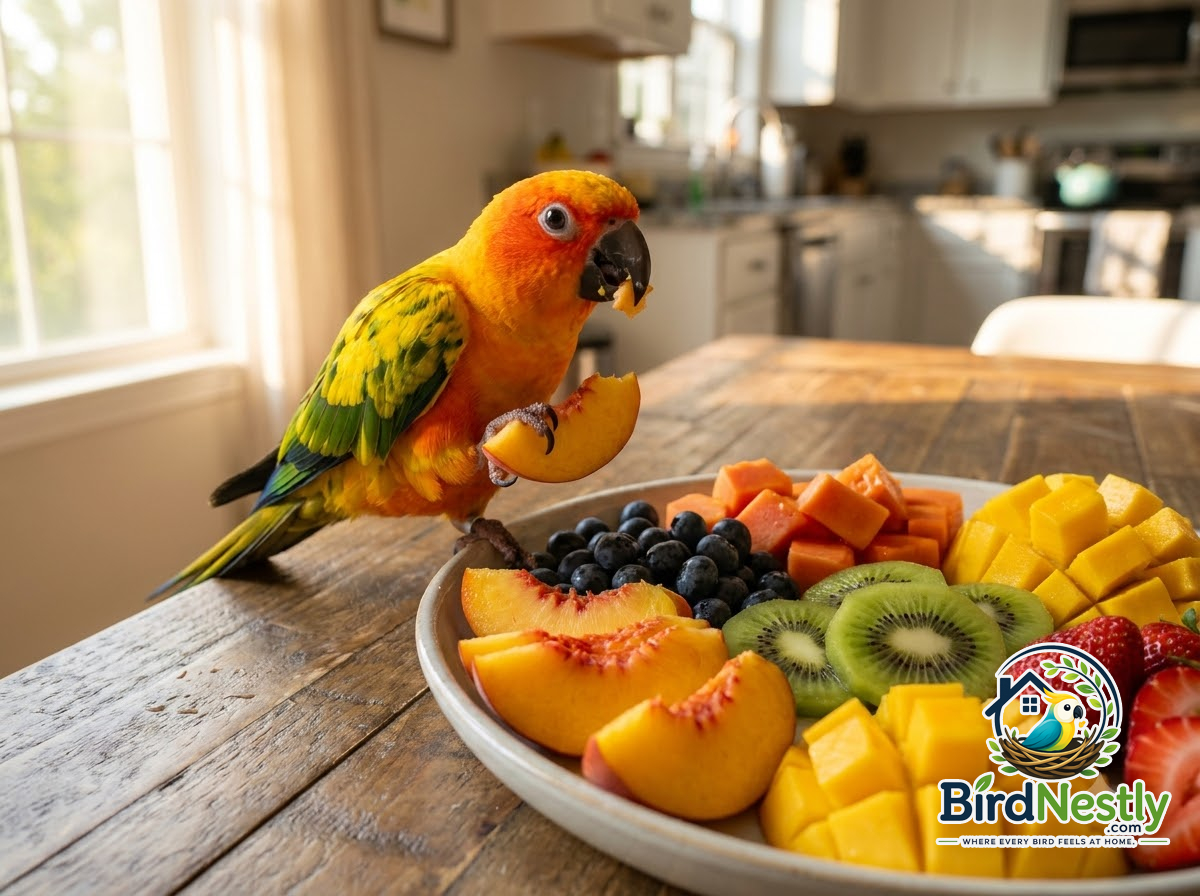
A bird that enjoys peaches one day, kiwi the next, and a few pieces of strawberry or papaya later in the week is getting a much broader mix of nutrients than one that eats the same fruit every day.
Peaches are also naturally high in water, which is one reason many parrots seem to enjoy them during hot weather. If you’ve ever watched a bird finish a juicy piece of peach, you’ve probably noticed the sticky beak and the satisfied look afterward. It’s messy, but most parrots don’t seem to mind.
Sweetness, however, is another reason not to overdo it.
Like most fruits, peaches contain natural sugars. Those sugars aren’t harmful when fruit is offered in sensible portions, but they shouldn’t crowd out pellets, vegetables, or other foods that make up the foundation of a healthy diet. Think of peaches as something that adds variety to a meal rather than becoming the meal itself.
Veterinary nutrition guidelines follow the same approach. The Merck Veterinary Manual notes that companion parrots thrive on a balanced diet, with fresh fruits and vegetables offered as complementary foods rather than the primary source of nutrition. Fruit plays an important role, but it’s only one piece of the bigger picture.
If your parrot enjoys peaches, there’s no reason to save them for special occasions. A few small pieces once or twice a week fit nicely into a varied diet. Then, on other days, you can switch things up with fruits like mango, blueberries, or oranges. That simple rotation keeps meals interesting and helps prevent your bird from becoming overly attached to just one favorite treat.
Can Parrots Eat Peach Skin?
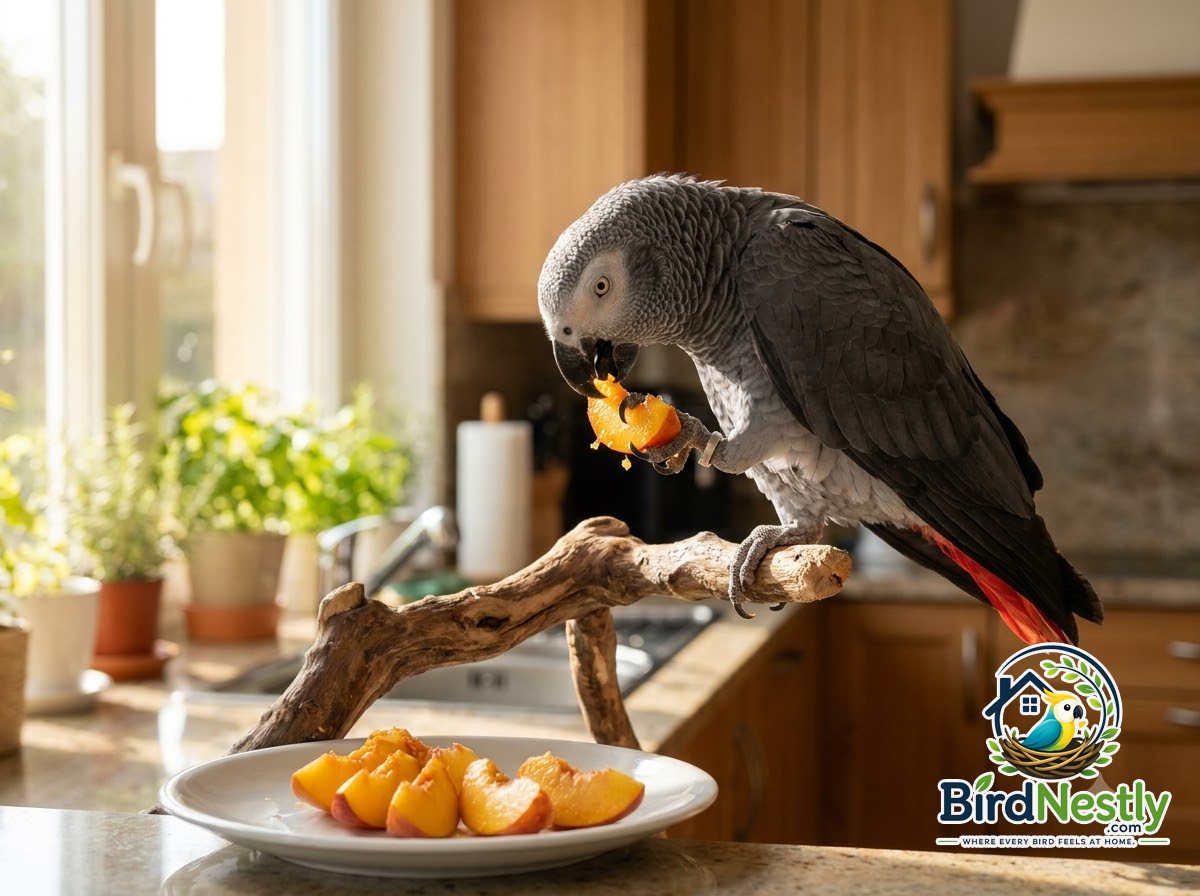
Leaving the skin on a peach isn’t usually a problem. Most parrots bite straight through it without giving it a second thought, especially when the fruit is ripe.
What deserves a little attention is how the peach was handled before it reached your kitchen.
Like many fruits sold in grocery stores, peaches may have been sprayed during the growing season. A quick rinse under cool running water is usually part of my routine before I cut one open. It only takes a minute and gives me a little more confidence before sharing a few pieces with my birds.
Some parrots eat every bite, skin included. Others somehow manage to peel the fruit with their beaks and leave the skin behind. Watching them figure it out is half the fun. They’ll often make a mess, but that’s just part of having parrots around the house.
If the peach has bruises or soft spots, I cut those away before serving it. Fresh fruit simply looks better, smells better, and birds usually seem more interested in it.
There’s no need to peel a perfectly good peach just because it’s for your parrot. A clean, ripe peach cut into small pieces is exactly how many owners serve it. Smaller cubes are easier to hold, especially for Budgies, Cockatiels, and Lovebirds that don’t have the beak strength of larger parrots.
Once the peach is on the plate, let your bird decide what it wants to eat. Some parrots finish every piece. Others leave tiny strips of skin scattered around the bowl like confetti. Both are common sights in homes with parrots.
By the time breakfast is over, you’ll probably know whether peaches are going to become another favorite alongside mango, papaya, or blueberries.
This is the one part of the peach that should never end up in your parrot’s food bowl.
While the soft flesh is safe, the pit is not.
Peach pits belong to the Prunus family, the same group as cherries, apricots, and plums. Inside the hard pit is a kernel that naturally contains cyanogenic compounds. If the pit is cracked or chewed, those compounds can release cyanide. The amount may be small, but there’s no reason to take that chance with a pet bird.
There’s another problem that shows up long before the chemistry does—the pit is simply too hard.
Parrots love testing things with their beaks. Give one a peach pit and there’s a good chance it’ll spend the next twenty minutes trying to chip away at it. Large parrots such as Macaws or Cockatoos have powerful beaks, but that doesn’t make peach pits safe toys. Smaller birds can also get into trouble if they try to break pieces off or wedge the pit between the bars of the cage.
Whenever I prepare peaches, the pit goes straight into the trash before the fruit reaches the cage. That way I never have to think about whether my bird might grab it later.
The same rule applies to several other stone fruits. If you’re serving cherries, remove the pit first. The habit quickly becomes second nature, and it takes only a few extra seconds while you’re cutting fruit.
If your parrot manages to pick up a peach pit before you notice, take it away calmly and replace it with a piece of the fruit instead. There’s no need to turn it into a game by chasing your bird around the room. Most parrots lose interest once the pit disappears and something tastier takes its place.
A simple rule makes peaches easy to remember:
- Peach flesh — yes.
- Peach pit — never.
Keeping those two parts separate is enough to make peaches a safe addition to your parrot’s fruit rotation.
Can Parrots Eat Canned Peaches?
Fresh peaches and canned peaches may look similar, but they aren’t the same once you read the label.
Open a can and you’ll usually find peaches sitting in syrup or sweetened juice. That extra sugar is there to improve flavor and preserve the fruit, not because it’s good for parrots.
A bird that weighs only a few hundred grams doesn’t need the amount of sugar packed into canned fruit. Even a few pieces can contain far more sugar than the same amount of fresh peach.
There’s another detail that’s easy to miss. Many canned peaches include ingredients you would never find in a fresh piece of fruit, such as preservatives, flavorings, or acidity regulators. They aren’t added with parrots in mind, so there’s little reason to include them in your bird’s diet.
Frozen peaches can be a different story.
If the package contains nothing but sliced peaches, with no sugar or syrup added, they’re perfectly acceptable after thawing. Many owners keep a bag in the freezer so they always have fruit available when fresh peaches aren’t in season.
A quick comparison makes the choice simple:
If fresh peaches aren’t available, don’t feel like canned fruit is your only option. Fruits such as blueberries, kiwi, papaya, or mango are easy to find throughout much of the year and make excellent alternatives.When shopping for fruit, the shortest ingredient list is usually the best one. For peaches, that list should contain just one word: Peaches.
| Fresh Peach | Canned Peach |
|---|---|
| Natural moisture | Often packed in syrup |
| No added sugar | Frequently contains added sugar |
| No preservatives | May contain preservatives |
| Best option for parrots | Better left for people |


Write Your Review
No reviews yet. Be the first to share your experience!